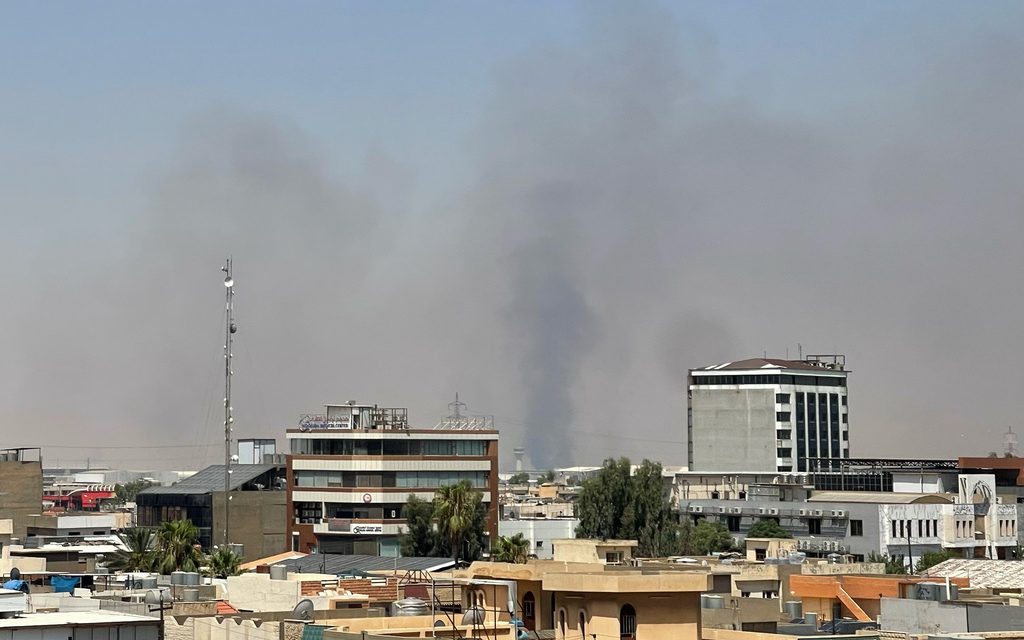
Recently, there have been explosions near a military base in Irbil, Iraq, where U.S. forces are stationed. As these tensions rise, The Washington Times has reported discussions among Republican lawmakers and foreign-policy analysts about how to end the ongoing war with Iran. A proposed strategy suggests President Trump declare victory and cease fighting.
This idea, while gaining some attention, is not new. The war’s primary goal of stopping Iran’s nuclear program remains unfulfilled. This would mark the fifth attempt at such a declaration.
On March 24, President Trump announced that Iran was “totally defeated,” claiming victory in the war. Yet, fighting persisted. Just days later, another address on April 1 stated the U.S. was close to accomplishing all military objectives. Trump asserted that the Islamic Revolutionary Guard Corps was crippled and predicted the reopening of the Strait of Hormuz. Yet, shortly after, Iran launched missiles at Israel.
Further declarations followed. On April 7, after a brief ceasefire, Trump confidently stated the U.S. had won “total and complete victory.” However, the ceasefire quickly fell apart. On June 15, Trump’s 80th birthday, he proclaimed a completed deal with Iran, promising a return to peace. Again, hostilities resumed.
Following Ayatollah Ali Khamenei’s funeral, the rhetoric changed again, focusing on ongoing determination rather than claimed success. On July 6, Trump assured that victory would come “one way or the other.” Later that month, the U.S. and Saudi Arabia conducted joint airstrikes after Iran attempted to attack U.S. forces.
These declarations have varied: total defeat, fulfilled military goals, ceasefire triumph, and a comprehensive agreement. Each was quickly overshadowed by ongoing conflicts. A fifth concept now suggests conceding the initial unmet goal.
This cycle is not accidental. The Trump administration often adjusted goals to suit the narrative. Objectives like preventing a nuclear Iran, securing the Strait of Hormuz, dismantling Iran’s military programs, or defeating proxy networks have all shifted. Inconsistencies and lack of clarity hinder planning for a war’s conclusion, as noted by a senior U.S. official.
Current discussions about declaring victory differ from genuine peacemaking. It is not about achieving peace; instead, it suggests redefining success to fit declarations. The nuclear threat, the war’s original target, remains unresolved.
For Congress, the critical question is not whether to declare victory. It is asking what must be accomplished for such a declaration to succeed where previous ones failed. Clarity and accountability are essential before another declaration is made.
Charbel A. Antoun is a journalist based in Washington, specializing in U.S. foreign policy with a focus on the Middle East and North Africa.
 Trump Unveils AI-Powered America.gov Platform
  Upcoming Congressional Elections: Key Districts to Watch
  President Trump’s Pre-Midterm Interview on Key Issues
  Trump’s 2024 Reelection and Evolving Voter Dynamics
  Defense Secretary Emerges as Key Player in the Trump Administration
  Hegseth’s Vision for the Military: Balancing Tradition and Innovation