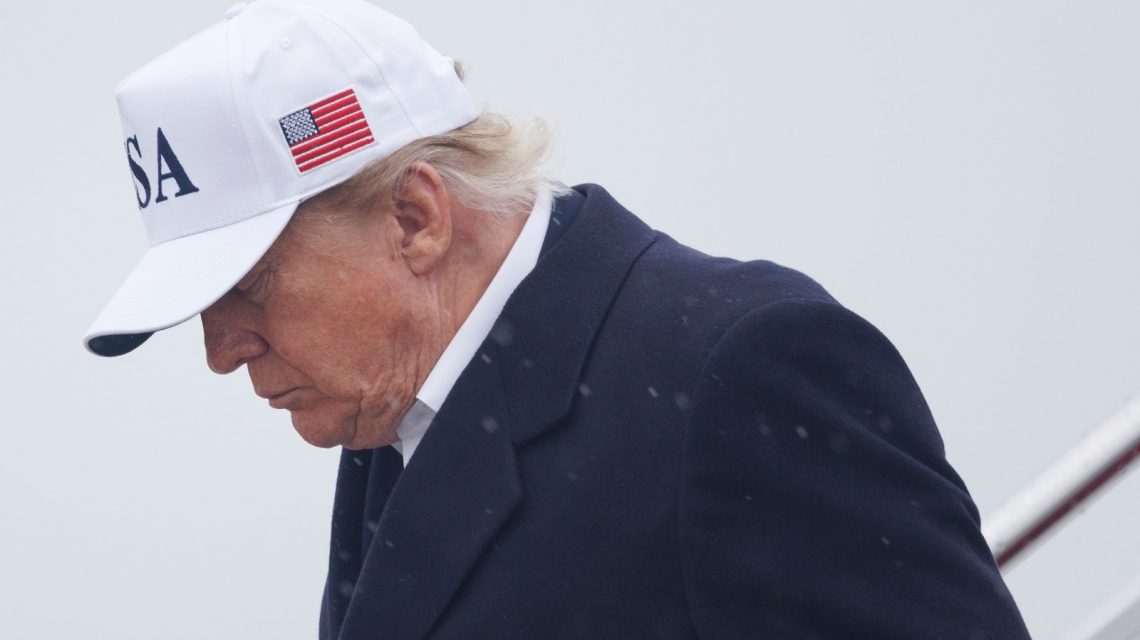
President Donald Trump’s approval rating has declined to 37 percent, marking a record low for any president before a midterm election in Wall Street Journal polls since 1990. The survey, conducted from September 16-21 with 1,500 registered voters, revealed that 61 percent disapprove of Trump’s performance.
The timing of this poll coincides with mounting concerns among Republicans about the upcoming November midterm elections. Several surveys indicate a decrease in Trump’s popularity. Newsweek has sought comment from the White House.
Support for Trump Falls
The Wall Street Journal found that 37 percent of Americans approve of Trump’s job performance, while 61 percent do not. Indications of weakening support within Trump’s ranks emerged, with 11 percent of voters who supported him in 2024 now regretting their decision. Similarly, 11 percent of Republicans outside the MAGA movement plan to vote for Democratic congressional candidates.
Nate Silver’s polling tracker on Thursday showed Trump’s net approval at minus 22.4, a record low for both of his tenures. VoteHub’s polling average echoed this, placing Trump’s net approval at the same level.
Economic Concerns Rise
Economic pessimism is prevalent, with 65 percent of respondents in the Wall Street Journal survey rating the economy negatively, compared to 33 percent who rated it positively. Sixty percent attribute a worsening economy to Trump’s policies, while 25 percent see improvements.
These results align with other recent polls. A Reuters/Ipsos poll showed Trump at 32 percent approval, and an American Research Group survey reported a 29 percent approval rating. Inflation, fuel prices, and living costs remain key concerns.
Kyle Kondik from the University of Virginia remarked that Trump’s numbers are deteriorating compared to eight years ago, with economic dissatisfaction being a key factor. The White House, however, dismisses these polls, highlighting electoral victories and progress in job creation and affordability.
Republican Concerns Intensify
Republicans are increasingly alarmed by the current political environment. Recent polls and voter attitudes have prompted Republican candidates to reconsider their positions on Trump’s administration. As some Republicans express dissent over issues like economic policy, Senator Thom Tillis emphasized the need for independence from the White House on certain policies.
Analysts suggest Trump’s low approval could challenge Republican candidates this midterm election. Nathan Gonzales from Inside Elections emphasized that presidents with low approval ratings pose risks for their party in midterms. A recent analysis showed Trump struggling in 41 states, including major battlegrounds, highlighting potential difficulties for Republican candidates.
The Journal’s findings indicate a challenging environment for Republicans, with Democrats needing only modest wins to regain the House as several Senate races remain hotly contested.
 The Trump Team’s Challenge to the Military Leadership
  Maryland First State to Restrict Electronic Pricing in Grocery Stores
  Activists Push for Nationwide Ban on Child Marriage in the U.S.
  Democratic Hopes and Historical Warnings in 2026 Senate Race
  Republicans Face Challenges Amidst Cost of Living Concerns
  A Different Kind of Fall for Congress This Year