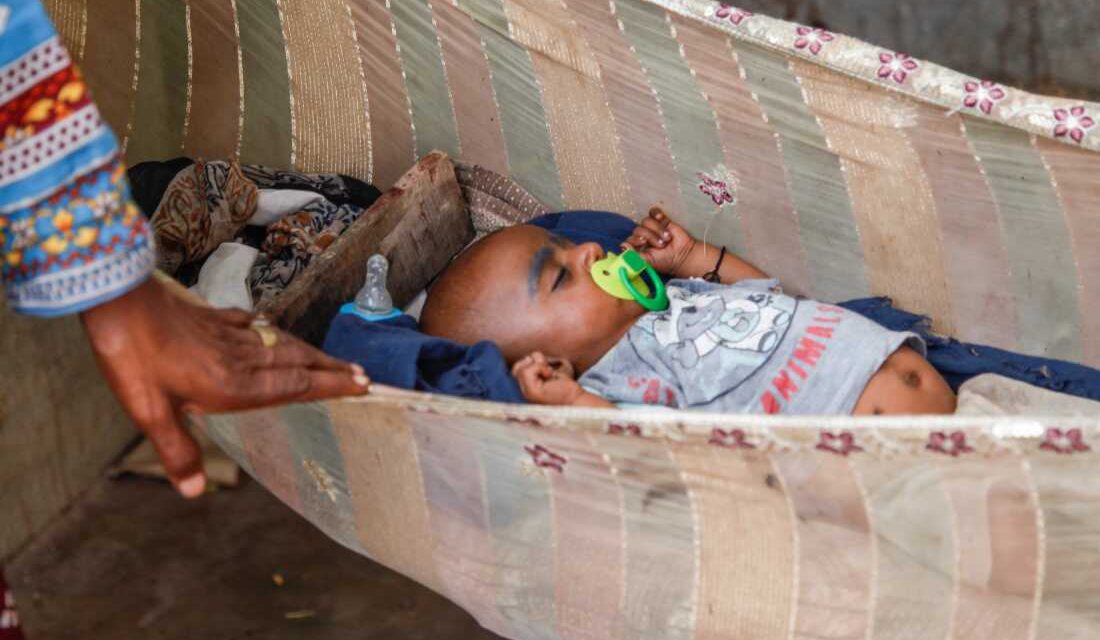
In Rehri Goth, a fishing settlement near Karachi, Pakistan, premature births are alarmingly common. Baby Ladoo, born to a young mother Mariam, exemplifies the struggles faced by many families here. Ladoo was born at 7 months and Mariam, only 17, couldn’t afford the necessary medical care. Like many, she hopes for the best despite the odds.
In Rehri Goth, about 25% of babies are born prematurely. This rate is almost double the national average of 14%, one of the highest in the world. Hanifa, Ladoo’s grandmother, tends to him as the family navigates difficult circumstances.
Environmental and Health Challenges
The environment exacerbates health issues. Sewage dried into powdery dust covers the riverbed near the settlement. In these conditions, local women like Sughran face harrowing decisions. She lost two premature children, including baby Gulshan, who died shortly after birth due to inadequate medical access.
Sughran’s experience highlights a harsh reality. Premature babies in low-income countries face high mortality rates. The World Health Organization states that half of babies born at 32 weeks in such regions are at significant risk of death. Survivors may deal with long-term health issues.
Research and Insights
Dr. Fyezah Jehan, leading maternal health research at Agha Khan University, investigates this crisis. Her team studies the microbiome, discovering a potential link between low levels of Prevotella copri bacteria and premature births. The finding suggests a possible indicator for preterm risk.
Despite the promising identification, Dr. Jehan acknowledges their work is preliminary. Efforts to cultivate the bacteria for therapeutic use continue. However, the connection remains under exploration.
Dr. Vincent B. Young underscores the complexity. While associations between bacteria and outcomes exist, causation isn’t guaranteed. Relief through microbiome intervention remains uncertain.
Sociocultural Barriers
The challenges in Rehri Goth are manifold. Economic constraints hinder access to proper healthcare. Pregnant women like Mariam are often given misguided advice on feeding practices. Ladoo’s family struggles with inappropriate healthcare guidance, leading to risky feeding practices.
The use of substitutes like Cerelac, a non-sterile mix not suited for infant sustenance, poses additional risks. The World Health Organization advises against such replacements, emphasizing the vitality of breastmilk.
Efforts to improve healthcare access and sanitation face hurdles. Donors hesitate to fund long-term solutions, opting instead for scientific research. Jehan stresses that improving education and sanitation could alleviate many issues.
Despite the adverse conditions, families like Ladoo’s persevere. His grandmother, Hanifa, remains determined to keep him safe, doing what little they can.
With local government corruption and other systemic barriers, lasting change seems distant. Additional insights are provided by Almas Kasmani.
 Increased Funding Needed for Psychiatric Hospitals
  Trump Administration Distributes ACA Refund Checks
  Higher Consumption of Ultra-Processed Foods Linked to Increased Health Risks
  Understanding Inflammation: Myths and Facts
  Calm Parenting: Strategies to Manage Stress
  Trump’s Executive Order to Combat Mosquitoes and Ticks in D.C.