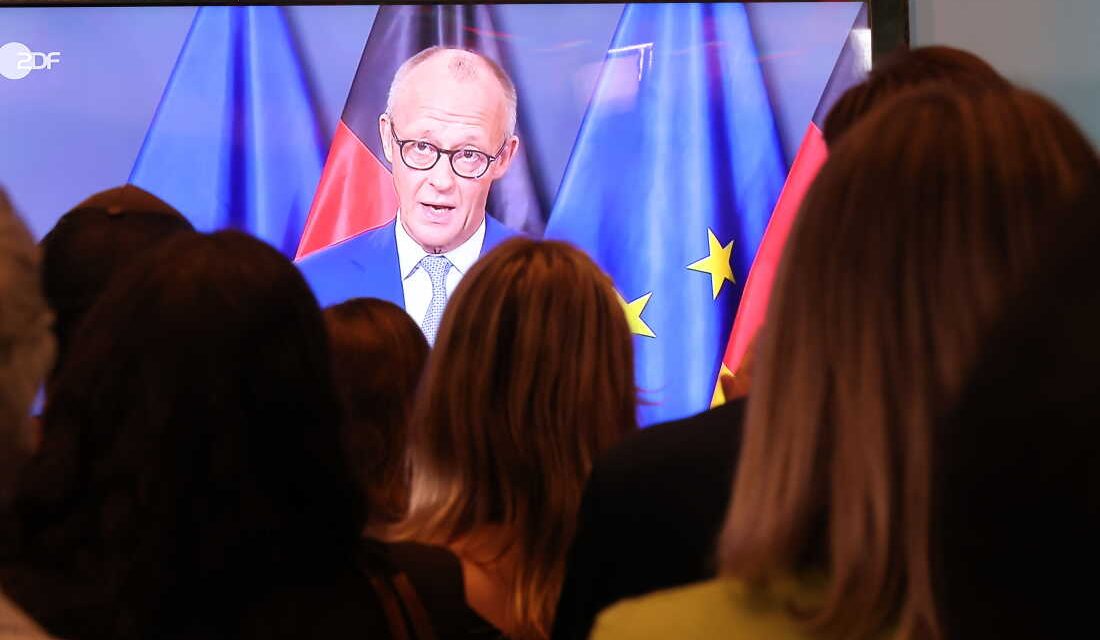
Post-election analysis reveals declining support for Chancellor Friedrich Merz’s Christian Democratic Union (CDU) following state elections in Mecklenburg-Western Pomerania and Berlin. Merz appeared at CDU headquarters in Berlin after polls closed, reacting to disappointing exit poll results.
The elections saw the far-right Alternative for Germany (AfD) make notable gains. They secured 38.2% of votes in Mecklenburg-Western Pomerania and 16.3% in Berlin. Meanwhile, the CDU received just 4.9% in Mecklenburg-Western Pomerania, risking exclusion from parliament.
Despite these setbacks, Merz dismissed resignation rumors, citing confidence in his federal reform agenda, targeting tax and welfare policies to counter rising authoritarianism. His stance emphasizes resilience and patience amidst political challenges.
Berlin’s election had Die Linke claiming victory with 25.7%. Leader Elif Eralp promised initiatives like a rent cap and measures against large corporate real estate entities, aiming to make living in Berlin affordable.
The electoral model combining winner-take-all and proportional representation means coalitions are necessary. For governance in Berlin, Die Linke needs support from two other parties. On the federal level, Merz’s CDU co-governs with the Social Democrats, facing difficulties in achieving consensus.
Federal AfD leader Alice Weidel claimed Merz’s perseverance bolsters her party’s prospects, suggesting CDU’s diminishing credibility under his leadership. The AfD surpassed the Social Democrats in Mecklenburg-Western Pomerania but struggles finding coalition partners.
Political analyst Sudha David-Wilp noted Merz’s strong desire to maintain his position, despite speculation of his replacement. The complex coalition dynamics lead to stalled policy implementations, leaving mainstream parties vulnerable to shifts in future federal elections.
 The Surveillance Threat to U.S. Federal Agents
  Trump Administration Distributes ACA Refund Checks
  Trump Administration’s Approach to Illegal Alien Deportations
  New Jersey Voter Fraud Prompts Renewed Push for SAVE Act
  Concerns Over Changes to Voter-Registration Form for Americans Abroad
  Trump’s 2024 Campaign Targets Young Men Through Cryptocurrency