The Changing Face of Latino Chicago
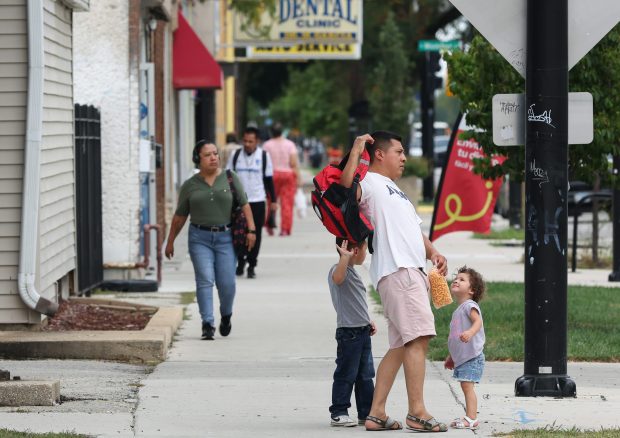
Belmont Cragin, a neighborhood on Chicago’s Northwest Side, has emerged as the largest Latino community in the city. The University of Illinois Chicago conducted a study revealing that of Chicago’s nearly 802,000 Latino residents, over 57,000 live in Belmont Cragin, which comprises roughly 80% of the neighborhood’s population.
Belmont Cragin: A Diverse Community
Belmont Cragin exemplifies the shifting demographics within Chicago. Streets adorned with flags of Mexico, Argentina, and Colombia highlight the cultural diversity. Along Fullerton Avenue, multilingual signs in storefronts showcase the area’s roots across Latin America.
Economic Activity in Belmont Cragin
Belmont Cragin isn’t only about the people; it’s a hub of commercial activity. Fullerton Avenue has become Chicago’s busiest commercial corridor, generating approximately $181 million in taxable sales in 2024, surpassing 26th Street’s “Mexican Magnificent Mile.”
Mexican residents form the largest Latino group here, yet the study marks significant Puerto Rican, Central American, and South American populations, including Guatemalan and Ecuadorian residents. Luisa Rodriguez, operating Niko’s Multiservices and Cell, says her customers hail from various countries, reflecting the neighborhood’s diversity.
Shifts in Demographics
The Latino population has seen movements beyond traditional areas. Austin registered the largest increase in Latino residents, with other neighborhoods like Garfield Ridge, Chicago Lawn, Ashburn, Clearing, and West Lawn experiencing growth. Conversely, areas like Logan Square and Pilsen have reported declines.
Understanding the Relocations
There isn’t a single factor driving these changes. Housing costs and homeownership opportunities are crucial, according to Oswaldo Alvarez, executive director of the Illinois Legislative Latino Caucus Foundation. The study notes gentrification pushing residents away from the city center, with nearly half of Latino renters spending at least one-third of their income on rent and utilities.
Families priced out of old neighborhoods are transitioning to areas where Latino homeownership can thrive. In Ashburn and Garfield Ridge, homeownership exceeds 80%, while Latino borrowers accounted for over 90% of mortgages in Gage Park, West Lawn, and Chicago Lawn in 2024.
Growing Middle Class and Challenges
A growing Latino middle class is emerging, with nearly one-third of Latino households earning at least $100,000 annually, up from 20.7% a decade ago. The number of Latino adults with a bachelor’s degree or higher has grown, along with significant increases in management roles.
This progress doesn’t signify the end of Chicago’s Latino working class. Around 60% of Latino workers remain in traditionally lower-paying industries. Alvarez wants his report to inspire questions across different areas and reevaluate the Latino community’s definition.
 Cargo Plane Crash at Miami International Airport
  Marine Veteran Suing Oregon School District Over Curriculum Reimbursement
  Tennessee Execution Halted as Issues Persist with Lethal Injection Protocol
  Judge Dismisses Case Against Former Olympian Over Lincoln Memorial Incident
  Minnesota Family Files Civil Rights Lawsuit Over ICE Agent Shooting
  California Bans Child Marriage, Protecting Minors