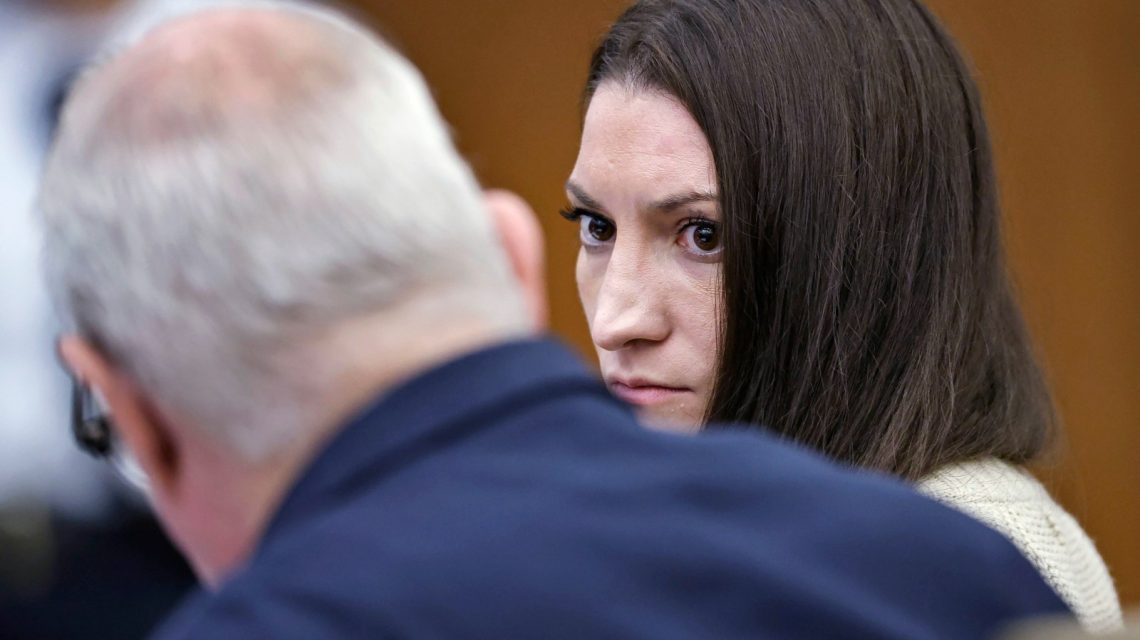
The final stages of Lindsay Clancy’s murder trial saw an intense confrontation on Monday. Defense attorney Kevin Reddington clashed with prosecution psychiatrist Dr. Avram Mack. The dispute centered around whether Clancy was severely depressed but not psychotic when she killed her three children. Prosecutors aimed to debunk the defense’s claim that Clancy experienced postpartum psychosis and wasn’t criminally responsible.
Dr. Mack’s Testimony Under Scrutiny
Mack had testified that Clancy suffered from major depressive disorder without showing psychosis. He argued that psychosis doesn’t always prevent someone from knowing right from wrong. This became a focal point for the defense’s questioning.
There’s no reason why psychosis in and of itself inhibits a person from knowing right from wrong,Mack testified.
Defense Challenges Mack
Reddington questioned Mack’s qualifications and previous testimonies in other cases. Reddington attempted to discredit Mack’s evaluation of Clancy by citing past court criticisms of Mack’s testimony. The courtroom exchange grew tense, with the judge sometimes stepping in.
At times, Reddington pressed Mack on his understanding of postpartum psychosis, questioning Mack’s interpretation of conditions following childbirth, prompting detailed responses from Mack. Observers noted jurors appeared attentive, with several taking notes.
Prosecution Experts Disagree
The prosecution presented two experts with different diagnoses. Dr. Kirk Heilbrun believed Clancy had bipolar II disorder, while Mack diagnosed major depressive disorder without psychosis. Despite differences, neither expert supported the idea that Clancy was psychotic during the killings.
Religious Testimony Sparks Controversy
A pivotal moment occurred when Heilbrun mentioned Clancy’s Catholic faith and questioned her on suicide as a mortal sin. This led to Reddington seeking a mistrial, arguing misconduct. Judge William Sullivan rejected the mistrial but instructed jurors to disregard religious aspects.
The Defense vs. Prosecution Narrative
The defense claimed Clancy suffered a command hallucination, leading her to kill her children and herself. Forensic psychiatrist Dr. Phillip Resnick described her as ‘frankly psychotic.’ Conversely, prosecution experts depicted Clancy as suicidal with severe depression but cognitively intact.
The prosecution outlined a theory that Clancy’s actions were part of a suicidal attempt. Heilbrun suggested Clancy wanted her children with her in death to prevent their suffering in her absence.
Medication’s Role Questioned
Edward L. Jones III, author of ‘Medication, Mental Illness, and Murder,’ suggested psychiatric medications might have influenced Clancy’s mental state. Jones compared Clancy’s case to David Crespi’s, noting both involved severe depression and multiple medications.
Clancy’s medication history included 13 prescriptions, with warnings about potential agitation and behavioral changes. FDA data linked some medications Clancy used to cases involving homicidal thoughts.
Awaiting Conclusion
The trial will continue with closing arguments expected on Wednesday. The jury will deliberate between the defense’s depiction of a psychotic episode and the prosecution’s framing of a suicide-driven tragedy.