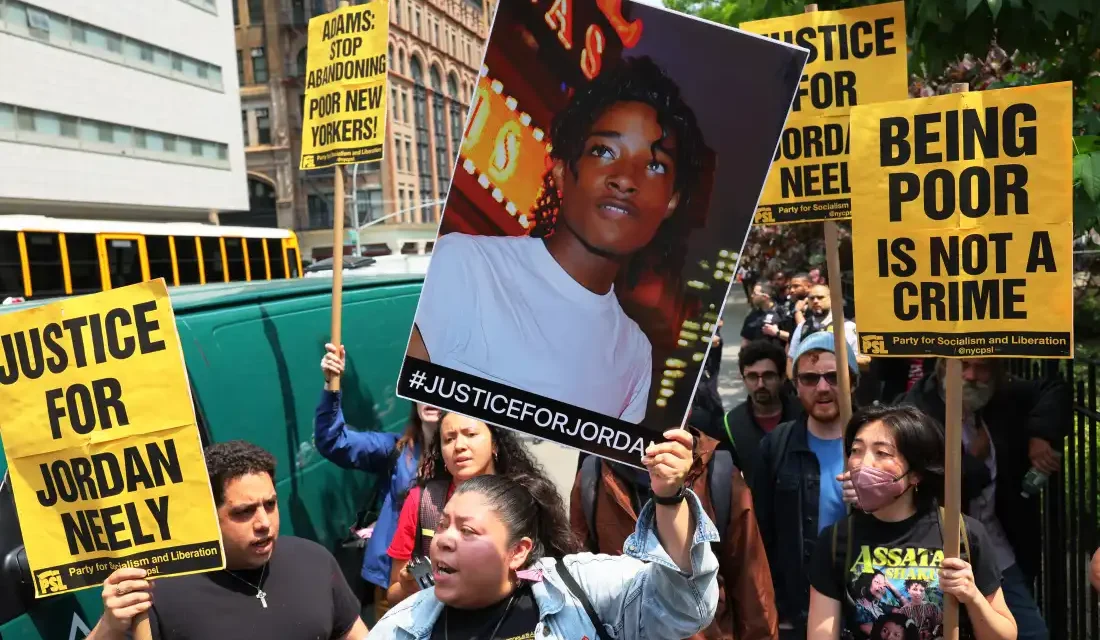
On May 1, 2023, Jordan Neely, an unhoused Black man, entered a New York City subway car in distress. Neely had spent years captivating commuters with his Michael Jackson impressions. On this day, however, he was shouting threats, alarming fellow passengers. Daniel Penny, a former Marine, intervened, restraining Neely in a chokehold for six minutes, resulting in his death. The incident sparked national debate.
For some, Penny’s actions were seen as necessary due to the absence of law enforcement. Others viewed Neely as yet another Black man whose life was deemed expendable.
Journalist Anand Giridharadas explored not only the incident but also the story behind the footage. In his book, “Man in the Mirror: Hope, Struggle, and Belonging in an American City,” Giridharadas discusses how both men felt abandoned by systems meant to protect them. He notes Neely’s long-standing sense of neglect and Penny’s perception of being left to act due to absent law enforcement.
Neely’s troubled history involves minor legal issues typical of homelessness in New York, like fare evasion and sleeping in public spaces. His infractions escalated over time, including violent offenses, landing him in Rikers Island. He was diverted to an alternative facility as a restorative measure. However, Neely left that program without completion, complicating his rehabilitation.
In the weeks before his death, outreach workers failed to recognize Neely during a chaotic episode at Coney Island. His ongoing struggles culminated in the subway altercation that ended his life.
Daniel Penny, raised in West Islip, Long Island, grew up in communities characterized by a complicated, often contemptuous relationship with New York City. Many residents sought refuge from urban challenges while maintaining ties to the metropolis.
Penny’s popularity among MAGA supporters, which emerged after the incident, reflects a broader trend of political polarization. His ideological stance appeared vague. The venture capital firm Andreessen Horowitz offered Penny a position, surprising many given his background.
The case’s politicization mirrors narratives in other tragic events, like the Luigi Mangione incident that highlighted systemic healthcare failures. Activists like Hawk Newsome express frustration with systems that leave individuals feeling abandoned, advocating self-reliance and community-building efforts.
This discourse highlights a recurring theme of perceived abandonment by societal systems, fueling individuals to take drastic actions. Giridharadas stresses the importance of addressing the underlying conditions that lead people to feel they have no options other than to act independently.