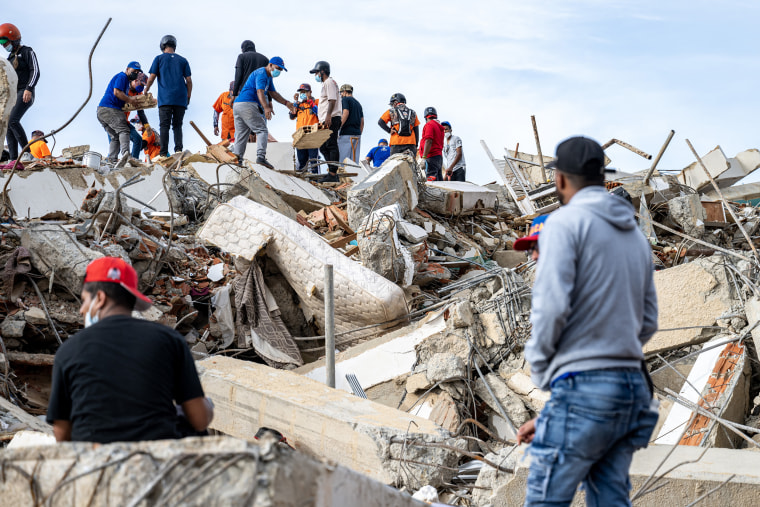
In recent months, South America experienced significant seismic activity, leading to starkly different governmental responses in Colombia and Venezuela. Social media was inundated with pleas as families sought missing relatives amidst collapsed structures. Although international support poured in, the reactions of the two governments highlighted their differences in governance and resources.
Colombia: Swift and Coordinated Response
Colombia’s response to the 7.4-magnitude earthquake showcased strong institutional functioning. President Abelardo de la Espriella, recently inaugurated, quickly organized an emergency command post within an hour of the quake. His prompt action included coordinating rescue efforts and visiting affected areas in cities like Cali and Quibdo.
The Colombian government managed rescue operations internally, accepting foreign help only from the U.S. Despite initial political challenges, such as tensions with former President Gustavo Petro, the transition did not hinder the response. The ability of Colombian institutions to function amidst political changes suggests a resilient democratic framework.
However, challenges emerged in managing foreign aid and communications. China’s ambassador expressed confusion over coordination roles. Disparate casualty reports also pointed to communication hurdles, with local counts diverging from national statistics.
Venezuela: Delayed Response and Political Challenges
In Venezuela, the response was hindered by political complexities and resource limitations. Acting President Delcy Rodríguez delayed public communication for hours post-earthquake, highlighting internal political tensions. Reports from her interior minister prior to her address indicated power struggles within the government.
Casualty reporting was inconsistent, with government figures underrepresenting the impact in areas like La Guaira, severely damaged due to poor-quality housing. As the government depended on international aid for rescue efforts, concerns grew over possible undercounts in official casualty figures.
The long-standing political repression in Venezuela contributed to public distrust. Access to crucial information and emergency services was hampered, complicating the population’s response and recovery efforts.
Challenges and Observations
Although each country faced logistical difficulties, the effectiveness of response strategies was notably different. Colombia’s governmental framework allowed for timely deployment of resources and personnel, such as using technology like thermal cameras and drones.
In contrast, Venezuela struggled with logistic and institutional setbacks. The media coverage in Colombia provided visibility and transparency, contrasting sharply with Venezuela’s limited communication.
According to Gabriel Bastidas, a Venezuelan journalist, the clear depiction of the response in Colombia highlighted institutional preparedness, a stark contrast to the experiences in Venezuela. For many Venezuelans, viewing Colombia’s organized efforts underscored the stark differences in governmental capabilities and public expectations of state response during such emergencies.
 British Police Arrest Man Suspected of Terror Plot
  Activists Push for Nationwide Ban on Child Marriage in the U.S.
  Investigation into Alleged Incident at Cornell University
  Rising Drone Threats Highlight Vulnerabilities in Moldova’s Airspace Defense
  Bolivia Faces Security Test Amid Unrest
  Incident on FlyDubai Flight Raises Security Concerns