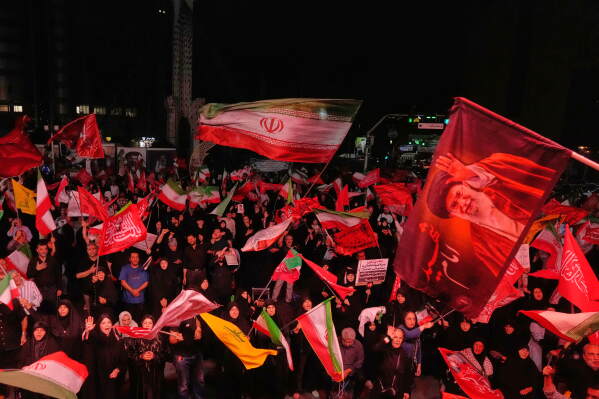
The conflict over the control of the Strait of Hormuz intensifies. This narrow waterway, long a reliable route for Middle East oil and gas, is central in the ongoing tension between Iran and the United States.
Recently, Iran has claimed the right to determine the terms under which ships pass through, citing an interim ceasefire. Threats and actions against vessels not following Iran’s preferred route aim to increase leverage over the United States. On Monday, President Donald Trump responded by reinstating a blockade on Iran. He declared U.S. control over the strait and introduced charges for safe passage, mirroring Iranian tactics.
The U.S. and Iran’s efforts to dominate the strait have escalated, risking a return to extensive conflict. The Strait of Hormuz, bordering Iran and Oman, is traditionally seen as a free international passage. But after attacks by the U.S. and Israel in February, Iran’s assertion of sovereignty disrupted global energy markets, hiking prices.
Rising Tensions Over Control
Both Iran and the U.S. claim dominance over this strategic location. Trump announced via Truth Social that the U.S. would become “THE GUARDIAN OF THE HORMUZ STRAIT.” Meanwhile, Iran’s Revolutionary Guard emphasizes its control, denouncing foreign military presence in the region.
The United Nations Convention on the Law of the Sea, established in 1982, states that international waters are not claimable by any country, ensuring free passage for all ships. Though neither the U.S. nor Iran are signatories, international custom reinforces this principle. However, both countries employ tactics to exert influence over the strait.
Maritime traffic has significantly reduced, with crossings dropping by 52% from Friday to Monday, compared to the week prior. On Sunday, only 14 ships traversed the strait, compared to about 130 daily before the conflict.
Iran’s Tactics and Demands
Iran’s strategic location gives it the power to disrupt shipping. Tehran has used this leverage to influence the global economy, attacking vessels and demanding payments. Recently, Iran required ships to register with the Persian Gulf Strait Authority. Additionally, Iran demands ships follow routes near its coast, instead of the U.S.-guided route near Oman’s coast. Central routes, mined by Iran, remain risky.
Suspected attacks on ships using the Oman passage have occurred, with six such incidents reported since June 25. Iran asserts the right to manage traffic, while the U.S. contests this, arguing for the strait’s reopening based on a recent agreement.
Disputes Over Shipping Fees
The U.S. announced plans to impose a 20% fee on cargo passing through the strait, covering safety and security costs. This move mirrors Iran’s past toll proposals, which the U.S. previously criticized.
Marc Weller, an international law professor, explained that while countries can charge fees for services like pilotage, they must reflect the actual service cost. Exorbitant charges, like Iran’s proposed $2 million per vessel, are not permissible.
The International Maritime Organization maintains its stance against tolls for passage, awaiting further details on the U.S. plan. Iran’s Foreign Minister Abbas Araghchi acknowledged Trump’s toll proposal, using it to validate Iran’s fee demands.
AP Writer Wyatte Grantham-Philips in New York contributed to this report.
 British Police Arrest Man Suspected of Terror Plot
  Activists Push for Nationwide Ban on Child Marriage in the U.S.
  Investigation into Alleged Incident at Cornell University
  Rising Drone Threats Highlight Vulnerabilities in Moldova’s Airspace Defense
  Bolivia Faces Security Test Amid Unrest
  Incident on FlyDubai Flight Raises Security Concerns