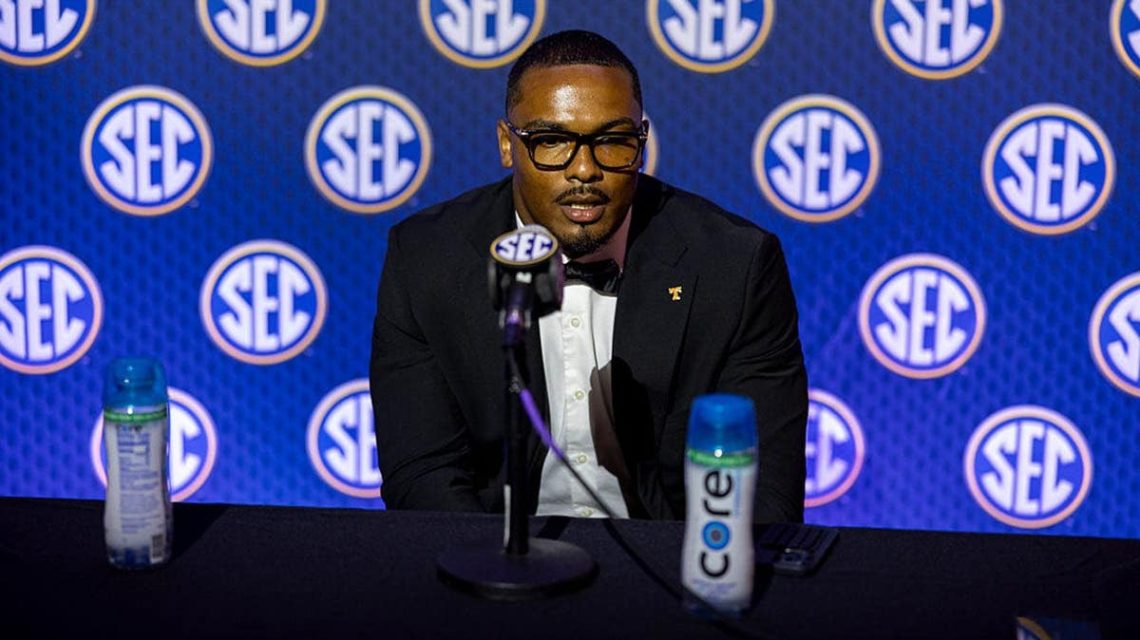
In Knoxville, Tennessee, the NCAA’s suspension of linebacker Arion Carter for Tennessee has sparked controversy. Carter received a two-game suspension, a decision his coach has strongly criticized.
Lost Eligibility Amid Professional Pursuits
After the conclusion of the 2025 season, Arion Carter declared for the NFL Draft. He hired a professional agent as part of this process. Under current NCAA rules, this action resulted in the loss of his collegiate eligibility.
Carter also accepted a $427 plane ticket from his agent to attend a training session. It was during this session that he discovered a foot injury, which jeopardized his draft prospects.
Faced with the potential financial fallout from the injury, Carter opted to return to college. He repaid the $427 and Tennessee self-reported the infraction to the NCAA.
Coach’s Strong Response
Head coach Josh Heupel did not hold back his opinions on the suspension. Ahead of the team’s Fall camp, Heupel criticized the NCAA’s punishment of Carter, particularly calling the two-game suspension outdated.
“He has done everything the right way… The ruling from the NCAA of a 2-game suspension, I truly believe, is unfair,” Heupel asserted.
Heupel pointed out the stark contrast between outdated rules and the current climate of college sports, where NIL deals provide athletes with significant earnings potential.
NCAA’s Response
The NCAA maintained that its rules clearly state student-athletes cannot sign with agents to explore NFL options. They stated Carter knowingly violated these regulations, necessitating the suspension.
Repayment of the plane ticket and potential suspension were part of the reinstatement process. However, many argue these rules fail to address the realities modern athletes face, particularly when injuries impact their draft prospects.
Ongoing Debate and Future Implications
The case of Arion Carter highlights the ongoing issues within NCAA regulations. Schools and athletes continue to navigate complex rules, many of which have not evolved alongside the shifting landscape of college athletics.
While Carter prepares for the season with grace, critics argue that outdated rules like these prevent athletes from benefiting from their college commitments, especially when they lose visibility in primetime games.
Tennessee, along with many college sports fans, stands in opposition to the suspension. As the debate over NCAA rules and athlete rights continues, Carter’s situation serves as a catalyst for potential changes.
 Penguins Make History with Dominant Season Opener
  Sonny Gray Expresses Frustration After Game Against Yankees
  Colorado Avalanche’s Nathan MacKinnon Shines in Season Opener
  Yankees Sweep Red Sox in AL Wild Card Series
  Arike Ogunbowale Shines in Dallas Wings’ Overtime Victory
  Dallas Cowboys Acquire Joey Porter Jr. in Major Trade