Recent reports have highlighted the airing of pro-Trump television ads funded by taxpayer money, raising significant questions about ethics and legality. The ads, marked with a disclaimer stating “Paid for by the U.S. Government,” have sparked debate about the use of public funds for political promotion.
These ads present various themes including the president’s stance against socialism, communism, and Marxism, with one replaying his July 4 speech at Mount Rushmore. Another ad caused considerable concern as it mirrored one used during Trump’s 2024 campaign, featuring statements about combating the “deep state” and expelling “warmongers.” This is particularly controversial given the Trump administration’s concurrent military actions against Iran.
Public reaction has been mixed, with notable figures like Sagar Enjeti questioning the use of taxpayer funds for such promotions on social media. Critics argue that taxpayer money is simultaneously being used to promote military actions and advertise against the very entities deemed as adversarial.
The ads have not only raised eyebrows among the general populace but also within the Republican Party. Senator John Kennedy from Louisiana expressed disapproval, stating that public funds should not be used for private political advertising.
The White House maintains these ads are public service announcements, intended to remind citizens of the nation’s values without any explicit call to action. However, ethics specialists have voiced concerns through outlets like The New York Times, suggesting that the advertisements might blur legal lines. Richard Painter, a former ethics lawyer, asserted that such spending could be seen as an “abuse of power” or potentially an “impeachable offense.”
There is particular scrutiny over the Hatch Act, a 1939 law preventing government employees from engaging in political activity in their official capacity. Although the president is exempt from this Act, involvement of government personnel in the creation or distribution of the ads could constitute a violation.
Overall, the concern centers on whether taxpayer funds should support political messaging, especially in the context of upcoming elections. As the debate continues, both legal and ethical implications are being closely examined.
 State Department Simplifies Passport Process with Online Applications
 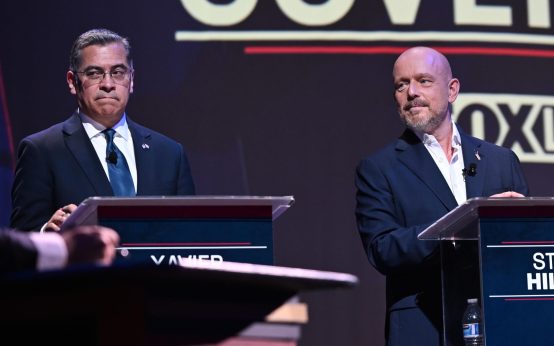 Becerra and Hilton Clash in California Gubernatorial Debate
  California Voters to Decide on $7.5 Billion State Research Fund
 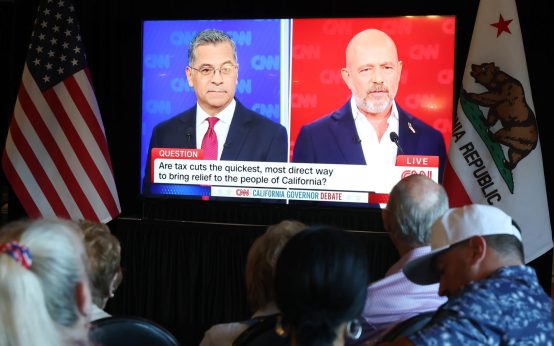 Highlights from the California Gubernatorial Debate: Becerra vs. Hilton
 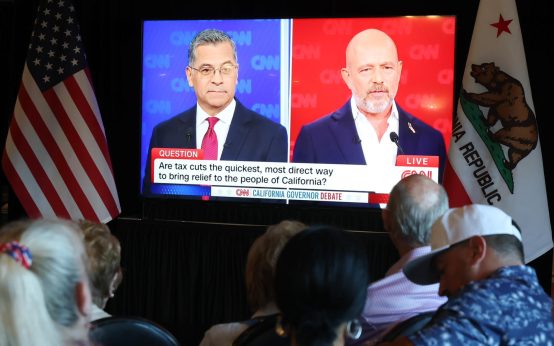 Becerra vs. Hilton: The Debate and Key Issues in the California Governor Race
  Senate Confirms New Labor Secretary