A federal appeals court has mandated the release of Raheem Fulton, a Jamaican man diagnosed with end-stage kidney disease, from immigration detention. Fulton’s critical health condition and his legal claims are still under consideration, necessitating bail during his appeal process. The U.S. Court of Appeals for the Second Circuit issued this decision in a 2-1 ruling, underlining the seriousness of his situation while awaiting a resolution. Fulton is facing deportation due to a burglary conviction.
Newsweek has attempted to obtain comments from the Department of Homeland Security (DHS) and Fulton’s legal representatives. This decision highlights increasing concerns over the adequacy of medical care provided in Immigration and Customs Enforcement (ICE) custody, focusing on treatments, continuity of care, and the management of medically vulnerable individuals facing deportation.
Recently, the handling of detainees with severe health issues has been under scrutiny. A notable case involves a Costa Rican man deported while in a vegetative state. Since his return, he passed away, prompting investigations by Costa Rican authorities into his care while in detention. Family allegations claimed inappropriate medication and inadequate care, though DHS maintained that he received suitable medical treatment. Importantly, his death did not occur within ICE custody.
Reasons Behind Fulton’s Release
Fulton met stringent criteria for bail during his habeas corpus appeal, illustrating both substantial legal questions and the need for release due to extraordinary circumstances. Habeas corpus permits detainees to request a court review of their custody’s legitimacy and relief during the review process.
“Fulton has shown that (1) his petition presents significant claims and (2) exceptional circumstances demand bail to ensure the effectiveness of the habeas remedy,” stated the majority.
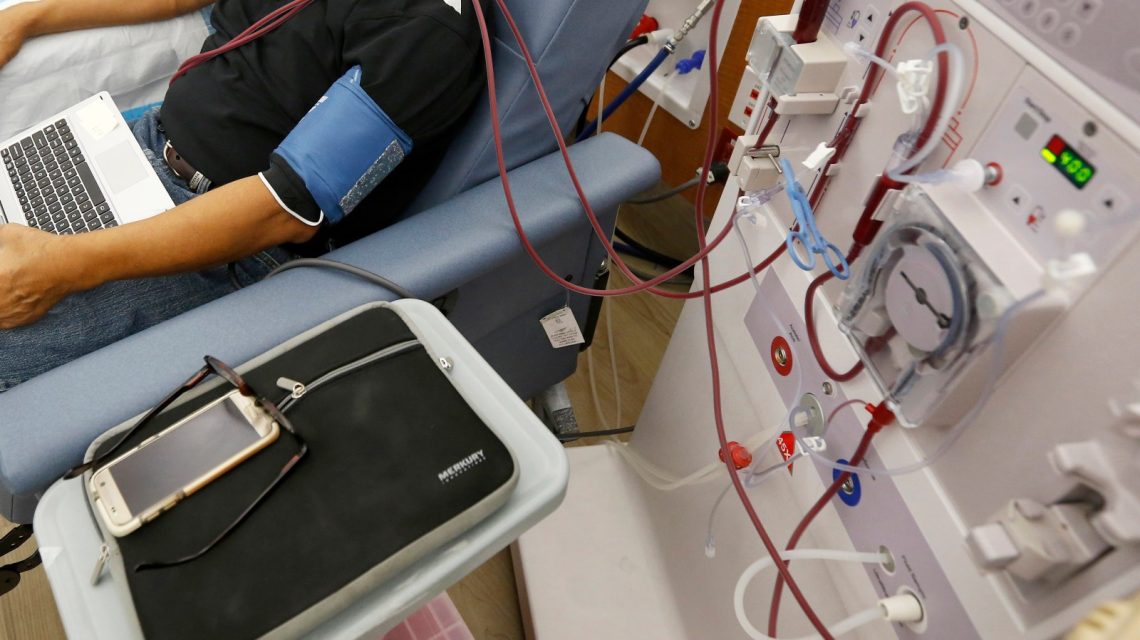
Fulton argued about inadequate medical-discharge planning preceding his deportation to Jamaica. His critical condition requires regular dialysis, emphasizing the urgency of resolving these issues.
The court majority stated that a previous panel recognized Fulton’s significant claim, contesting a district court’s dismissal of his request for medical planning addressing his severe health concerns.
“The government conceded that failing to provide proper medical care would likely result in Fulton’s death,” noted the court. “These extraordinary circumstances necessitate bail to ensure the full effectiveness of the habeas remedy.”
Evidence showed Fulton faced life-threatening risks, having previously missed dialysis while under ICE custody. Records indicated he was recommended for a kidney-transplant evaluation, yet ICE denied facilitating the procedure.
The court further highlighted that the government did not argue that Fulton posed a community threat or flight risk.
“Deportation without dialysis amounts to a death sentence for Fulton,” wrote the court. “Currently, neither ICE nor Fulton can organize post-deportation healthcare.”
ICE’s Stance on Medical Arrangements
The legal dispute centers on the government’s duty to ensure adequate medical care for deported immigrants with serious health conditions. Fulton’s claims about this obligation are still pending in court.
Judge Steven Menashi dissented, saying Fulton failed to meet release requirements during habeas proceedings. Menashi noted that Fulton is detained primarily because of a court-ordered stay delaying removal during litigation. The dissent described government efforts to coordinate with Jamaica for dialysis treatment after Fulton’s return, asserting that he receives routine dialysis in U.S. custody.
Menashi detailed communication between U.S. officials and Jamaican authorities, confirming dialysis availability and obtaining approval from Jamaica’s Ministry of Health and Wellness. “Fulton remains in custody because he requested the court to postpone his removal,” Menashi stated.
The dissent emphasized that Fulton’s case demands clarification on government responsibilities in arranging his continued medical care post-deportation, rather than addressing care adequacy during detention.
However, the majority concluded that Fulton’s serious health risks and unresolved legal issues necessitate his release during the appeal. The court instructed both parties to discuss release conditions and return for resolution if disagreements continue.
Implications of the Decision
This ruling may influence future cases involving detainees with life-threatening medical conditions, indicating a potential willingness by federal courts to grant releases amid ongoing legal challenges.
While not resolving the underlying dispute, the appeal may impact government responsibilities in organizing medical care continuity before deporting seriously ill individuals.
A favorable ruling for Fulton could redefine how ICE manages deportations involving detainees who require continuous, life-sustaining treatment.
For further information, Newsweek editors John Fitzpatrick and Gray R. Thomas are contacted for this story.
 Immigration Judge Allows Deportation of Wisconsin Mosque Leader Salah Sarsour
  Lindsay Clancy Faces Potential Retrial After Mistrial
  Tennessee Prepares for Rare Execution of Woman on Death Row
  Mistrial in Lindsay Clancy Case: Juror Speaks Out
  Utah Judge Orders Release of Man on Death Row After DNA Evidence Emerges
  Kurt Olsen Resigns from the Justice Department Amid Investigation