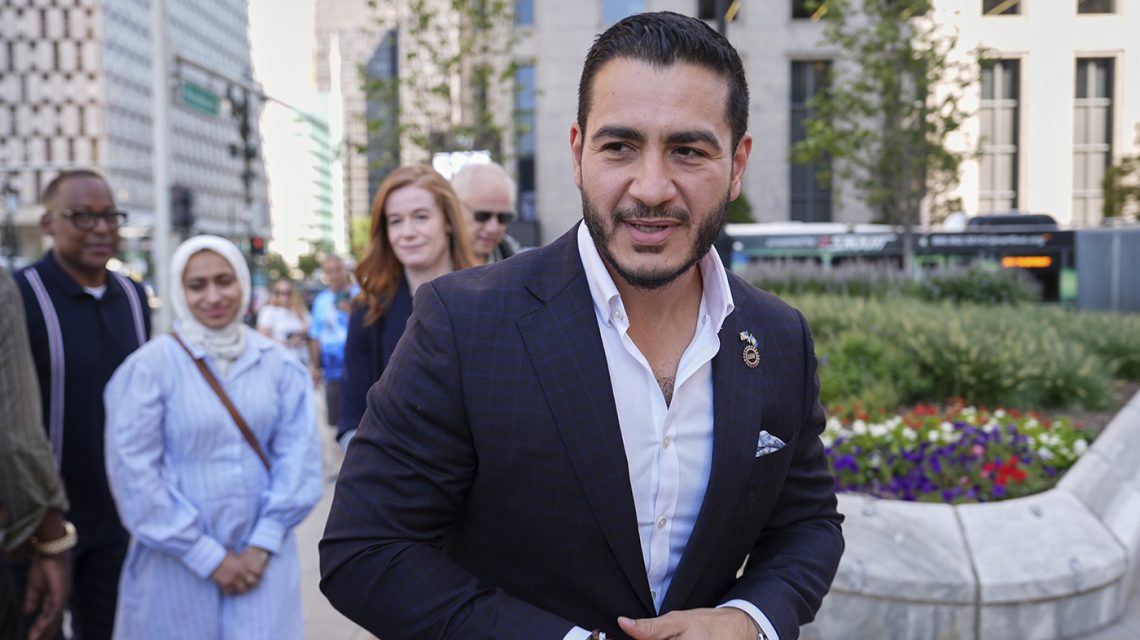
Abdul El-Sayed recently participated in a news conference in Detroit, marking his victory in the Democratic nomination for U.S. Senate in Michigan. Despite the fact that President Trump holds a remarkably low approval rating of 34 percent, Democrats are engaging in internal conflicts, spending large sums on campaigns against their own party members.
Third Way, a moderate Democratic organization led by Jonathan Cowan, is investing $15 million to challenge the rise of democratic socialism. Cowan highlights individuals like Michigan’s Abdul El-Sayed, who is not a democratic socialist, in contrast to individuals like New York City’s Zohran Mamdani, who is. The inability to clearly define democratic socialism leaves moderates in a tough spot, as economic policies popular among Democrats are often associated with it. A third of Democratic voters now identify as democratic socialists, showing the popularity of these policies. Nonetheless, moderate groups prefer to attack individuals rather than discuss these policies.
The Democratic Party faces the challenge of aligning with voters’ preferences if they hope to regain control of Congress and the White House. This necessitates understanding voter priorities and moving beyond outdated political practices. Historical failures, linked to figures like Senator Chuck Schumer and groups like Third Way, have shown that efforts to discredit progressive politicians by misrepresenting their positions have been unsuccessful.
Candidates like Abdul El-Sayed have achieved victories despite substantial financial disadvantages and ongoing negative advertisements. Zohran Mamdani overcame significant opposition in New York, highlighting the struggles between establishment and progressive candidates. Progressives have focused their campaigns on pressing issues like economic affordability, distancing themselves from the cultural issues that previously characterized them.
David C. Barker from the Brookings Institution states that today’s progressives appeal to swing voters, prioritizing economic issues over cultural debates. Instead of embodying extreme positions, they resonate more with candidates like Texas’s James Talarico, who emphasizes economic concerns without delving into democratic socialism.
Voters view candidates like El-Sayed positively, contradicting attempts to paint them as extremists. Democrats have historically distanced themselves from working-class roots, but recent trends show candidates gaining support through open discussions on policy changes. Tressie McMillan Cottom, a New York Times columnist, emphasizes the importance of genuine engagement with voters rather than dismissing their concerns.
Centrists face challenges in adopting incremental approaches while progressives push for action. Despite criticisms of progressives being unrealistic, it is the centrists who delay action, waiting for optimal conditions. Disenchanted Americans seek immediate action and solutions, finding more alignment with progressive ideas than centrist hesitancy.
 The Trump Team’s Challenge to the Military Leadership
  Maryland First State to Restrict Electronic Pricing in Grocery Stores
  Activists Push for Nationwide Ban on Child Marriage in the U.S.
  Democratic Hopes and Historical Warnings in 2026 Senate Race
  Republicans Face Challenges Amidst Cost of Living Concerns
  A Different Kind of Fall for Congress This Year