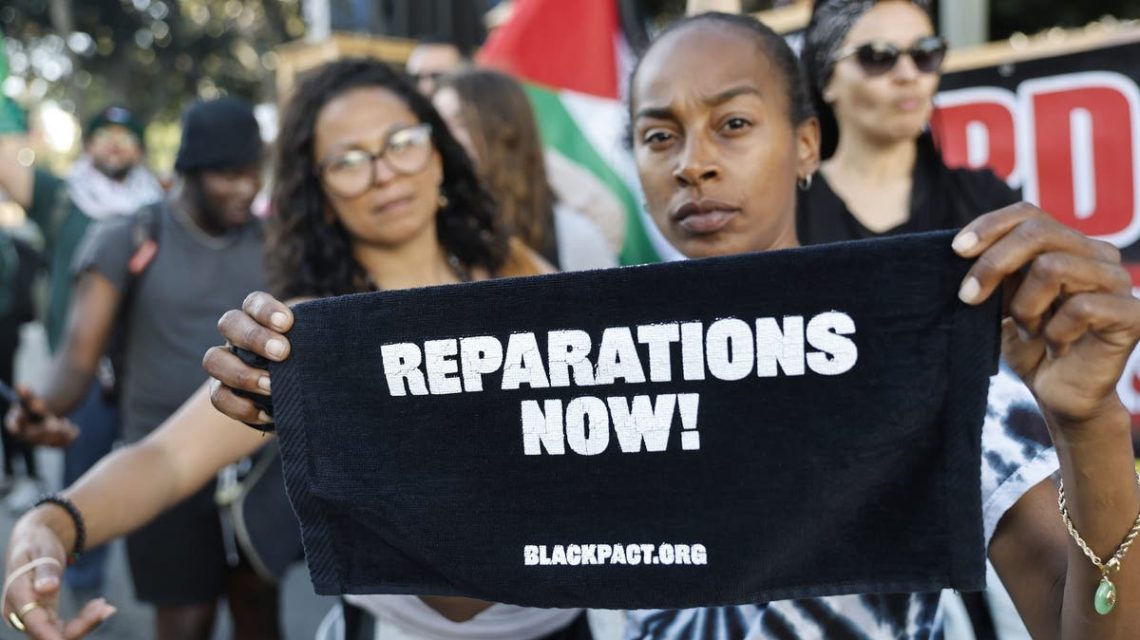
Judicial Watch, a conservative watchdog group, has initiated legal action against Evanston, Illinois, over its reparations program that limits eligibility based on race. This action has drawn the attention of the Department of Justice (DOJ), which seeks to intervene and support the lawsuit challenging the program’s legality.
The controversy arose when a federal judge allowed the DOJ to join the civil rights lawsuit filed by Judicial Watch. Evanston’s attorney, Precious S. Jacobs-Perry, has announced intentions to file a motion to dismiss the DOJ’s complaint while affirming the city’s commitment to maintaining its program.
Evanston Mayor Daniel Biss, who defends the program, explained to CNN that the goal is to address wealth disparities and historical injustices. The program provides $25,000 in housing-related benefits and cash payments specifically to Black residents and their descendants who lived in Evanston between 1919 and 1969. The program, established in 2019, marked Evanston as the first U.S. city to implement municipal reparations, with a funding commitment of $10 million over ten years, sourced from a local cannabis tax.
The DOJ challenges this approach as a violation of the Equal Protection Clause of the 14th Amendment and the Fair Housing Act, arguing that distributing benefits based on race is unlawful. Federal prosecutors maintain that the program discriminates by offering financial assistance exclusively according to race and ancestry, bypassing broader criteria.
Judicial Watch’s case represents six non-Black individuals with historical ties to Evanston, who allege exclusion from the program due to their race. Michael Bekesha, a Judicial Watch attorney, asserts that Evanston’s race-based payments are unconstitutional and pledges to continue the legal pursuit irrespective of the DOJ’s outcome.
The DOJ’s stringent position aligns with past instances, such as a decision by U.S. District Judge John F. Kness, who previously refused Evanston’s bid to dismiss Judicial Watch’s lawsuit.
Evanston has faced similar legal challenges in the past, including a case judged in San Francisco, disputing a reparations fund’s potential discriminatory implications.
The DOJ’s involvement highlights the ongoing national debate over reparations efforts and their implementation at local government levels.
Evanston spokesperson Cynthia Vargas has stated that the city will continue to ardently defend its reparations program despite ongoing litigation. Joshua Q. Nelson, a reporter at Fox News Digital, has covered this development extensively, offering insights into cultural trends, education, and public policy debates across the United States.
 Mayor Mamdani’s Policing Reform Plans
 Gen Z Voter Shifts and Their Impact on the 2026 Midterm Elections
 Disappearance of US Senate Candidate Raises Questions
 DOJ Rule Change Reduces Appeal Time for Immigrants Facing Deportation
 Former Hospital Security Guard Convicted for Sexual Conduct with a Dead Body
 Hakeem Jeffries’ Bid for House Speaker Faces Progressive Hurdles