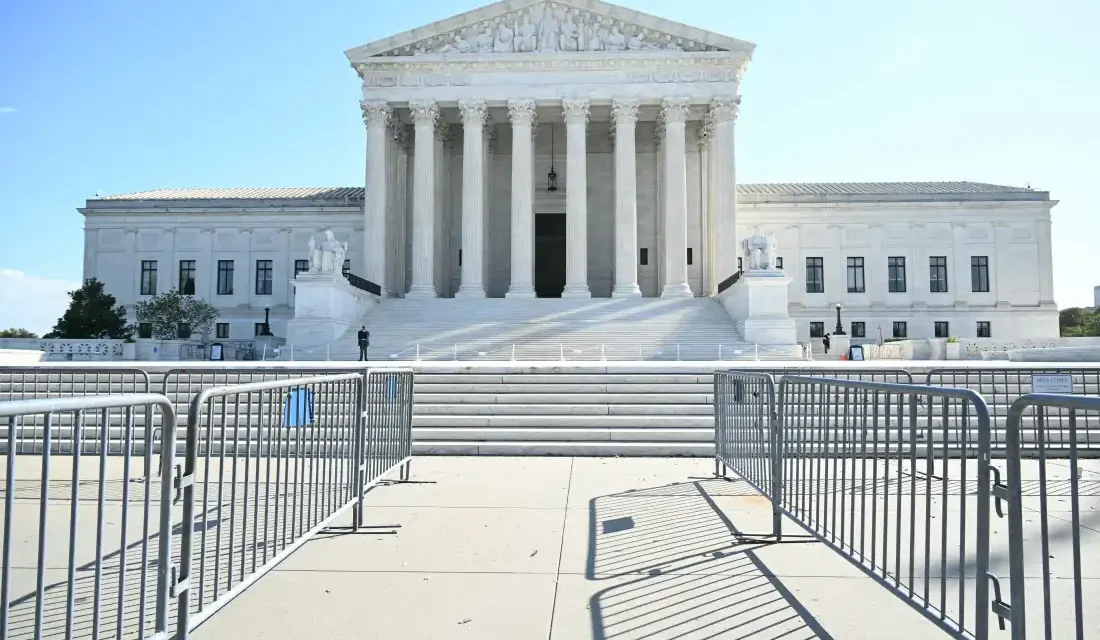
The U.S. Supreme Court, located in Washington, D.C., finds itself at the center of a critical case just a day before Election Day, November 3. The Department of Justice (DOJ) has appealed to the court in a tense debate with California regarding the state’s voter rolls.
A federal district judge and a split panel from the 9th Circuit Court of Appeals previously turned down the DOJ’s plea to halt the processing of ballots for thousands of alleged noncitizens. Subsequently, the DOJ announced its intention to bring the matter before the Supreme Court.
Uncertainty looms over whether the Supreme Court will decide to engage in the issue and, if so, whether a decision will occur before the election. The DOJ has claimed to identify 20,000 probable noncitizens within California’s voter list that should have their ballots held until their citizenship status is confirmed.
To date, judicial decisions have favored California and Los Angeles County’s stance. They argue that the federal list lacks reliability and that establishing a new system for segregating ballots during an ongoing election is not practical.
“[T]here is a material risk that granting the United States its requested relief would result in disenfranchisement and could jeopardize the County’s entire election,” wrote 9th Circuit Judges Mark Bennett and Gabriel Sanchez when denying the DOJ’s emergency motion.
Judges Bennett and Sanchez cited the established Purcell principle, which advises against changing election rules shortly before an election. They also pointed to the Constitution granting election management authority to states, alongside the National Voter Registration Act that restricts systematic voter removals close to a federal election.
The panel included a dissenting opinion from Judge Patrick Bumatay. Notably, Bumatay is a Trump appointee, as are Judges Bennett and Sanchez, respectively appointed by Presidents Trump and Biden.
The number of ballots at issue is expected to be considerably less than 20,000. Many listed by the DOJ were found by county election officials to lack active registrations and did not receive ballots.
The DOJ’s approach reflects its increasing friction with California election authorities. Recently, the DOJ has warned local officials of potential criminal charges for noncompliance with federal directives to separate contested ballots. It also issued grand jury subpoenas to staff at the Los Angeles County Registrar-Recorder’s office.
 Mayor Mamdani’s Policing Reform Plans
 Gen Z Voter Shifts and Their Impact on the 2026 Midterm Elections
 Disappearance of US Senate Candidate Raises Questions
 DOJ Rule Change Reduces Appeal Time for Immigrants Facing Deportation
 Hakeem Jeffries’ Bid for House Speaker Faces Progressive Hurdles
 Ohio Judge Dismisses Defamation Lawsuit by Rep. Max Miller