
The United States and Iran engaged in a new round of air strikes on Thursday, accusing one another of violating their provisional agreement. This escalation followed President Trump’s announcement that he believed the fragile cease-fire had ended.
U.S. Military Action
The U.S. military launched strikes targeting Iran’s military infrastructure to reduce its capacity to threaten commercial shipping in the Strait of Hormuz. About 90 targets, including missile and drone storage sites, were hit, per the U.S. Central Command.
Iranian Retaliation
Iran responded with missile and drone strikes on perceived American bases in Kuwait and Bahrain. The Islamic Revolutionary Guards Corps warned of increased retaliation if U.S. attacks persisted. No immediate damage was reported from Kuwait or Bahrain, though both nations responded to the assaults.
Railway Strikes in Iran
The U.S. strikes reportedly damaged a railway line from Tehran to Mashhad, impeding passenger service. Buses have been arranged to transport affected passengers. This comes as Iran holds funeral ceremonies for Ayatollah Ali Khamenei, concluding with his burial in Mashhad.
Rising Oil Prices
The renewed hostilities have impacted energy markets. Brent crude oil increased by over 1% to approximately $79 per barrel following the strikes. This rise comes after a temporary decline to $70 per barrel before the conflict. The International Maritime Organization has advised avoiding the Strait of Hormuz.
Strait of Hormuz Tensions
The situation in the Strait of Hormuz intensifies, with Iran asserting rights over the waterway. The U.S. accuses Iran of targeting vessels, causing disrupted shipping routes. Data from Kpler shows a significant decrease in ship transit compared to pre-war figures.
Stock and Bond Market Effects
Investors remain concerned about the conflict’s inflationary effects. The U.S. Treasury yields reached around 4.6%, reflecting worries over rising oil prices.
Global Diplomacy and Potential Negotiations
MR. Trump suggested Iran is eager for negotiation, although Iran has remained silent on new talks. Division within Iran regarding negotiations with the U.S. has deepened.
Conclusion
As tension mounts, President Trump returned to the U.S. from Turkey aboard an older Air Force One due to security considerations amid ongoing military actions.
 Democratic Hopes and Historical Warnings in 2026 Senate Race
  Republicans Face Challenges Amidst Cost of Living Concerns
 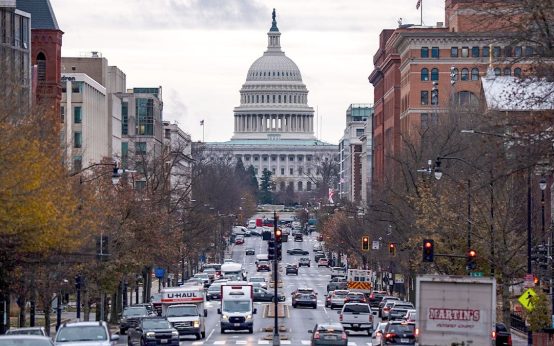 A Different Kind of Fall for Congress This Year
  Investigation into Alleged Incident at Cornell University
  Cornel West and Sean Hannity Discuss Differences on Podcast
  Trump Unveils AI-Powered America.gov Platform