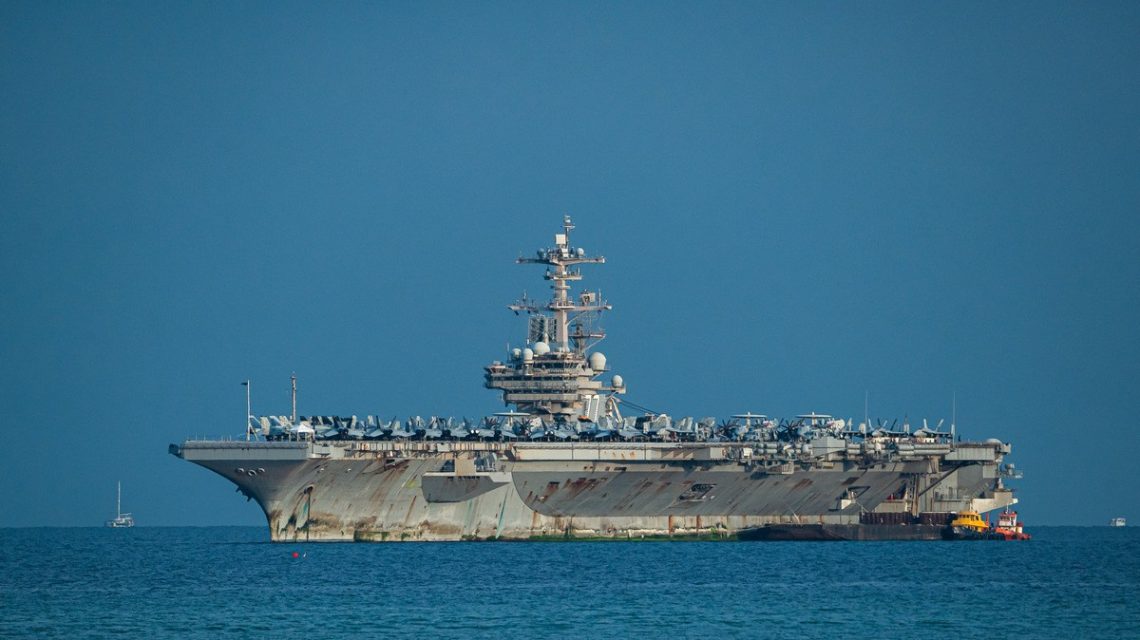
The deployment of the USS George H.W. Bush aircraft carrier in the Middle East has been extended. This decision follows the previous record-breaking deployment of the USS Abraham Lincoln, raising concerns about the well-being of U.S. personnel due to prolonged sea missions. Navy officials informed the families of service members that their loved ones would not return home for the holidays. They mentioned that the deployment could last up to a year, as revealed in a recording from a meeting acquired by MSNOW.
A Pentagon official stated to Newsweek that the Department of Defense refrains from discussing “future or hypothetical movements” to ensure operational security, and the U.S. Navy has been approached for further comments.
Carrier deployments typically last between six and seven months but can extend, incorporating port calls for resupplying and providing crew rest. Aircraft carriers, accompanied by destroyers, form a carrier strike group along with an embarked air wing. Presently, the Bush carrier strike group is in the Arabian Sea, along with the USS George Washington and its respective vessels.
The Bush departed Norfolk, Virginia, on March 31. On October 8, the Lincoln returned to San Diego, California, after leaving the West Coast in November 2025. During its mission, the Lincoln docked briefly in Guam in December 2025 and September 2026, and in Oman in July 2026. The crew spent a record 208 continuous days at sea between these stops.
A study in 2025, involving the U.S. Naval Health Research Center, showed sailors faced significant stressors, including lack of rest and limited mental healthcare access. Approximately half of the sailors surveyed rated stress management services as inadequate.
Navy Secretary Hung Cao reported eight suicide attempts within the Lincoln carrier strike group during its deployment, as noted in a letter to Senator Kirsten Gillibrand. “It’s difficult when kids ask, ‘When is daddy or mommy coming home?’” Cao expressed to Bush family members in Norfolk, based on MSNOW reports. The Bush’s crew went 187 days without port calls until a four-day stay in Thailand in October, as mentioned by MSNOW.
Admiral Karl Thomas, in a meeting with family members, acknowledged threats from Iran towards U.S. ships in the Middle East, utilizing drones. Thomas emphasized the efforts sailors make in defense as “hard work.” Even eight months after U.S. and Israeli strikes on Iran, peace appears elusive, although conflict intensity has decreased.
Comparison of the Bush and Lincoln
Both the Bush and Lincoln belong to the Nimitz-class nuclear-powered aircraft carriers. The U.S. Navy operates two such categories: the Nimitz and Ford classes. With ten Nimitz-class carriers currently, the USS Gerald R. Ford represents the sole operational Ford-class carrier aimed to replace older models in the coming decades.
Commissioned in January 2009, the Bush incorporates numerous improvements over earlier Nimitz-class carriers such as updated data-management systems and redesigned propellers. Its other features include expanded air-conditioning units, upgraded communication systems, and a bulbous bow for reduced water resistance.
Although the Lincoln is nearly 20 years older, it completed an extensive refurbishment in 2017, comprising nuclear reactor refueling and system upgrades. Components were replaced, and the hull received a new paint job. The Lincoln’s deployment lasted 321 days, whereas the Bush, having left Norfolk on March 31, might be deployed up to a year.
If you know someone struggling with suicidal thoughts, the 988 Suicide & Crisis Lifeline offers free, confidential support, reachable by call or text. U.S. service members and veterans can contact the Veterans/Military Crisis Line at 988, pressing 1, or text to 838255. Military OneSource provides assistance at 800-342-9647.
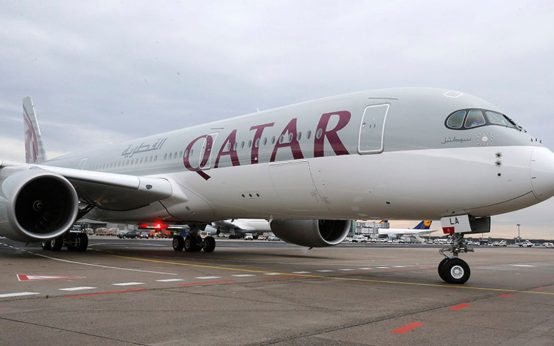 In-Flight Altercation on Qatar Airways Leads to Police and FBI Response
 Virginia Residents Sue Over Alleged Immigration Violations
 Updates on Key International and Domestic Events
 Pope Leo XIV Completes South American Tour with Farewell Mass in Peru
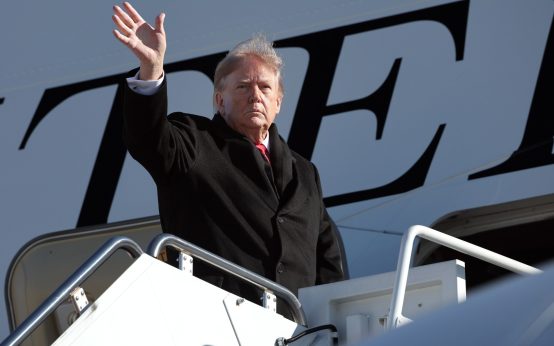 President Trump’s Critical Asia Trip: Key Meetings and Implications
 U.S. Plans to Restrict AI Chip Exports Before Trump-Xi Meeting