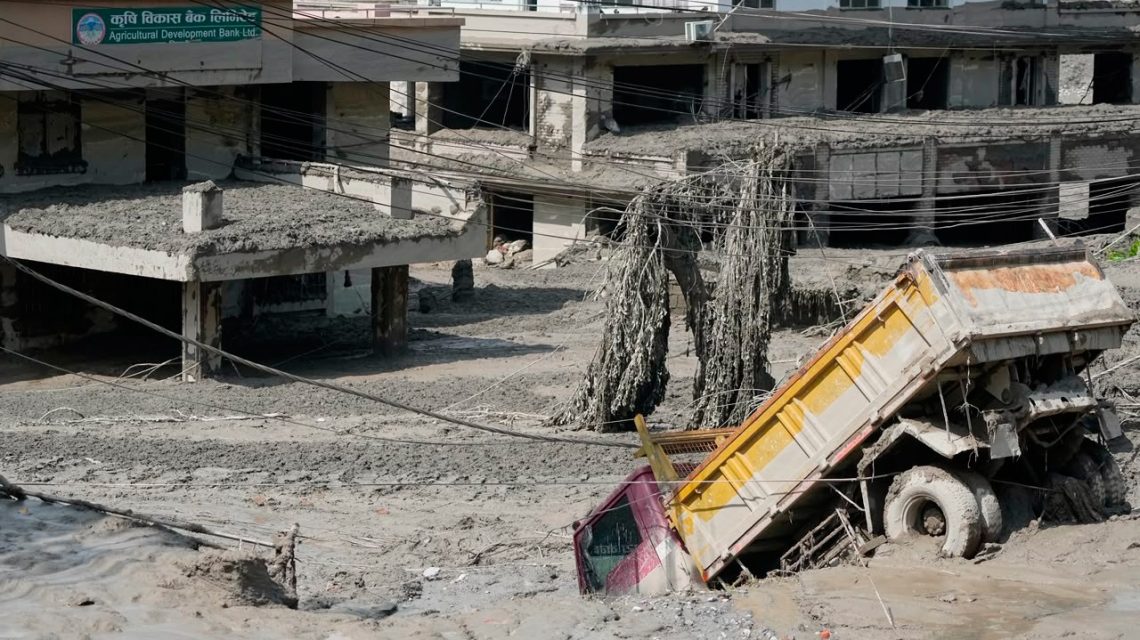
A violent surge of muddy water swept through the Himalayan border crossing at Gyirong Port, leading to widespread destruction. This disaster, which occurred on a Wednesday, affected communities in northern Nepal and Tibet.
Surveillance footage showed individuals fleeing as a torrent of mud and debris flowed down from Nepal, consuming buildings in its path. At least eight fatalities were reported, and hundreds are missing following an avalanche of ice and rock that blocked a river, triggering a sudden flood downstream.
The impact was felt first in Nepal’s Rasuwa district before affecting the Chinese side of the border, causing power and communication failures. Rescue operations commenced immediately. Authorities reported that 384 tourists are unaccounted for, including 291 foreigners from India, the U.S., the UK, and Malaysia. Nepal appealed to India and China for aid in rescue efforts.
We have asked both India and China to help us with the rescue efforts,said Sasmit Pokharel, a Nepalese government spokesperson.
Rasuwa district experienced similar flooding in the past. In August 2025, a glacial lake overflowed, resulting in casualties and infrastructure damage. The recent flood was likely triggered by an ice and rock avalanche from a glacier in Nepal, blocking the Lhende Khola River.
Flash Flood Triggers
Climate experts from the International Centre for Integrated Mountain Development attributed the flood to the blocked river, which released a sudden surge. This disaster highlights the growing necessity for early warning systems in an area increasingly exposed to climate change-related hazards.
The Himalayan region is particularly vulnerable due to faster warming, associated with climate change. Research found that glacier ice loss in the Hindu Kush Himalaya has doubled since 2000 due to increasing global temperatures.
China’s Response
Chinese President Xi Jinping ordered comprehensive efforts to find the missing after the disaster. Xi called for the evacuation of at-risk residents and prompt medical treatment for the injured. He emphasized the importance of monitoring and strengthening early-warning systems.
Chinese Premier Li Qiang instructed authorities to verify missing and affected persons and directed coordination with other countries. Vice Premier Zhang Guoqing traveled to the affected area to oversee response operations.
The People’s Armed Police dispatched 145 officers to Gyirong Port. Reports indicate that drone footage showed port buildings buried by debris. China’s Ministry of Finance and Ministry of Emergency Management allocated 120 million yuan, approximately $17.9 million, to support rescue operations.
This article includes information from The Associated Press.
 British Police Arrest Man Suspected of Terror Plot
  Activists Push for Nationwide Ban on Child Marriage in the U.S.
  Investigation into Alleged Incident at Cornell University
  Rising Drone Threats Highlight Vulnerabilities in Moldova’s Airspace Defense
  Bolivia Faces Security Test Amid Unrest
 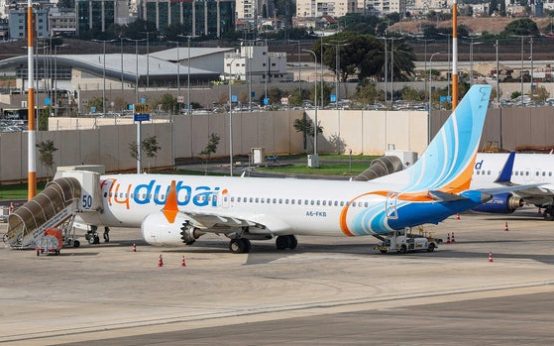 Incident on FlyDubai Flight Raises Security Concerns