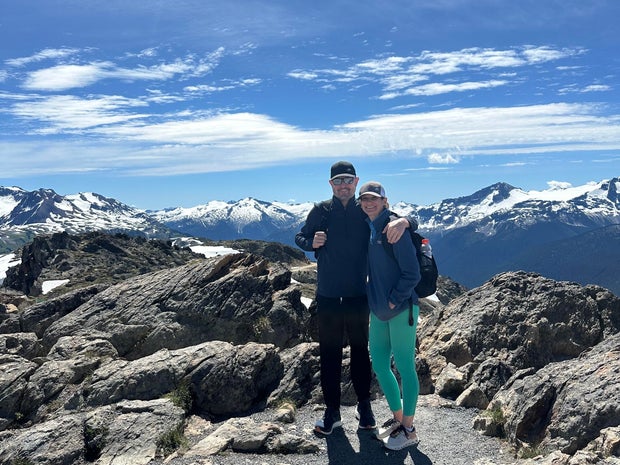
Ryan Goepel, a Florida father of three, faced a dire health crisis that unexpectedly altered his life. Initially thinking his knee pain was a typical gout flare-up, Goepel visited his doctor when the pain persisted. Following initial medication and tests, his doctor called with urgent advice: Goepel’s immune system was severely compromised, prompting an immediate hospital visit.
Upon arrival at the hospital, Goepel met an oncologist who informed him that he had acute myeloid leukemia (AML), a blood cancer known for its critical nature and a five-year survival rate of approximately 30%. The doctors were pessimistic and suggested hospice care due to the severity of his condition.
Despite grim prospects, Goepel and his girlfriend sought a second opinion and transferred to Sylvester Comprehensive Cancer Center in Miami. A biopsy confirmed AML with adverse-risk genetic markers, meaning standard chemotherapy might worsen his condition rather than help.
“My girlfriend refused to accept defeat,” Goepel stated. “She fought for a second opinion and pushed for alternative paths.”
At the cancer center, Goepel found hope in a clinical trial led by Dr. Justin Watts. The trial tested whether medications typically prescribed to elder AML patients could benefit younger ones. Given Goepel’s genetic disease markers, he was seen as a fitting candidate.
Joining the trial seemed an obvious choice for Goepel, who embraced the regimen fully. Participating patients, including Goepel, started treatment immediately with impressive outcomes. Within two weeks, Goepel entered remission, an outcome he called “bonkers.” Out of 36 patients, 25 experienced significant progress with 19 achieving complete remission.
Standard treatment for adverse-risk AML typically results in only 44% of patients achieving similar results, while the trial showed decreased hospital time, fewer blood transfusions, and reduced infections.
Afterward, Goepel required a bone marrow transplant, a procedure that can be crucial for leukemia recovery. Both of his sisters matched perfectly, allowing a successful transplant in November 2024.
Dr. Mihir A. Shukla from NYU Langone’s Perlmutter Cancer Center, who was not part of Goepel’s treatment, commented that such trials might alter longstanding approaches to AML treatment if successful.
Following his transplant, Goepel spent significant recovery time in the hospital and under home isolation. He faced complications like rotavirus and pneumonia but managed to overcome them. Two years later, Goepel remains cancer-free, an outcome Dr. Watts remarked as unlikely without the trial.
Reflecting on his journey, Goepel acknowledges life’s fragilities, but also embraces its joys. He married his girlfriend in November 2025, on the anniversary of his remission, and resumed activities he once feared were lost.
“Life isn’t about returning to normal,” Goepel shared. “It’s about living without the constant fear of cancer’s return and truly enjoying life’s moments.”
Research continues to explore treatment avenues for adverse-risk AML patients, and Goepel’s care team remains vigilant to ensure his ongoing remission.
 Scientific Debate Surrounds Mysterious Object Near the Sun
 The Future of MAHA in American Health Politics
 Insulin Cost Caps Gaining Support Amid Rising Prices
 A Personal Journey Through Encephalitis
 Low-Cost Medication May Benefit Stroke Survivors
 Voyager 1 Reaches Light-Day Distance from Earth