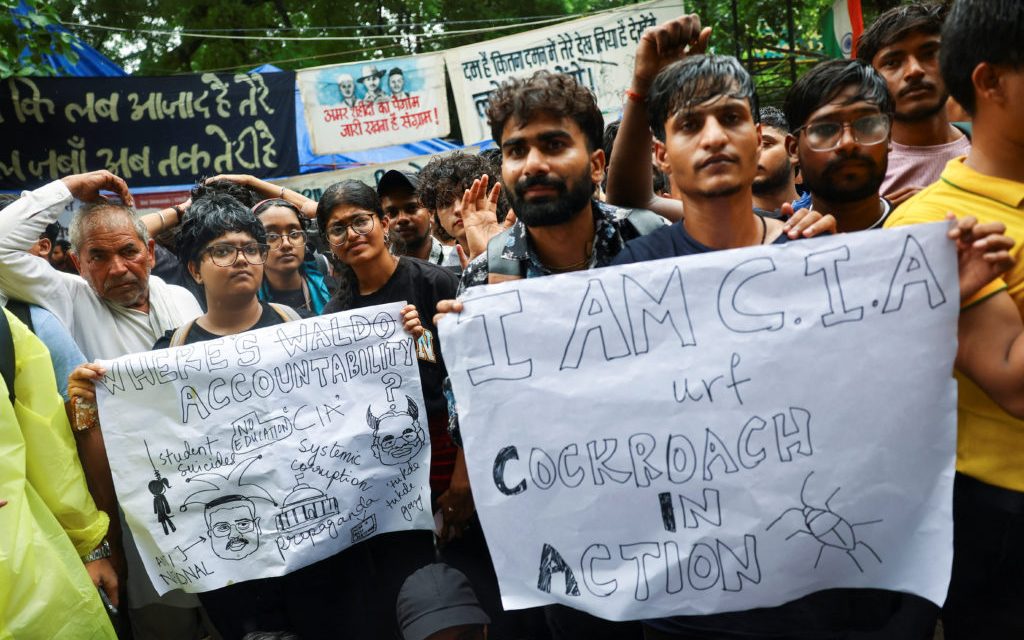
Tens of thousands of young Indians have begun calling themselves ‘cockroaches.’ This unusual phenomenon stems from frustration over leaked national entrance exams and has ignited one of India’s most significant youth-led protests in years. This movement serves as a direct challenge from Generation Z to Prime Minister Narendra Modi, spreading across various Indian cities despite government resistance.
Understanding the Gen Z ‘Cockroach’ Movement
The movement started with a derogatory remark. India’s chief justice compared unemployed young individuals to ‘cockroaches’ during a court session. Students embraced the label and turned it into a rallying cry. Abhijeet Dipke, a graduate student from Boston University, suggested online that ‘what if all Cockroaches come together?’ He soon developed a website and social media presence for the ‘Cockroach Janata Party’ (CJP), a satirical reference to Modi’s ruling party, BJP. The CJP’s Instagram page gained over 25 million followers, surpassing BJP’s following.
The Activists’ Demands
The ‘cockroach’ insult followed the Ministry of Education’s decision to nullify an undergraduate medical exam due to leaked questions. This news outraged two million students who had taken the expensive test. In India, competitive entrance exams are vital for students’ futures, providing opportunities for social mobility. Allegations of leaks and corruption threatened students’ hard work, with reports linking the scandal to at least 20 student suicides.
Activists demand the removal of the education minister, stricter penalties for leak perpetrators, and fee compensation when exams are invalidated. Their broader demands include more women in parliament, a freer media, and accountability measures like arresting the chief election commissioner if votes are erased.
Government and Police Response
This week, clashes erupted as CJP protesters advanced toward Parliament. Accusations arose that police used excessive force, deploying tear gas, batons, and even pellet guns against unarmed students. Despite the crackdown, the movement has only gained momentum. ‘If the government thinks that doing this with Gen Z can stop us, then that won’t happen,’ said student Sona Bisht.
Protests have spurred nationwide support. Many are sending food and supplies to students using delivery apps, helping sustain the movement.
Broader Political Reactions
Opposition leader Rahul Gandhi and others support the protests, criticizing the government’s failure to address youth issues. Government supporters and some media outlets depict protesters as anarchists with foreign influence. Rohit Chopra, a professor and fellow at Stanford University, highlighted the weariness with labeling any government criticism as ‘anti-national.’
After weeks of silence, Modi announced swift judicial actions to address the exam scandal but refrained from dismissing the education minister, a key protester demand.
The Protests’ Distinct Nature
India has experienced significant protests before, but analysts believe this movement is different. It doesn’t merely oppose a policy; it challenges the authority of Modi himself. Chopra noted that the movement directly attributes police brutality to the Prime Minister and demands his accountability.
Even if the immediate outcomes are uncertain, the movement has already affected Modi’s public image. The protests underscore the importance of a free press in maintaining a robust democracy.
 President Trump’s Pre-Midterm Interview on Key Issues
  Trump’s 2024 Reelection and Evolving Voter Dynamics
  Defense Secretary Emerges as Key Player in the Trump Administration
  Hegseth’s Vision for the Military: Balancing Tradition and Innovation
  Significant Funding Boosts Ken Paxton’s Texas Senate Campaign Amid Tight Race
  U.S. States Extend Gas Tax Waivers Amid Rising Fuel Costs Due to Iran Conflict