Incident Overview
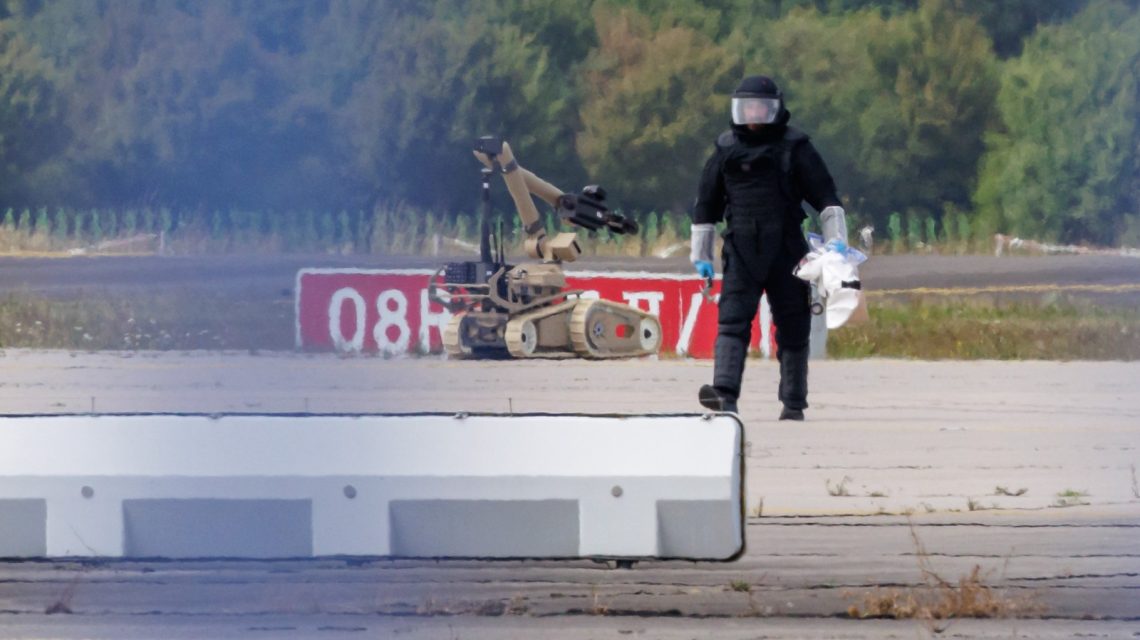
Germany has encountered what its Interior Minister describes as “a hybrid attack scenario.” A drone equipped with explosives was discovered and neutralized at Leipzig airport in Saxony. The Interior Minister, Alexander Dobrindt, stated, “We are talking about a professional hybrid threat situation.” The drone’s presence at the airport indicates a new type of threat.
Concerns and Reactions
The incident has prompted officials and experts to reconsider the nation’s security status. There is a rising concern over whether Germany is engaged in a form of war, and if so, with which entities. Hybrid warfare typically occurs below the level of open conflict, making responses challenging. According to Holger Muench, President of the Federal Criminal Police Office, Germany noted over 1,000 suspicious drone overflights in 2025. However, the Leipzig incident stands out as particularly serious.
Security and Intelligence Analysis
German security professionals suspect that Russia might be involved, with China also considered a potential part of the threat landscape. Reports indicate the drone was spotted late Tuesday, joining two Ukrainian Antonov transport planes. It reportedly entered the airport territory from the south at around 7 p.m., carrying a ball of explosives, likely Semtex.
Additionally, a DHL aircraft sustained damage due to an object collision during the airport’s closure response, as detailed in an internal, albeit unofficial, report.
Focused Concerns in Leipzig
Leipzig serves as a hub for DHL deliveries and military support for Ukraine. It is a focal point for intelligence activities by Russian and Chinese operatives. In a noteworthy case from 2025, Chinese national Yaqi Xiao was convicted for spying, passing sensitive data on flight schedules and military cargo to another Chinese agent, Jian Guo, who is linked to a far-right German politician.
Expert Opinions
Security expert Joachim Krause of the University of Kiel attributes this incident to increasing threats from Russia, linked to its ongoing conflict in Ukraine. Krause emphasizes the need for Germany to recognize the nonlinear warfare from Russia, which includes political tactics and covert operations before potentially escalating to overt aggression. He criticized Germany’s current preparedness against drone threats and called for stronger governmental action.
Potential International Implications
Juergen Kremb, a China intelligence expert, warns that such an attack constitutes state terrorism. He highlights the threat’s severity, asserting that even indirect attacks with drones on German soil are significant. Kremb warns about the close collaboration yet competitive nature between Russian and Chinese intelligence services, noting the difficulties in countering drone threats.
Krause points out Germany’s inadequate technical capabilities and coordination issues among the various security and defense agencies, which may have emboldened adversaries to increase their attacks. He urges the German government to display stronger resolve and clear strategies to address this pressing threat.
 New Jersey Voter Fraud Prompts Renewed Push for SAVE Act
  Concerns Over Changes to Voter-Registration Form for Americans Abroad
  Trump’s 2024 Campaign Targets Young Men Through Cryptocurrency
  Trump’s White House Visitor Center Proposal Gains Bipartisan Support
  State Department Simplifies Passport Process with Online Applications
  Becerra and Hilton Clash in California Gubernatorial Debate