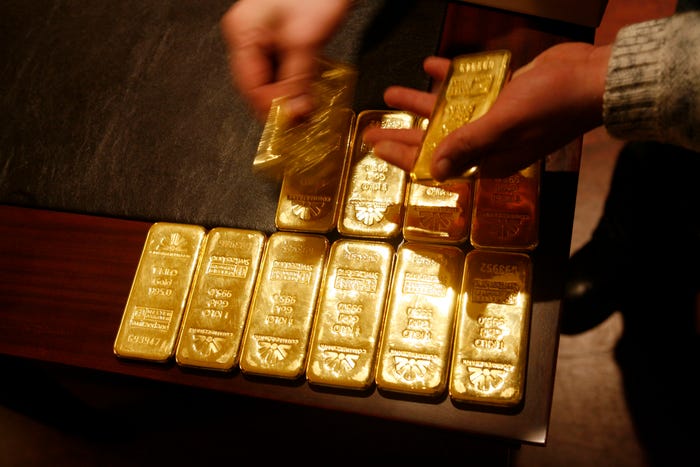
Gold is heading for its most challenging year in over a decade, after facing a dramatic decline in prices. Originally among the hottest investments in 2025, gold has seen a 29% drop from its January high, settling below $4,000 per ounce on Tuesday. This decline is linked to several challenges faced by the U.S. economy and markets this year, including increased interest rates and a withdrawal from risk in stocks.
Gold’s Unusual Market Behavior
Typically considered a safe haven, gold often appreciates when stock markets are volatile or when geopolitical tensions arise. Additionally, gold demand usually increases when inflation fears surface, as it serves as a hedge against a devaluing currency. Yet, in 2026, despite the Iran conflict raising oil and gas prices, gold has not benefited from these conditions, as pointed out by economist David Rosenberg.
Rosenberg notes that gold now follows an unpredictable pattern, diverging from traditional correlations and behaving more like a risk asset. Several factors explain this unusual performance.
Impact of Rising Yields
As rates increase, the opportunity cost of holding gold also rises. CFOTO/Future Publishing via Getty Images pointed out that Treasury yields are high across the maturity curve, driven by ongoing fears about inflation and U.S. fiscal policies. The 10-year U.S. Treasury yield climbed to about 4.91% on Tuesday, up 77 basis points year-to-date.
“Higher interest rates have made gold less attractive, and a stronger U.S. dollar has increased its cost for international buyers,” Adam Perry, senior market analyst at Capital.com, explained.
The Fed paused its rate hikes recently, but investors expect a resume in tightening as we head into 2027. Markets estimate a 75% chance of the Fed raising rates another quarter of a percentage point by year-end and a 21% chance of another similar hike in January.
Declining Demand for Gold
Consumer demand for gold jewelry has also decreased, which might be contributing to the fall in gold prices. Central banks remain major gold purchasers for reserve diversification, but demand from other segments is down. According to the World Gold Council, bar and coin demand fell 19% year-over-year, and global jewelry demand is down 17%.
In the U.S., even though gold jewelry revenue is up, unit sales are down with growth concentrated at higher price points. Lower-priced merchandise is underperforming, as reported by analytics firm Tenoris.
“The economy’s K-shaped structure may affect gold’s decline, with aspirational shoppers pulling back due to inflation,” Tenoris stated.
This aligns with a global slowdown in jewelry and luxury goods purchases, particularly in the U.S. and China.
Influence of AI Market Sell-off
Investors may be selling gold due to extreme risk-off sentiment in broader markets. AI stocks suffered significant losses, with the Nasdaq 100 entering an official correction and losing about $2 trillion in market cap since early October. Perry suggested this may have led investors to liquidate gold alongside equities.
Rosenberg noted margin calls on tech positions forced some investors to sell gold in October. With debit balances in margin accounts sitting near record highs, investors faced calls to backfill losses on their stock holdings.
Historical Patterns in Gold
Gold often sees extended stagnation following a major rally. After gold’s double-digit increase in 2025, it mirrors its post-Great Financial Crisis pattern of slow gains, as highlighted by Jose Torres, senior economist at Interactive Brokers. Gold may now be entering a prolonged sluggish phase, as investors look to other assets for stronger returns.
With limited investor demand, gold cannot rally effectively, Torres observed.