
Republican Senate candidates in Iowa and Michigan have expressed a desire to conclude the U.S. involvement in the conflict with Iran. Rising fuel costs in these states have prompted this stance from the nominees.
Rep. Ashley Hinson from Iowa criticized the financial burden placed on Iowans due to the war in Iran. She stated that residents should not be responsible for elevated costs at the pump or grocery stores. Former Rep. Mike Rogers from Michigan echoed her sentiments in a campaign ad, citing the urgent need for the conflict to end.
Both candidates linked the seven-month military engagement to inflationary pressures impacting everyday expenses in the United States. President Trump’s foreign policy has been noted for increasing financial challenges for American citizens.
Hinson proposed several measures to mitigate rising costs. These included pausing the gas tax, halting diesel exports, allowing higher ethanol blends, and introducing a diesel relief program to aid farmers and truckers. She emphasized the need for immediate actions and a successful conclusion to the conflict, advocating for bipartisan cooperation.
Rogers used a grocery store setting in his campaign ad to highlight the economic struggles faced by Michiganders. He called for the cessation of the U.S.-Iran conflict and stressed the possible reduction in energy costs upon its conclusion.
Rogers suggested suspending the state and federal gas tax, which totals 70 cents per gallon. He also proposed a temporary halt on American diesel exports until the conflict ends, asserting that increased supply would help lower diesel prices.
The Strait of Hormuz, a crucial passage for oil export, has been effectively shut down due to Iran’s actions. This has contributed to a significant increase in gas and diesel prices. Currently, the national average for gas sits at $4.48 per gallon, a stark rise from last year’s average, according to AAA. Diesel prices have reached $6.51 per gallon.
Various policy actions continue to unfold as defense and national security remains influenced by global dynamics. The newly announced Homeland Defense Board aims to provide more integrated advice for homeland security, showcasing an evolving defense strategy.
Recent developments in the Middle East also impact U.S. foreign policy. The Iranian-backed Houthi rebels in Yemen have reportedly reassured the U.S. administration regarding attacks on American ships in the Red Sea. The State Department has advised Americans in the region to exercise caution, citing complex tensions.
Sen. John Kennedy from Louisiana predicted a near-term resolution to the conflict in Iran. The situation has led to increased oil and fertilizer prices, but he assured that economic relief is forthcoming.
In related defense news, CIA Director John Ratcliffe met with Ukrainian President Volodymyr Zelensky at an airport in Ireland, hinting at ongoing diplomatic discussions.
 Concerns Over Changes to Voter-Registration Form for Americans Abroad
  Trump’s 2024 Campaign Targets Young Men Through Cryptocurrency
  Trump’s White House Visitor Center Proposal Gains Bipartisan Support
  State Department Simplifies Passport Process with Online Applications
 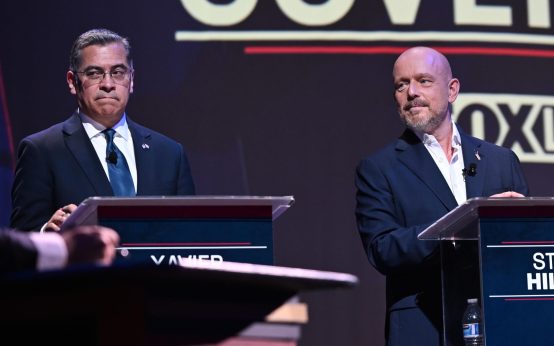 Becerra and Hilton Clash in California Gubernatorial Debate
  California Voters to Decide on $7.5 Billion State Research Fund