At British drugmaker GSK, getting a drug-safety report to the right specialist often consumes hours. Information arrives through emails, paper mail, faxes, and data loggers. Someone must read these, assess priority, and decide where each belongs. Details often require repeated entry and reconciliation as they move between systems.
Lisa-Ann Chiriseri, Director of Drug Safety and Pharmacovigilance Applications at GSK, spoke with Newsweek about this issue. She believes it’s a data problem, not a process one. GSK aims to change how information moves through pharmacovigilance. This area involves collecting and evaluating data on medicine safety, allowing specialists more time for decision-making that requires their expertise.
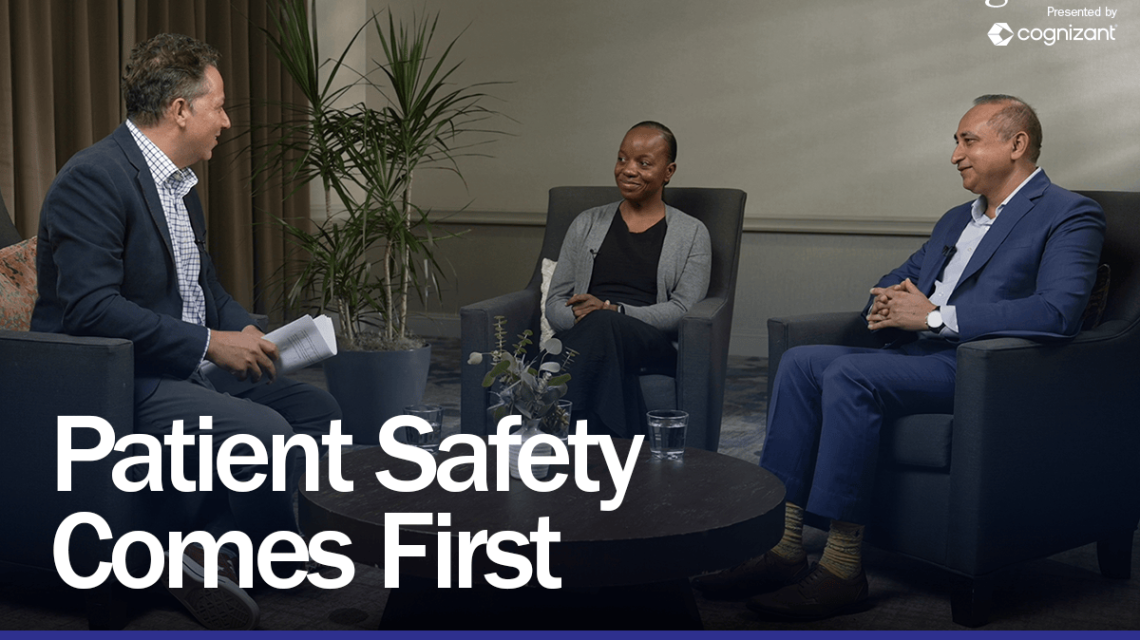
Chiriseri participated in a discussion for the Seeking Value video series by Cognizant. Mohammad Haque, Global Head of Intelligent Enterprise Platforms at Cognizant, joined her. Newsweek‘s Gabriel Snyder moderated. Cognizant collaborates with GSK to automate drug-safety workflows. Haque noted that improving individual tasks has limited value if the next team must reconstruct or reenter the same information.
The problem has not gone away, it has just moved.
The companies examine how a safety report progresses from arrival, through processing, evaluation, and regulatory reporting. Their goal is to preserve information throughout these activities while reducing manual preparation steps.
GSK retains its established safety systems as the primary source of truth but seeks more efficient information movement without replacing underlying systems. Automation decisions start with identifying problems and determining if technology can reliably address them. Some tasks are repetitive and predictable, even those performed by highly trained specialists.
GSK employs both AI-based and conventional automation to classify incoming safety reports, establish priorities, and direct information to specialists. Structuring data as it arrives helps maintain context for later checks and reviews. Haque envisions a more significant role for specialized AI agents in connecting pharmacovigilance activities.
Haque proposed an operating model combining Cognizant’s services with an AI-based platform covering interconnected drug-safety areas from receiving reports to preparing regulatory information. This model would employ around 40 specialized agents supporting activities across the drug lifecycle, including intake, coding, and retrieving evidence. Tasks could run in parallel, reducing wait times between teams.
GSK and Cognizant have pursued narrower automation initiatives. The coordinated agent architecture remains a long-term project. Haque sees it as redesigning information and responsibility movement within the organization.
Human judgment remains crucial, as drug-safety decisions carry regulatory obligations. Activities governed by defined rules differ from those requiring interpretation and domain knowledge. Conventional automation handles predictable tasks, while AI helps prepare information for complex assessments.
The proposed model employs two forms of oversight. In one, agents prepare work, but a professional must act before proceeding with a regulated decision. In the other, agents execute defined workflows, with employees setting thresholds, monitoring performance, and intervening when needed.
We’re not asking for blind trust from our regulators and quality and compliance teams.
GSK builds traceability into applications from the start. Audit trails reconstruct information handling and decision processes. Validation and ongoing monitoring ensure systems remain within limits. Regulation offers a framework to introduce new capabilities responsibly. Establishing safeguards during development, rather than post-deployment, allows innovation while meeting obligations.
GSK and Cognizant are rethinking technology investment assessments. Haque said conventional measures, like the percentage of software-handled activities, don’t fully capture the benefits in drug-safety operations. Tasks may complete faster but not improve speed in investigating or resolving concerns.
We start measuring the outcomes. And the big one is time.
Targets include reducing case processing time and effort for aggregate safety reports by 50%, and shortening time to decision on potential safety signals by 40%. Cognizant also aims for over 90% consistency in quality-control activities.
GSK is moving from pilots to production use. Early results from its work with Cognizant give Chiriseri confidence in the approach.
Success also hinges on employee adaptation. While there are concerns about AI’s impact on jobs, GSK wants workers to use technology and improve their workflows actively. This effort involves citizen development, where employees outside software teams create applications or workflows. These employees know where current systems create unnecessary work.
Chiriseri emphasized reusing existing information and technologies, avoiding constant rebuilding of capabilities. Connecting data across systems can support new workflows without the need to replace every application.
Haque advised companies under heavy regulatory oversight to map business processes and data before introducing AI agents.
Let the agents do the predictable work, make every decision visible and keep people accountable by design.
 The Daily Routine of Klook’s CEO Focused on Fitness and Efficiency
 The Jensen Huang Controversy: Silicon Valley’s Divided Opinion
 California Lawsuit Against OpenAI: Key Details and Implications
 Updates on Key International and Domestic Events
 E.l.f. Cosmetics Breaks Makeup World Record at TwitchCon
 Understanding Credit Freeze, Fraud Alert, and Identity Monitoring