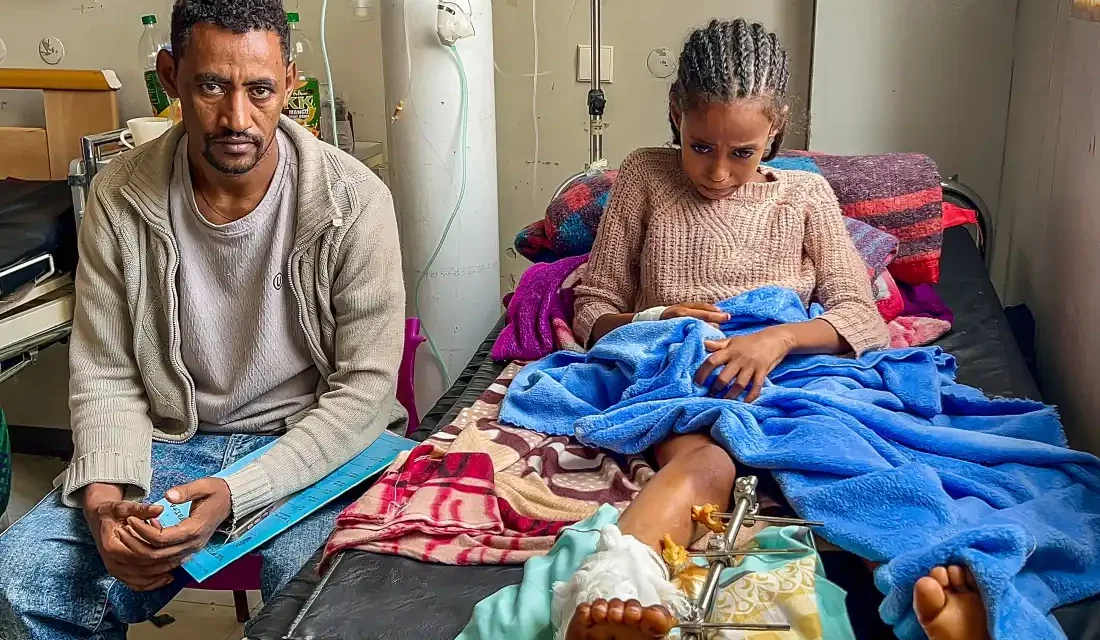
Betelhem, aged 10, rests in a bed next to her father at Ayder Referral Hospital in Mekelle, Ethiopia, on October 6, 2026. She sustained injuries from an artillery attack in Alamata. Fighting between the Tigray People’s Liberation Front and Ethiopian federal forces erupted on September 23, raising concerns of a resurgence in the 2020-2022 civil war and straining the healthcare system.
“It was chaos for nearly a week,” recalled a surgeon in Ethiopia. “No cell service, no electricity,” he added. The ceasefire between rebels and the Ethiopian government fell apart on September 24. The surgeon and his colleagues treated a steady flow of injured individuals in the hospital.
The surgeon, wishing to remain anonymous, expressed fear of repercussions for treating rebel fighters. “The emergency room was flooded with war trauma patients,” he described. “There was no space to step.” Recent violence increases fears of another civil war in Ethiopia. The military accused Sudan, Egypt, and Eritrea of supporting Tigrayan militants allied with rebel groups against Prime Minister Abiy Ahmed.
In late October, drone strikes killed at least 15 people, including children. The WHO Director-General, Tedros Adhanom Ghebreyesus, expressed concern about the fragile healthcare system nearing collapse. During the initial clashes, the Tigray surgeon operated on victims from gunfire, drone strikes, and mortar attacks. The lack of cell service added to the confusion of incoming patient numbers.
Signs of renewed conflict had appeared when Tigrayan rebels ousted regional leaders in May. The Ethiopian government cut funds, impacting Tigray’s hospitals. This financial strain saw doctors receiving no pay for months.“It’s an open wound,” said the Tigray surgeon. “It was left to heal but never closed,” he lamented.
Tedros Adhanom Ghebreyesus, a Tigrayan and former Ethiopian health minister, outlined a dire situation in northern Ethiopia in a social media message. The hospitals face shortages of workers, medicine, and ambulances, while WHO and the U.N. work to deliver medical supplies.
Global public health experts note targeted healthcare attacks as a growing concern in conflict zones. In 2026, WHO data reported healthcare facility and worker attacks in 19 countries, resulting in over 960 deaths. A Pakistani airstrike on an Afghan drug rehab center was the largest event; other countries affected include Sudan, Lebanon, and Ukraine. Funding cuts to global health initiatives compound the problem, including the dismantling of USAID after 2025.
Lindsey Green from Physicians for Human Rights explains how attacks on healthcare undermine the standard of protection in conflict situations. During the Tigray war, around 600,000 people died. Tigray’s government-imposed blockade left health facilities partially functional. Despite a 2022 peace agreement, healthcare attacks persisted. A recent collaborative report detailed assaults on ambulances and facilities from 2020 to 2024. A Mekele health worker recalled Ethiopian forces occupying a hospital and forcing staff to desecrate Tigrayan rebel uniforms.
Research confirmed targeted attacks on healthcare by both rebels and government forces as revenge for perceived alliances or doctors treating enemies. Victims lack means to seek justice. NPR’s inquiries to Ethiopia’s Foreign Ministry and Prime Minister’s Office went unanswered.
Northern Ethiopia doctors explain how healthcare attacks and subsequent foreign aid cuts leave the region unable to recover. A Tigray health worker counted over 100 childbirth-related deaths, attributing them to the health system’s dire state. A lack of workers, medicine, and fuel incapacitates ambulances.
A review of 2020-2022 Tigray birth data showed a fivefold increase in maternal mortality rates. Clinics and hospitals largely ceased serving pregnant women. Systemic rape and sexual violence exacerbated the crisis. Health centers remain targeted by unidentified groups stealing supplies, including medication and equipment.
Concerns grow over Ethiopia’s healthcare capacity amidst ongoing conflict. Many Tigray doctors have already left the country. “It’s a repeat of the past,” said a surgeon in Mekele, expressing insecurity.
 In-Flight Altercation on Qatar Airways Leads to Police and FBI Response
 Virginia Residents Sue Over Alleged Immigration Violations
 Updates on Key International and Domestic Events
 Pope Leo XIV Completes South American Tour with Farewell Mass in Peru
 President Trump’s Critical Asia Trip: Key Meetings and Implications
 U.S. Plans to Restrict AI Chip Exports Before Trump-Xi Meeting