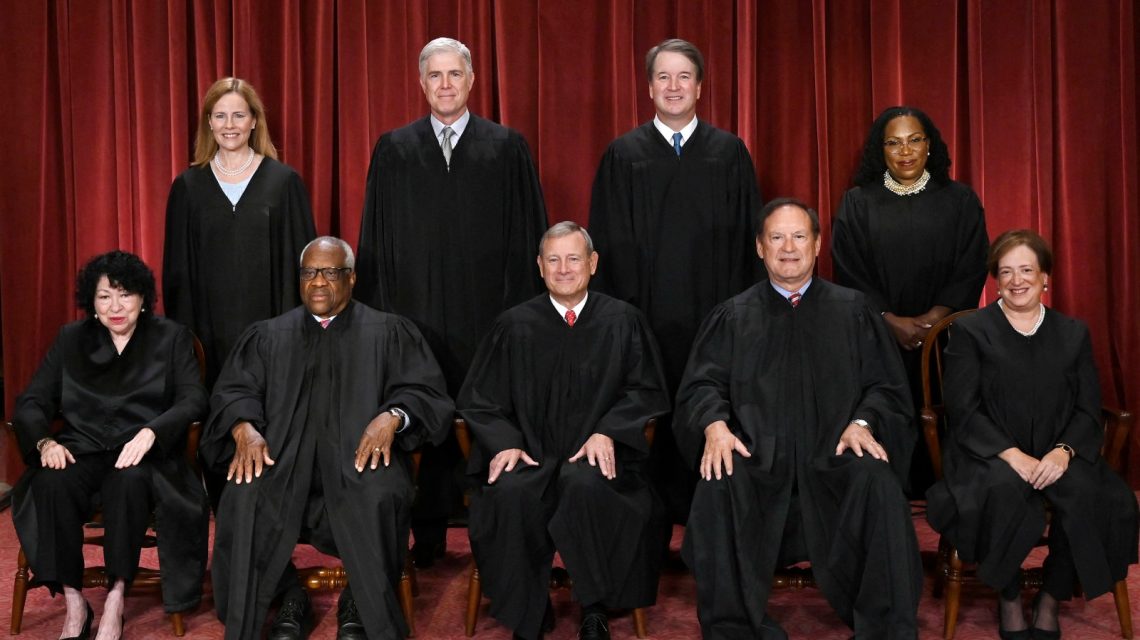
The House of Representatives voted on Wednesday on a proposed constitutional amendment aimed at permanently setting the U.S. Supreme Court at nine justices. This vote forced lawmakers from both parties to publicly take a stance on a contentious issue surrounding the judiciary.
Details of the Proposed Amendment
The measure, known as the “Keep Nine Amendment,” sought to incorporate the current size of the court directly into the U.S. Constitution, rather than relying on ordinary federal law. Republicans pushed for this amendment to hold Democrats accountable amidst discussions to expand the Supreme Court.
All Republicans supported the amendment, but it failed to secure the required two-thirds majority needed for passage. Representative Don Davis of North Carolina was the only Democrat to vote in favor. The final vote yielded 212 votes in favor, falling short of the necessary 290 votes.
Republicans’ Rationale for the Amendment
Republicans argued that the amendment was crucial to prevent future efforts to expand or “pack” the Supreme Court by adding more seats. Proponents emphasized that setting the number at nine justices would shield the court from political influences and maintain a structure that has been in place for more than 150 years.
“This proposed constitutional amendment would undermine our system of checks and balances,” stated Representative Mary Gay Scanlon, a Pennsylvania Democrat.
Historical Context of Supreme Court Composition
The Constitution establishes the Supreme Court but leaves the number of justices unspecified, delegating this task to Congress through legislation. Throughout U.S. history, the court’s size has fluctuated, ranging from five to ten justices.
The present configuration of one chief justice and eight associate justices dates back to the Judiciary Act of 1869. Advocates of the amendment argue that this nine-member court has ensured stability for generations.
Arguments for Expanding the Supreme Court
Calls for increasing the number of Supreme Court justices have gained traction, particularly following several significant rulings and the establishment of a 6-3 conservative majority. Advocates assert that expansion could counteract partisanship and restore public trust in the court.
Democrats and legal experts have also discussed other reform ideas, such as implementing a formal ethics code, setting term limits for justices, and altering recusal standards. They claim these reforms are necessary due to the court’s substantial impact on national policy and constitutional interpretation.
Critics of expansion argue that it may lead to a cycle of political retaliation, where parties in power might increase the number of seats to ensure favorable rulings. Such actions could compromise judicial independence and further politicize the Supreme Court.
Path to Passing a Constitutional Amendment
Passing a constitutional amendment is challenging. Article V of the Constitution requires a two-thirds vote in both the House and Senate before sending it to the states for ratification. Following congressional approval, three-fourths of the states, currently 38 states, must ratify the amendment for it to become part of the Constitution.
The amendment’s future is uncertain given these stringent requirements, making the vote largely symbolic. Republicans aim to highlight Democrats’ stance on maintaining the Supreme Court’s existing size ahead of the midterm elections.
 Maryland First State to Restrict Electronic Pricing in Grocery Stores
  Activists Push for Nationwide Ban on Child Marriage in the U.S.
  Democratic Hopes and Historical Warnings in 2026 Senate Race
  Republicans Face Challenges Amidst Cost of Living Concerns
  A Different Kind of Fall for Congress This Year
  Cornel West and Sean Hannity Discuss Differences on Podcast