
ICE to Equip Officers with Body Cameras
Immigration and Customs Enforcement (ICE) plans to provide its officers with body cameras within the next two months. This initiative, set to complete by the end of September, is part of an effort to increase accountability amid scrutiny following recent fatal shootings linked to the immigration policies of President Donald Trump. However, the policy governing the release of this footage includes stipulations that might limit public access to certain videos.
Policy on Video Release Raises Questions
Despite the significant investment by taxpayers, who are contributing tens of millions of dollars toward this technology, ICE’s policy indicates that the release of footage will depend on whether it serves the agency’s “best interests.” This approach allows the agency to selectively release videos, potentially maintaining a positive public image by controlling the narrative around controversial events.
Experts suggest this selective disclosure, although common in some law enforcement bodies, is typically not as explicitly outlined in policy documents.
Christopher Schneider of Brandon University, who has authored works on body camera use, points out that ICE’s policy effectively acknowledges cameras as tools for image management. They are seen as devices to cast law enforcement in a favorable light.
Conditions for Footage Release
The policy mandates officers to record during various enforcement actions, including arrests, emergency responses, and while executing search warrants. Following any serious incidents, such as shootings resulting in death or injury, a review by a committee comprising top ICE officials determines if footage will be released. If approved, videos could become public within 72 hours. However, the ICE director holds the power to delay or withhold release indefinitely under “specific and compelling circumstances,” although the policy lacks details on what constitutes such circumstances.
In contrast, practices across the U.S. vary widely. For instance, Chicago’s police watchdog regularly releases footage of serious incidents within a set timeframe, unlike Philadelphia, where no formal policy exists for such releases.
When ICE footage is released, it will undergo redaction to remove officers’ identifying details to protect their privacy.
Cost and Deployment of Cameras
In July, ICE spent $30.9 million on body cameras from Axon, a well-known manufacturer based in Arizona. This purchase followed swiftly on the heels of two fatal incidents involving ICE officers. These incidents, unrecorded at the time, added to congressional frustration, especially after allocating $20 million for camera procurement earlier in the year. Despite earlier promises, ICE projects full deployment by the end of September, trailing initial timelines.
Senator Susan Collins of Maine and U.S. Representative Henry Cuellar of Texas are among the lawmakers closely following this deployment, with training already underway in areas like Houston, where significant resources are being directed.
Public Discourse and Anticipated Use of Footage
ICE is likely to release footage that supports public narratives of immigration enforcement efforts, potentially portraying officers as courageous and immigrants as threats. This approach aligns with broader law enforcement strategies that emphasize the necessity of their roles to the public.
Tom Homan, former acting director of ICE, has publicly highlighted the role of body cameras in providing exonerating evidence for officers more often than capturing misconduct.
Background on ICE’s Adoption of Body Cameras
ICE began camera trials in 2021, during President Joe Biden’s administration. Initially slow to expand, the distribution of 1,400 cameras happened over three years, contingent on available funding. President Trump, upon resuming office in 2025, rescinded Biden’s mandate for federal body camera use. Major purchases in 2023 stemmed from existing contracts rather than immediate responses to enforcement demands.
Jason Houser, former chief of staff under Biden, criticizes the timing of the camera rollout. He points out the political motivations behind the move, arguing that the implementation is too reactive and does not ensure the safety of either officers or the public.
 State Department Simplifies Passport Process with Online Applications
 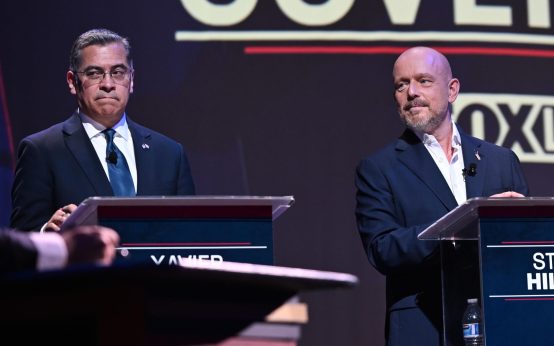 Becerra and Hilton Clash in California Gubernatorial Debate
  California Voters to Decide on $7.5 Billion State Research Fund
 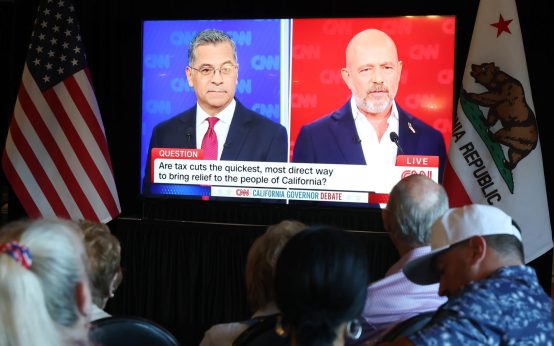 Highlights from the California Gubernatorial Debate: Becerra vs. Hilton
 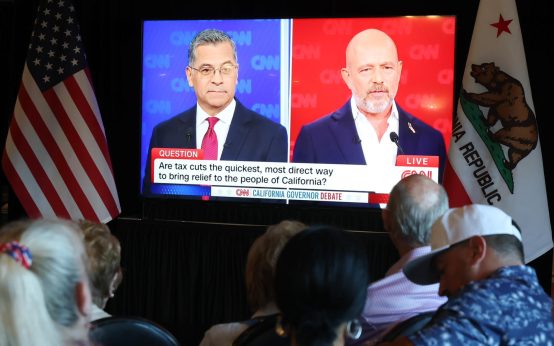 Becerra vs. Hilton: The Debate and Key Issues in the California Governor Race
  Senate Confirms New Labor Secretary