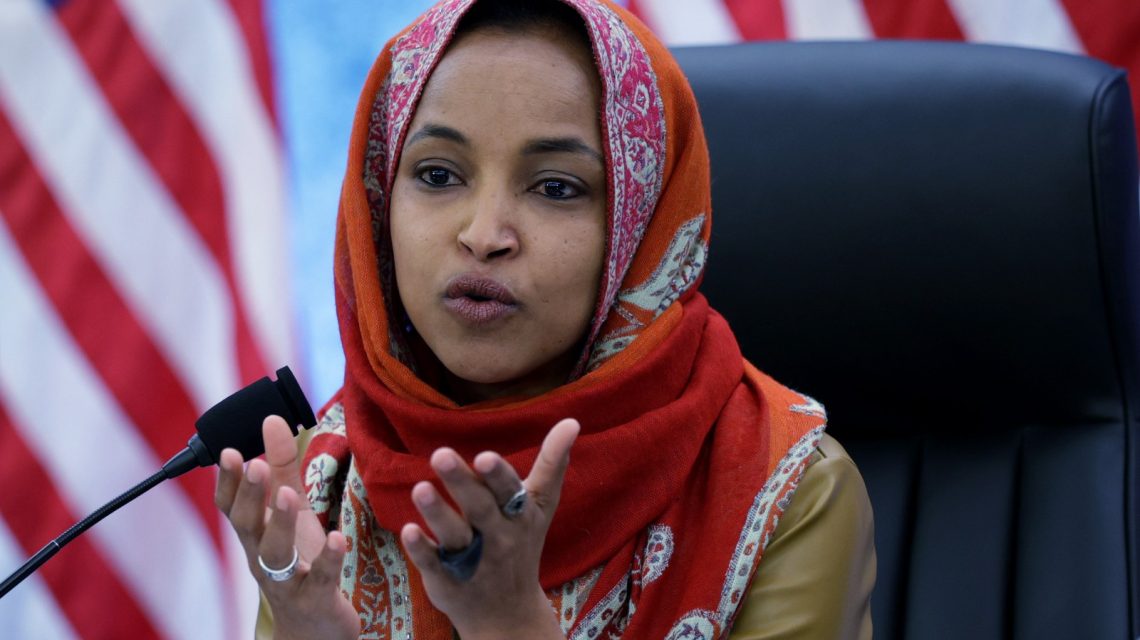
U.S. Representative Ilhan Omar shares her life story of fleeing from Somalia’s civil war, depicting her early years, family background, and the path that led to resettling in the United States. In her 2020 memoir, This Is What America Looks Like: My Journey From Refugee to Congresswoman, Omar recounts experiences of conflict in Mogadishu and her family’s journey through Somalia and Kenya before reaching America.
The Minnesota Democrat has faced much criticism from MAGA supporters and conservative adversaries regarding unproven claims about her former husband, Ahmed Nur Said Elmi. Omar has consistently denied allegations about her marriage being fraudulent or Elmi being her brother. Federal authorities conducted a search of Omar’s residence in Washington on October 12, obtaining a DNA sample. Her sister, Sahra Noor, also voluntarily cooperated with investigators. There has been no legal finding of immigration fraud against Omar.
Omar’s memoir frequently mentions Ahmed Abdisalan Hirsi, her first husband, but omits any reference to Elmi in the chapter covering 2009-2011. Persistent rejection of allegations concerning Elmi has been a hallmark of Omar’s addresses. In 2019, The Daily Beast disclosed that claims originated from a 2016 anonymous post on the Somali diaspora forum, Somali Spot. This post lacked evidence and was linked to a known troll.
Omar reflects on the intense scrutiny she endured, explaining her civil and religious marriage separations in statements. She expressed regret for responding to such allegations, labeling them as baseless conspiracy theories, echoed by President Donald Trump in 2019.
Discussions on Ilhan Omar’s Age
Jim Geraghty of National Review questioned Omar’s birth date, picking apart a chapter titled “War: 1989-1991, Mogadishu, Somalia.” Omar mentioned being eight when Somalia’s civil war erupted. Geraghty argued this would indicate a birth year of 1981, yet her memoir systematically aligns the war’s start with 1991, consistent with her birth date of October 4, 1982.
The conflict’s start is not easily pinned down. The U.N. mentions the conflict starting in January 1991, while MSF associates it with December 1990. Despite earlier riots in July 1989, Omar didn’t reference these events when recounting her age at the war’s outset.
Omar notes ceasing to wear the hijab at 16, later returning to it at 23. At 20, she juggled motherhood while attending college. Her child, Isra Hirsi, was born on February 22, 2003, when Omar was indeed 20.
Will Chamberlain from the Article III Project scrutinized Omar’s recounting of age-related events. His questioning of her stated age during a 2011 African trip doesn’t match the chapter’s timeline: 2011-2012. Separate statements about her age and courses taken affirm her listed birth year.
In a February 13, 2014 op-ed for the Minnesota Star Tribune, Omar called herself a “31-year-old Somali-Muslim woman” in a piece supporting her birth date. Amid violence during a Democratic-Farmer-Labor Party caucus that injured her, Omar described societal perceptions of her role in politics.
Despite continuous inquiries, Omar’s office didn’t respond to Newsweek regarding the memoir.
Relocating to the United States
Omar and her family contemplated moving to the U.S. during their stay at the Utange refugee camp in Kenya. Initially resistant to leaving, young Omar was swayed by her father’s portrayal of the U.S. as a land of opportunity. The family proceeded through a refugee resettlement process, undergoing preliminary and health screenings.
While settling in Arlington, Virginia, Catholic Charities facilitated the move. Omar recounts the allure of America contrasted with initial disappointments. Her father comforted her by promising a more favorable America.
Arriving in the U.S., the family adjusted to life in a two-bedroom apartment, securing Social Security cards. Omar and her siblings received additional medical screenings to meet school entry requirements. Despite her father’s concerns, they resubmitted to vaccinations received earlier in Kenya.
 Mayor Mamdani’s Policing Reform Plans
 Gen Z Voter Shifts and Their Impact on the 2026 Midterm Elections
 Disappearance of US Senate Candidate Raises Questions
 DOJ Rule Change Reduces Appeal Time for Immigrants Facing Deportation
 Hakeem Jeffries’ Bid for House Speaker Faces Progressive Hurdles
 Ohio Judge Dismisses Defamation Lawsuit by Rep. Max Miller