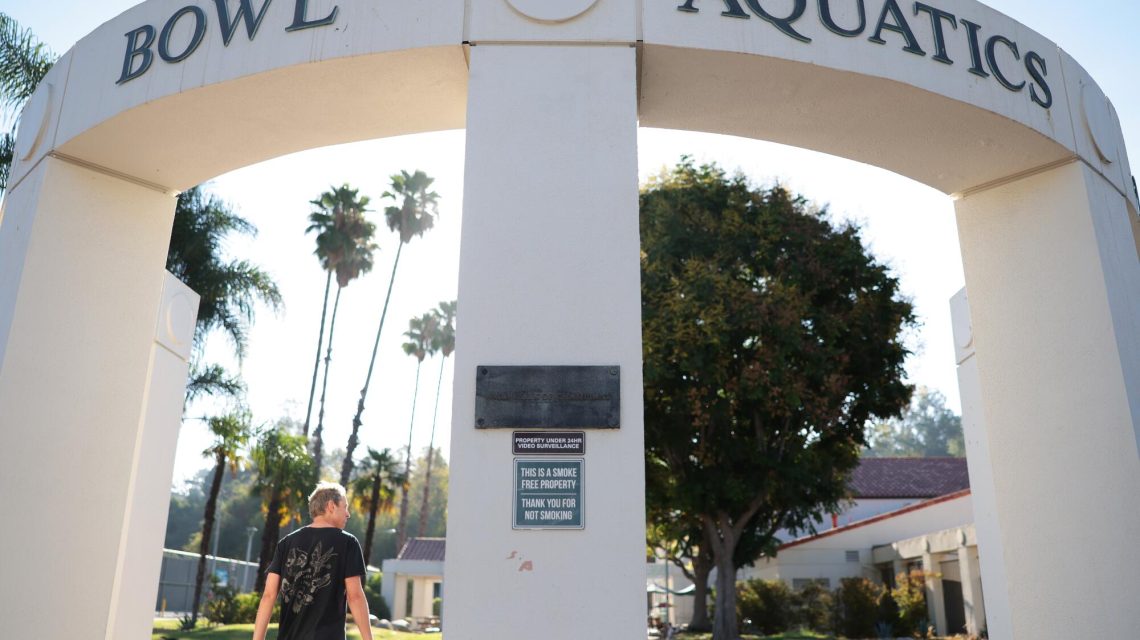
The Rose Bowl Aquatics Center in Pasadena heralded their selection to host the diving competition for the 2028 Summer Olympics as a significant achievement. However, users of the facility are now facing the reality that pre-Olympic enhancements may displace them from three popular swimming pools for over a year.
The center is set to close as early as April next year and will remain inaccessible to its regular visitors until the Olympics end in 2028. This closure will affect over 400,000 annual visitors who utilize the center for swimming, diving, water polo, and aqua aerobics. The closure includes two 50-meter pools, a therapy pool, and two large hot tubs.
The facility operators have not disclosed specific details about the closure, stating that a formal announcement will be made soon. Negotiations on the nature of improvements are ongoing, as confirmed by Jacie Prieto Lopez, vice president of communications for LA28, the Olympic organizing body.
Originally opened in 1990 with funds from the 1984 Los Angeles Olympics, the Aquatics Center now requires an overhaul. Despite its historical significance, it is deemed outdated. Although LA28 is expected to fund some renovations, it’s unclear if they will cover all desired upgrades by Pasadena and the nonprofit managing the center.
The facility has visible deterioration, such as roughened pool decking and cramped locker rooms, along with outdated pumps and filters. Discussions about funding these upgrades continue between LA28 and the center’s managers.
The extensive renovation is expected to benefit LA28 and the Aquatics Center alike, with LA28 investing significantly during its use as an Olympic venue. Nevertheless, regular patrons are concerned about long-term access. Elizabeth Ramirez, a social worker, finds the pool essential for her health, expressing worry over the prolonged closure. Similarly, Lynn Roberts, who utilizes the pool due to mobility issues, shares her concerns about potential lack of access.
The center serves as a community hub, as noted by regular visitor Bonnie Stern, who emphasized the importance of the social connections fostered at the center. Facility rental space includes a café and the Swim Guy shop. Michael Eisenberg, co-owner of Swim Guy, worries about business impacts as patrons disperse to other venues.
Efforts are underway to find alternative venues for community groups. Rose Bowl Masters Swimming has already arranged workouts at Occidental College and is in talks with other facilities.
Financial losses are anticipated during the closure, with the Aquatic Center reporting significant revenue from admissions and other services. The center’s “RBAC on the Road” initiative aims to secure income by relocating activities to different facilities.
The decision to relocate Olympic diving to the Rose Bowl was driven by logistical advantages and potential cost savings compared to previous plans at Exposition Park. Planned upgrades include new spectator seating and the replacement of the existing diving platform.
Supporters highlight the long-term economic benefits, projecting that the games and ensuing events will boost local hotels, restaurants, and shops, adding to Pasadena’s economy. The center could also host future major events, increasing its prominence and profitability.
“This historic opportunity will shine a global spotlight on our community,” the Aquatic Center stated, emphasizing the long-term benefits expected from world attention.
 Cargo Plane Crash at Miami International Airport
  Nick Saban’s Comments on ESPN Spark Debate Over College Sports Regulations
  Marine Veteran Suing Oregon School District Over Curriculum Reimbursement
  Freddy’s American Adventure: From Soccer to College Football
  Tennessee Execution Halted as Issues Persist with Lethal Injection Protocol
  Brock Purdy’s Impressive Start in the 2026 NFL Season