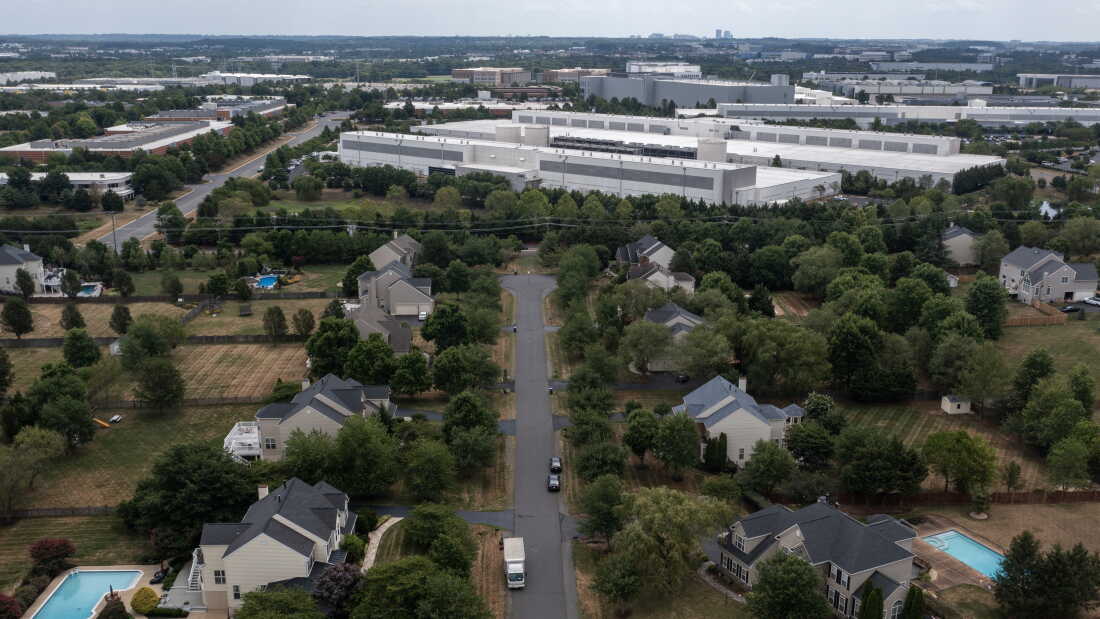
In an aerial view taken on July 17, 2024, various data centers are visible near a neighborhood in Ashburn, Virginia. Northern Virginia hosts 319 mapped data centers, accounting for about 19% of all facilities in the U.S. This image reflects the growing trend in the construction of large data centers, which raises important questions about their influence on the housing market.
To help real estate agents address these concerns, the National Association of Realtors (NAR) commissioned a comprehensive study, the first of its kind, to evaluate the impact of data centers on the real estate market. The findings revealed a striking variation in effects depending on the location.
We talk about data centers as though they are one category, and they are not,said Nadia Evangelou, the principal economist and director of real estate studies for the NAR.
In some counties with numerous data centers, economic growth has been evident. Yet, in others, there has been a strain on energy resources. Data centers house servers that facilitate internet functionality, serving industries like artificial intelligence and basic web operations. The increasing demand for computing power is driving the construction of these large facilities, many of which are near residential areas.
The NAR study utilized several data sets, including the location and physical characteristics of about 1,500 data centers, property values, home sales rates, demographic insights, and feedback from over 2,300 realtors nationwide. The study discovered that while construction is accelerating, these technological hubs are concentrated in a mere 1% of the country.
Evangelou noted, Northern Virginia, Silicon Valley, Phoenix, Central Ohio, and Grant County, Washington, are all very different places. They have different economies, they have different markets, and different reasons for attracting data centers. So when we look at things like home values, employment, electricity rates, we didn’t find one pattern that can explain all of them.
The research highlighted Northern Virginia, with 319 mapped centers, as a major hub. Other notable areas include Silicon Valley, Central Ohio, Central Washington State, and South Texas. In many locations where data centers emerge, the housing markets and income levels already exceeded national averages, showing stability despite the new centers.
Beyond completed facilities, data centers influence markets during construction. In Abilene, Texas, the ongoing development of the Stargate Project, slated to become the nation’s largest at $500 billion, has increased worker influx. This project is expected to finish by the end of 2026, covering roughly 4 million square feet and operated by Oracle for OpenAI.
Steve Stovall, a local realtor, detailed the dual impacts: local revenue growth and strengthened infrastructure, contrasted with the mounting pressure on housing availability. Buyers that are currently in the market are well aware of it because they’re having trouble finding housing,
he said.
The median home price in Abilene is approximately $342,000, up from $250,000 six years ago. The full effects of the Stargate Project on nearby properties remain uncertain, but concerns about energy usage and environmental impacts persist among residents. As two more data centers are approved for construction near Abilene, these dynamics are expected to intensify.
Evangelou stressed the need for continuous updates to the study due to the rapid pace of data center development. The NAR plans to release an updated report within six months to monitor ongoing changes.
 Navigating Los Angeles Real Estate on a Budget
  Mortgage Rates Return Above 7% After Twenty Months
  Inland Empire Grapples with Growing Housing Affordability Concerns
  Challenges in Los Angeles’ Multifamily Housing Market
  Jevon Carter Sells Chicago Town Home
  Charming River Forest Home With Custom Features