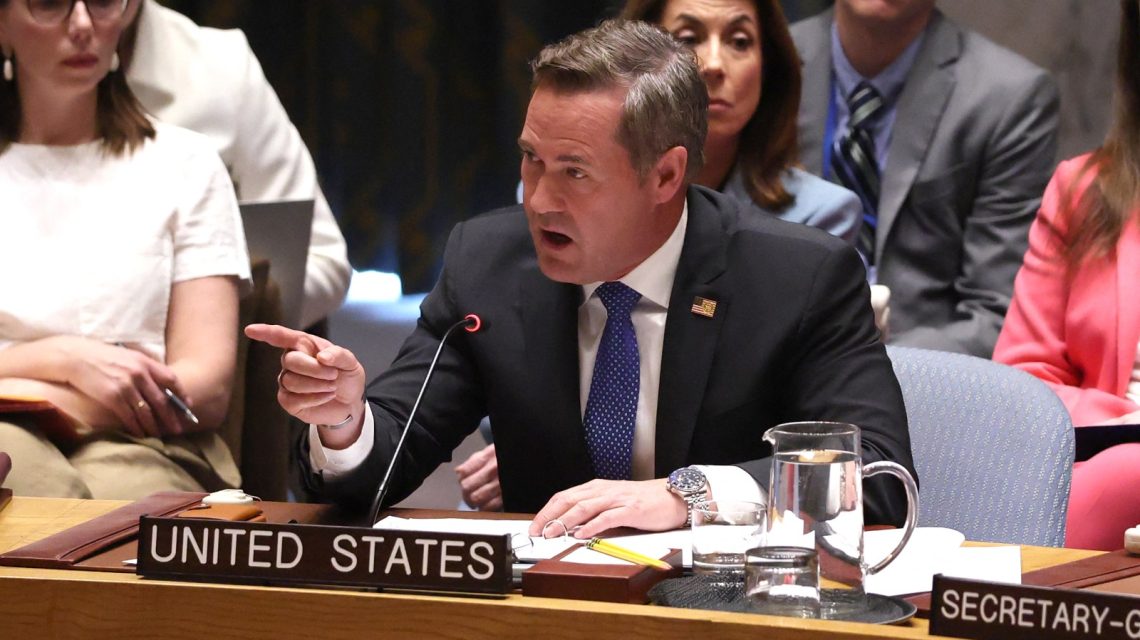
The ongoing conflict involving the United States and Iran has persisted beyond President Donald Trump’s initial expectations of a brief resolution. As the war enters its seventh month, Mike Waltz, the U.S. ambassador to the United Nations, refrains from specifying a timeline for its conclusion. While appearing on CNN’s State of the Union, Waltz emphasized ongoing U.S. economic pressure and naval blockades aiming to impact Iran, suggesting time benefits their strategy. Despite Trump’s assurances of an imminent end, the situation further deteriorates, with Iran’s threats of retaliation and escalating Houthi attacks.
Voter Skepticism Revealed in Poll
A recent NBC News poll highlights significant voter pessimism concerning the war. Findings show 62% of voters deem the conflict unwarranted, while 57% express reluctance to support candidates favoring the war. Only 24% show increased support for such candidates. These sentiments present a political obstacle for Republicans ahead of the midterms, compounded by Trump’s approval rating standing at just 41%.
The poll reveals broader discontent with Trump’s administration, with 56% disapproving of his job performance. As the midterms approach, 43% of voters indicate that their congressional vote will express opposition to Trump, compared to 27% signaling support.
Division Within Republican Ranks
Amid these challenges, intra-party dissent emerges as seven House Republicans supported a resolution limiting further military action against Iran without congressional approval. This vote, symbolic yet significant, underscores growing Republican concern over the protracted conflict. Noteworthy are Iowa Representatives Zach Nunn and Mariannette Miller-Meeks, both from competitive districts. Nunn, a veteran, criticized prolonged military engagements, while Miller-Meeks called for a clear plan for ending the war to focus on reducing economic strain domestically.
Economic Impact Under Scrutiny
The conflict’s financial implications are evident, influencing key election topics. Many voters link the war to Trump’s economic policies negatively impacting the economy. Rising energy prices have provoked significant unease, particularly in rural areas where diesel costs are surging. The Strait of Hormuz and Bab al-Mandab disruptions contribute to uncertainty in global energy markets, as reported by Reuters.
As Republicans grapple with issues surrounding inflation and energy costs, the Iran war continues to challenge their electoral strategies. Disagreements over U.S. involvement duration reflect deeper divisions within Trump’s coalition, complicating Republican efforts to make a comprehensive case to voters.
The Road Ahead
As the administration resists setting a timeline, the lack of a clear end strategy raises questions about the long-term approach. With Iran’s threatening posture and ongoing global energy market pressure, a diplomatic resolution remains elusive. Increasingly, calls for an exit strategy echo among Republican lawmakers as voter skepticism grows. For Republicans, convincing the electorate of a viable path to ending a war once portrayed as short-term remains a critical task as midterm elections loom.
 Maryland First State to Restrict Electronic Pricing in Grocery Stores
  British Police Arrest Man Suspected of Terror Plot
  Activists Push for Nationwide Ban on Child Marriage in the U.S.
  Democratic Hopes and Historical Warnings in 2026 Senate Race
  Republicans Face Challenges Amidst Cost of Living Concerns
  A Different Kind of Fall for Congress This Year