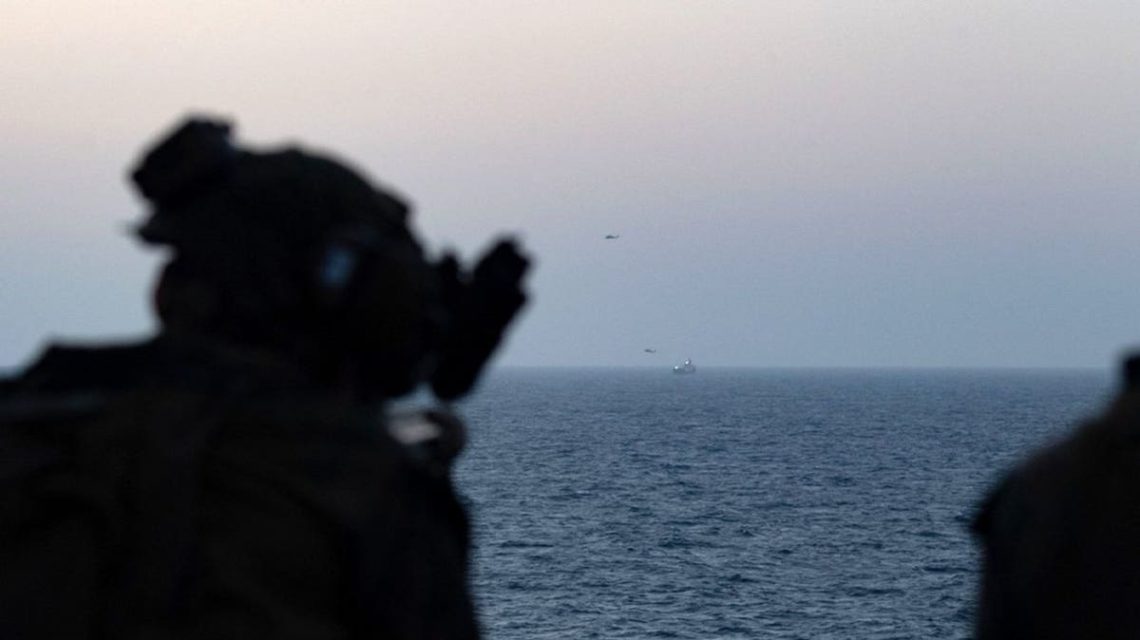
Iranian tankers are bypassing the U.S. naval blockade to smuggle sanctioned liquefied petroleum gas (LPG) to China. These tankers use a maritime hub off Malaysia, U.S. investigators revealed after covertly filming one vessel in September.
United Against Nuclear Iran (UANI), the organization investigating this activity, reported nine similar tankers successfully evading restrictions in the Strait of Hormuz since the blockade was reinstated in July.
UANI identified one tanker, the SOGL, which escaped the blockade on September 1. It carried approximately 500,000 barrels of LPG after loading it at an Iranian port in August. The vessel traveled thousands of miles to a Malaysian offshore anchorage, receiving fuel and other services before heading to China to unload the cargo.
“This tanker breached the U.S. blockade and reached a Malaysian anchorage,”
Jemima Shelley, a senior analyst at UANI, explained.
She noted that while most vessels are halted, a few have managed to breach U.S. restrictions since July, transporting oil or LPG from the Gulf of Oman.
The Malaysian Eastern Outer Port Limits Anchorage (EOPL), located about 70 kilometers from Malaysia’s coast, plays a crucial role. It provides a logistical base for sanctioned Iranian energy exports due to its offshore location, allowing for cargo transfers and resupplying.
UANI monitored the SOGL before its appearance in Malaysian waters. “On September 16th, UANI chartered a supply vessel to investigate activities at EOPL,”
Shelley added.
The SOGL is described as a small Handymax tanker with 500,000 barrels of LPG.
The blockade originally imposed on April 13 was lifted temporarily in mid-June but reinstated on July 14 after diplomatic talks failed. This has largely halted Iran from exporting crude oil, depriving Tehran of significant revenue amidst economic challenges.
“The blockade succeeds in preventing Iranian oil and petrochemicals from leaving the Gulf of Oman,”
Shelley said.
Though some smaller tankers manage to evade it, the blockade targets Iranian crude and large tankers that can carry up to two million barrels.
Malaysia is roughly a 10-day to two-week journey from Iran.
LPG, a risky mixture used for heating, cooking, and production, poses challenges. “Military action on LPG cargo is high-risk,”
Shelley noted.
The small vessels exploit these challenges by employing tactics linked to Iran’s ghost fleet. They obscure their location and identity, using false flags and deactivating AIS transponders, which hide their movements.
According to Shelley, the scale of the operation is small compared to Iran’s historical energy exports.
The SOGL, identified by IMO number 9208227, appeared on the U.S. Treasury Department’s OFAC sanctions list on October 8 due to transporting Iranian petroleum since 2025.
These tankers often operate under various flags like Comoros and Zimbabwe, with front companies running their operations. The Malaysian anchorage has become vital for transferring Iranian crude eastwards to China.
Floating storage use has decreased significantly since the blockade’s enforcement.
UANI’s footage showed the SOGL receiving services at Malaysian waters, with local authorities seemingly ignoring the activity. The EOPL serves as a hub for ship-to-ship transfers, required services, and connecting Iranian exports to the Chinese market.
China remains the major destination for Iranian oil and LPG, providing Tehran a critical economic channel despite sanctions.
China now imports nearly all of Iran’s oil and LPG exports, benefiting from discounted rates.
After UANI’s visit to the EOPL, the SOGL chose not to perform a ship-to-ship transfer. Instead, it traveled north to the South China Sea, unloading LPG at Xinzhou Port in China.
The G Summer, a U.S.-sanctioned LPG carrier, was tracked sending signals beyond the blockade in April, likely heading for Sri Lanka but carrying Iranian cargo.
Fox News Digital contacted U.S. Central Command for comments.
Emma Bussey, a breaking news writer, previously reported for The Telegraph.
 In-Flight Altercation on Qatar Airways Leads to Police and FBI Response
 Virginia Residents Sue Over Alleged Immigration Violations
 Updates on Key International and Domestic Events
 Pope Leo XIV Completes South American Tour with Farewell Mass in Peru
 President Trump’s Critical Asia Trip: Key Meetings and Implications
 U.S. Plans to Restrict AI Chip Exports Before Trump-Xi Meeting