Japan’s Sendai Nuclear Power Plant remains unharmed following a strong earthquake, as reported by the country’s nuclear authority to the International Atomic Energy Agency (IAEA). The United Nations watchdog, IAEA, stated that monitoring of the situation would continue. This event brings back memories of the 2011 disaster when a 9.1-magnitude quake and tsunami caused meltdowns at Fukushima Daiichi, placing focus on nuclear plant safety during seismic activities.
Military Assistance Deployed
In response to the earthquake, Prime Minister Sanae Takaichi deployed 300 Japan Self-Defense Forces members to southern Japan to aid in disaster relief efforts. The region was significantly affected by the quake, prompting a swift governmental response.
Mall Tragedy and Explosion
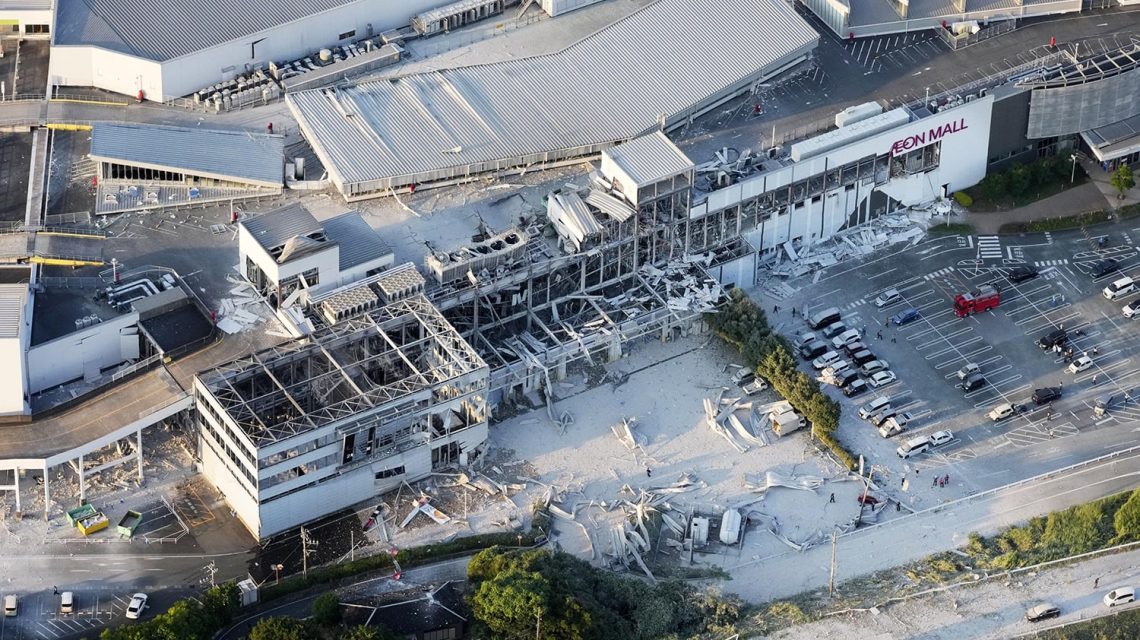
Local fire officials reported multiple individuals trapped in a mall following the earthquake. The incident took place at AEON Mall, where an explosion was heard on the second floor. State broadcaster NHK showed footage of the mall with numerous fire trucks in the parking area, capturing images of collapsed sections and debris covering roads.
Impact on Infrastructure
The quake, which registered at a magnitude of 7.1, caused extensive infrastructure damage. Aerial footage revealed at least 12 collapsed buildings. In Yatsushiro, part of Kumamoto Prefecture, several incidents with trapped individuals were noted. State broadcaster NHK highlighted significant damage in commercial areas, including mall collapses and shrine damage. Fires were reported at seven locations in Kumamoto Prefecture, increasing the urgency of disaster responses.
Earthquake Details and Tsunami Warning
The Japan Meteorological Agency recorded the earthquake hitting southern Japan at approximately 4:27 p.m. local time. It derailed a train, resulting in numerous injuries and triggering a tsunami warning for the Ariake and Yatsushiro Seas. The tsunami advisory was eventually lifted by NHK.
Japan’s Earthquake Preparedness
Japan is positioned on the “Ring of Fire,” making it a hotspot for seismic and volcanic activity. The nation experiences frequent tremors, with about 20% of global earthquakes measuring 6.0 or higher occurring here. Since the 2011 Fukushima disaster, Japan has enhanced earthquake warning systems and evacuation protocols, improving response efforts during such natural events.
 British Police Arrest Man Suspected of Terror Plot
  Activists Push for Nationwide Ban on Child Marriage in the U.S.
  Investigation into Alleged Incident at Cornell University
  Rising Drone Threats Highlight Vulnerabilities in Moldova’s Airspace Defense
  Bolivia Faces Security Test Amid Unrest
  Incident on FlyDubai Flight Raises Security Concerns