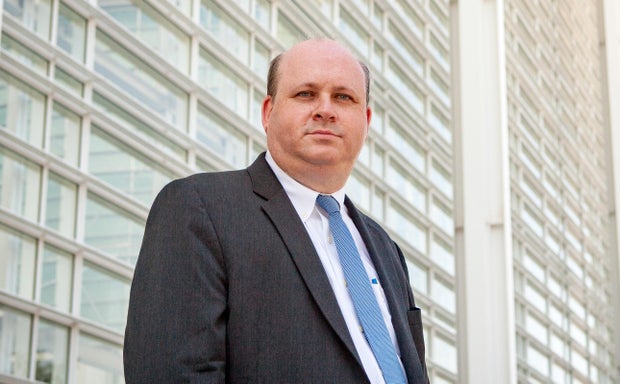
Marc Elias, a Democratic attorney known for opposing the Trump administration, is under scrutiny by the Justice Department. The investigation explores if Democrats tried to confuse voters in Alaska by supporting a candidate with a name similar to Republican Senator Dan Sullivan. This information comes from a law enforcement official and another informed source.
Elias is among several individuals who have received target letters, preservation letters, or grand jury subpoenas from the department. The probe is led by the U.S. Attorney’s Office in Alaska and involves the Civil Rights Division’s criminal section. Around 20 such letters have been issued so far, according to multiple sources.
The Democratic Senatorial Campaign Committee (DSCC) has also received a grand jury subpoena, as reported by CBS News. President Donald Trump has criticizes Elias publicly on social media, urging his prosecution.
“No one should be surprised that President Trump’s Department is targeting me and my law firm on Election Day,” Elias stated to CBS News. He claimed the administration has weaponized the DOJ against the President’s political opponents.
Federal prosecutors have not clearly defined the crimes they are investigating. Stephen Miller, the White House deputy chief of staff for policy, mentioned on Fox News the possibility of probing violations of 18 USC 241. This statute addresses conspiracies to threaten or intimidate people exercising their rights.
Concerns have been raised about the timing of these letters and subpoenas in relation to the Justice Department’s internal guidelines and norms. Brandon Wrobleski, acting chief of the DOJ’s Civil Rights Division, has tried recruiting assistant U.S. attorneys in Alaska for the probe. Some attorneys have declined or expressed discomfort about participating.
Court-appointed U.S. Attorney in Alaska, Michael Heyman, held a press conference with the FBI’s special agent in charge in Anchorage. He disclosed a criminal investigation into whether operatives for Democratic Senate candidate Mary Peltola aided the recruitment of independent candidate Daniel J. Sullivan to confuse voters.
Reported by The New York Times, the Peltola campaign’s lawyers and DSCC senior aides were allegedly involved in the recruitment effort. The tactic of ballot-stacking, though controversial, is usually not illegal. Peltola’s campaign and the DSCC deny any involvement.
“This new information has led to significant law enforcement efforts in Alaska,” Heyman stated. He noted that law enforcement across the country is taking steps regarding the investigation.
Heyman refuted claims that the DOJ was escalating the investigation or timing its actions with the election. He cited public reports in The New York Times as reasons for increased activity.
Elias and his firm have engaged in over 90 voting and election lawsuits, challenging the DOJ’s access to unredacted voter rolls. He is also involved in civil litigation related to Alaska’s Senate election results, where the DOJ aimed to block certification if Dan Sullivan, the Republican incumbent, loses. A U.S. district judge dismissed the DOJ’s lawsuit, citing a lack of standing.
Over the weekend, Trump accused the efforts to place the second Sullivan on the ballot as fraud and a “Democrat con job” allegedly initiated by Senator Charles Schumer and Elias.
Elias joins several Trump political adversaries facing recent DOJ investigations. Prosecutors obtained a search warrant for Rep. Ilhan Omar’s home, investigating possible immigration fraud. They sought charges against former FBI officials for lying to Congress regarding the Hunter Biden probe, and attempted to indict Cassidy Hutchinson for her testimony on Trump’s actions during the Capitol attack.
The grand jury declined to indict Hutchinson, and a federal judge dismissed complaints against the FBI officials. These cases were perceived as politically motivated and timed with the elections.
 Mayor Mamdani’s Policing Reform Plans
 Gen Z Voter Shifts and Their Impact on the 2026 Midterm Elections
 Disappearance of US Senate Candidate Raises Questions
 DOJ Rule Change Reduces Appeal Time for Immigrants Facing Deportation
 Hakeem Jeffries’ Bid for House Speaker Faces Progressive Hurdles
 Ohio Judge Dismisses Defamation Lawsuit by Rep. Max Miller