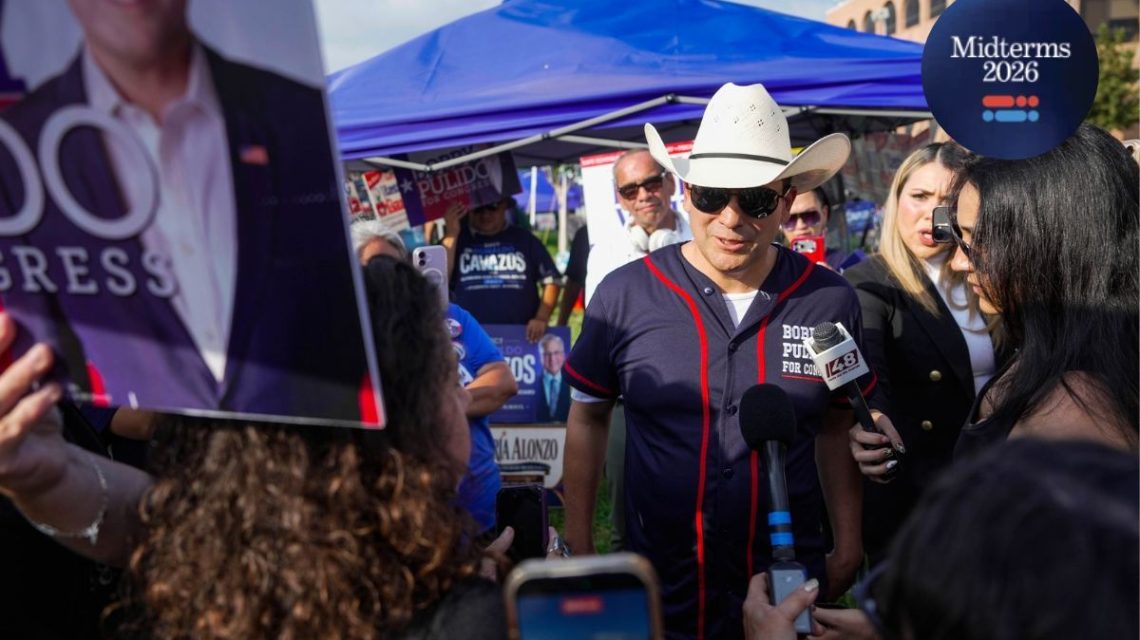
Latino voters showed a notable shift away from former President Donald Trump in recent elections, favoring Democratic candidates in various regions. This trend was evident from the Rio Grande Valley to Paterson, New Jersey. An exit poll by NBC News indicated that 60% of Latino voters supported Democratic House candidates, while 35% backed Republicans. In contrast, a Pew Research Center study from two years ago found that Trump received 48% support from Latino voters, while former Vice President Kamala Harris received 51%.
Mike Madrid, a Republican strategist who focuses on the Latino vote, explained to Newsweek that the election results reflected a strong rejection of Trump and the Republican Party that supported him. However, Madrid emphasized that the results should not be seen as an endorsement of the Democratic Party. Instead, he described the situation as a dealignment, with Latino voters moving away from both parties due to dissatisfaction with their economic priorities.
South Texas Challenges the Republican Landscape
One notable example of this shift occurred in Texas’ 15th District. Tejano singer Bobby Pulido won about 62% of the vote, unseating Republican Representative Monica De La Cruz. The Associated Press reported a significant 42-point swing in this district. The Republican-drawn Texas map assumed Trump’s gains in 2024 would continue, but Democratic Representatives Vicente Gonzalez and Henry Cuellar retained their seats. Additionally, Democrats gained seats in the 23rd and 35th Districts, areas that Trump had previously won.
The Texas Tribune reported that border counties saw an 8% increase in voter turnout compared to 2022. Senator-elect James Talarico won nine border counties that Trump had previously carried. Exit polls indicated a shift in Hispanic Texan voters, with approximately 60% supporting Talarico for Senate, while only 30% backed Republican Ken Paxton. Gina Hinojosa defeated Republican Governor Greg Abbott 53% to 46% statewide.
Madrid commented on the shifting political landscape along the border, noting that voters previously punished Democrats for border disorder in 2024 and are now penalizing Republicans for subsequent actions. He criticized immigration crackdowns, describing them as aggressive and detrimental to the Republican Party.
Close Contests in Miami
In Miami, Democrats nearly flipped two seats, but Republican incumbents Mario Díaz-Balart and María Elvira Salazar narrowly held onto their positions. Díaz-Balart led Democrat Nicole Locklin 49.9% to 49.1% in a district Trump had carried by 18 points. Salazar maintained a slim lead over Democrat Eliott Rodriguez, prompting a recount.
Doral, within Díaz-Balart’s district, saw a significant shift in voter sentiment. Trump’s previous dominance in Doral, with support from the Venezuelan American community, waned dramatically. U.S. Immigration and Customs Enforcement targeting asylum seekers and ending temporary protected status for Venezuelans contributed to this change.
Eduardo Gamarra, a political scientist at Florida International University, highlighted that Salazar’s district had become competitive for the first time in this election cycle. Miami-Dade County swung 18 points toward Democrats since 2024, according to the AP, with significant contributions from majority-Black and majority-white neighborhoods.
Puerto Rican Influence in Central Florida
In Central Florida, Puerto Rican voters make up the largest Hispanic community in Osceola County, part of Florida’s 9th District. Democratic Representative Darren Soto carried the area with a substantial lead, contributing to his overall district victory. Republicans redrew the district to include more Republican-leaning areas, but Soto held on.
Class ties these diverse Latino communities together, according to Madrid. In 2024, Latino communities leaned right, while in 2026, the pendulum swung left. Economic concerns remain central to voters’ decisions, highlighted by Madrid’s observations.
New Jersey’s Notable Shift
New Jersey’s 9th District, including Paterson and Passaic, warned Democrats in 2024 when Trump carried it. However, on Tuesday, Democratic Representative Nellie Pou won with 66.7% of the vote, a 36.1-point shift towards Democrats.
California and Colorado Gains
In California’s 22nd District, a majority-Latino farm area, Randy Villegas led against Republican Representative David Valadao. If the lead holds, the swing would top 30 points. In Colorado’s 8th District, Democrat Manny Rutinel defeated Gabe Evans, marking a 16-point shift from Trump’s previous win.
Wake-Up Call for Parties
“Latinos shouldn’t be looked at for their differences between their country of origins.” – Mike Madrid
The elections demonstrated that Latino voters are a critical and dynamic demographic. Madrid emphasized that both parties must address economic concerns and develop agendas that resonate with working-class communities. Latinos’ voting patterns remain volatile, and both parties need to deliver tangible results to earn their support.
Newsweek reporters and editors contributed to this story using their AI assistant, Martyn.
 Mayor Mamdani’s Policing Reform Plans
 Virginia Residents Sue Over Alleged Immigration Violations
 Gen Z Voter Shifts and Their Impact on the 2026 Midterm Elections
 Disappearance of US Senate Candidate Raises Questions
 DOJ Rule Change Reduces Appeal Time for Immigrants Facing Deportation
 United Airlines Faces System Outage Amid Banking Disruptions