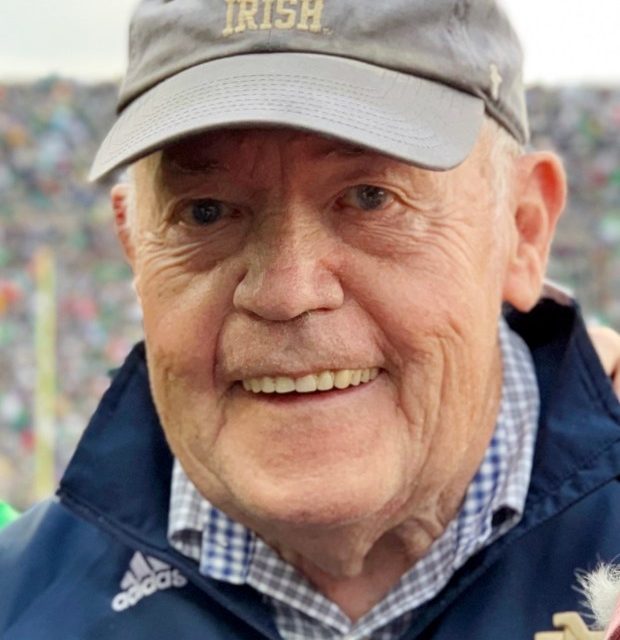
David E. Collins, former chairman of Johnson & Johnson’s McNeil Consumer Products unit, played a crucial role during the 1982 Tylenol poisoning crisis in the Chicago area. This episode, caused by drug tampering, resulted in multiple deaths. Collins became the public representative for the company, working to prevent a proposed ban on Tylenol by then-Mayor Jane Byrne. Under his leadership, the company regained its market position, serving as a case study for corporate crisis management.
In addition to his corporate contributions, Collins dedicated his retirement to teaching, philanthropy, and serving on various boards. Collins, aged 92, passed away due to leukemia complications on September 22 at his home in Palm Desert, California, according to his son, Pat. Collins also maintained a residence in Reno, Nevada, and lived previously in locations including New York City and Mendham, New Jersey.
Collins was born in 1934 in Oak Park. He attended Fenwick High School before earning a bachelor’s degree at the University of Notre Dame in 1956 and a law degree from Harvard Law School in 1959. After working at the New York City law firm Shearman & Sterling, he joined Johnson & Johnson’s legal department in 1962. Over 16 years, he rose to corporate secretary, general counsel, and board member. Roger Fine, a retired Johnson & Johnson general counsel, described Collins as a natural leader and a warm, approachable individual.
In 1978, Collins became president of McNeil Consumer Products unit. He later managed Latin American subsidiaries and, eventually, all of Johnson & Johnson’s consumer products. His innovative approach was demonstrated when Johnson & Johnson sought a license to produce codeine, initially opposed by competitors. The DEA ultimately granted permission, showcasing Collins’s leadership.
During the 1982 Tylenol crisis, Collins managed the situation by becoming the public voice of the brand. He conveyed empathy for victims while ensuring enhanced safety measures. Collins moved operations to Chicago to manage the crisis closely, opting to form partnerships with local law enforcement. He engaged directly with concerned parties and provided valuable cooperation in the investigation.
Collins reassured stakeholders through media appearances, emphasizing the company’s commitment to consumer safety. By late 1982, the company introduced tamper-resistant packaging. His efforts paid off as Tylenol sales surged by 1983, with the company’s market share exceeding pre-crisis levels.
In 1986, Collins became Johnson & Johnson’s vice chairman of public affairs. After retiring in 1988, Collins spent time at Schering-Plough Healthcare, where he reorganized consumer product operations. He concluded his corporate career in 1994.
His post-retirement years included teaching at the University of California, Davis, the University of Notre Dame, and Dartmouth University. Collins was engaged with the Aspen Institute and Align Technology’s board, contributing to significant growth and legal successes.
Collins is survived by his wife of 65 years, Judy; sons Pat and Paul; daughter Ann Cazalot; six grandchildren; and siblings Chas, Eddie, and Penny. Services will be private.