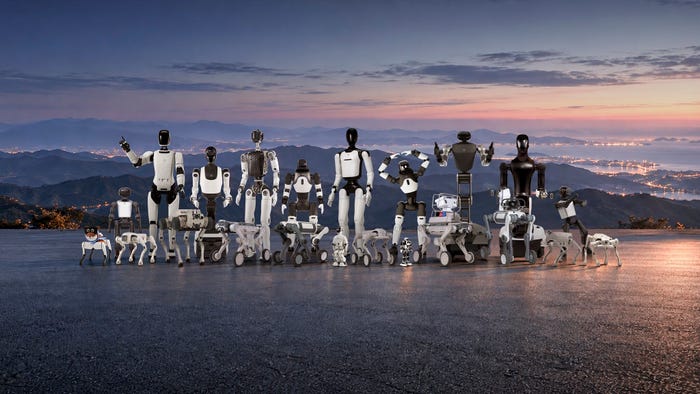
Leopold Aschenbrenner, the Gen Z hedge-fund manager, has a bold prediction for the future of AI: billions of robots entering the physical world. Despite his AI-focused fund facing challenges last summer, he is betting on substantial advancements in robotics with potential inception as early as next year. His vision was articulated in a 167-page letter to investors, which has since garnered attention after being leaked online.
Physical Intelligence, a robotics startup, is at the center of Aschenbrenner’s investment strategy. Believing in a rapid growth of robotic technology, he foresees robots building more robots, factories, data centers, and even engaging in ambitious projects like mining asteroids. This, he argues, could lead to cheaper construction costs and potentially transform industries across different environments.
Silicon Valley shares a growing belief that AI’s next frontier lies in the physical sector. Factors such as decreasing hardware costs, labor shortages, and fierce competition have sparked interest in robotics. However, the field faces a significant challenge: reliably teaching machines to function in a complex, unpredictable world. Experts express skepticism about the swift arrival of general-purpose robots, mainly due to a lack of comprehensive training data comparable to language models.
Even Elon Musk acknowledges the potential of robotics but emphasizes the critical nature of timing investments. Aschenbrenner, however, maintains a firm stance, arguing that the primary hurdle is not hardware but intelligent AI models. He cites recent advancements where specialized models learn tasks quickly and adapt to new contexts as pivotal moments, akin to the release of GPT-3.
His efforts include investing in specialist models and backing general AI models through Anthropic. Physical Intelligence raised around $1 billion in May and is regarded as a leader in the space, with support from figures like Jeff Bezos and companies like OpenAI. Competitors like FieldAI and Skild AI are also positioning themselves in this burgeoning market, signifying intense competition.
Aschenbrenner’s firm, Situational Awareness, is exploring opportunities across the robotics supply chain, seeing parallels with the rise in computing infrastructure after the ChatGPT breakthrough. He envisions an industrial surge following increasing AI capabilities, with robots potentially transforming industries to an extent not yet seen.
 Latest Developments in Politics, Technology, and Economy
 The Silence of Women in Tech Regarding Jensen Huang’s Return
 Lawmakers Question Nvidia CEO Jensen Huang Over National Security Concerns
 Uber Kids: A New Option for Busy Families
 Why Memorizing Facts Still Matters in the Age of AI
 Rising Stock Market Boosts 401(k) Balances Amid Withdrawal Concerns