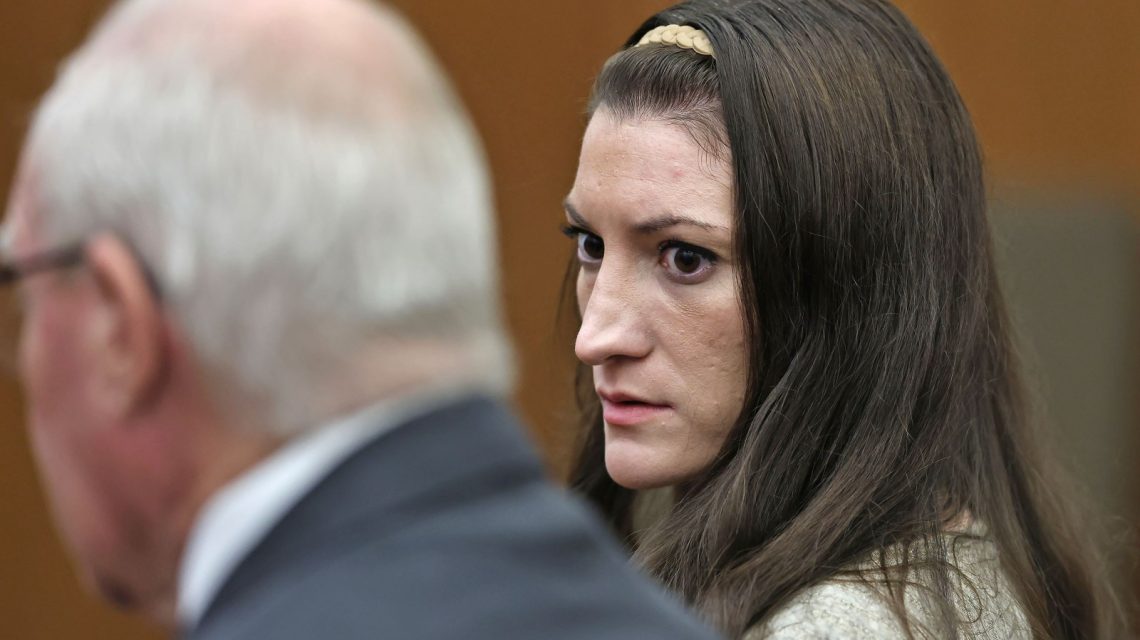
The jury responsible for deciding Lindsay Clancy’s fate has announced an inability to reach a unanimous verdict. Despite deliberating for over 17 hours across four days, jurors informed Plymouth Superior Court Judge William Sullivan that they have not come to a consensus. Rather than declaring a mistrial, Judge Sullivan directed the jury to continue deliberations.
The jury’s deadlock follows a roughly six-week-long trial, featuring testimonies from over 80 witnesses and more than 300 exhibits. Central to the trial is the question of Clancy’s criminal responsibility for the January 2023 killings of her three children. The defense argues postpartum psychosis, while prosecutors claim deliberate action.
Legal Duration of Deliberations
Massachusetts law does not impose a strict time limit on jury deliberations. As long as the judge believes further discussion could yield a unanimous verdict, jurors may continue deliberating. Should the jury become clearly unable to reach consensus, the judge may declare a mistrial due to a hung jury, potentially leading to a retrial.
Currently, the 17 to 18 hours spent in deliberation does not appear unusually lengthy for a case of such complexity.
Comparing Clancy’s Jury with Historical Cases
If the jury continues for days or weeks, it would still fall short of the longest jury deliberation recorded. Guinness World Records cites a 1992 California civil case as the longest, where jurors deliberated for about 4.5 months.
A more pertinent example might be the McMartin Preschool trial, one of America’s noteworthy lengthy criminal trials. That trial spanned nearly three years and had deliberations lasting around nine weeks.
Famous Cases with Rapid Deliberations
Swift verdicts have emerged from major trials. In O.J. Simpson’s 1995 trial, the jury returned not-guilty verdicts in under 4.5 hours. Similarly, in 2021 the Robert Durst murder trial verdict came after seven hours spread over three days. The Scott Peterson trial in 2004 took seven days of deliberation before a guilty verdict was reached.
These cases illustrate there is no standard timeline for how quickly a jury should reach a decision. Complex cases may yield prompt verdicts, while others necessitate prolonged discussions.
Deadlock in Menendez Brothers Trial
The Menendez brothers’ initial trial in 1993-94 faced similar jury deadlock issues. Deadlocked juries in their separate trials resulted in mistrials after roughly 11 days of deliberation. They were retried and convicted in 1996.
For Lindsay Clancy, a deadlock does not equate to acquittal. Should a mistrial be declared, prosecutors might pursue a new trial.
Experts’ Insight on Deliberations
Research emphasizes not over-interpreting the hours jurors spend deliberating. Evidence strength stands as the most significant conviction predictor, with many deliberation variables proving weakly connected. It has been found that lengthy trials, multiple charges, and case complexity often lead to prolonged deliberation.
Mock jury studies support that deliberation length does not directly correlate with deliberation quality. Longer discussions can reflect intricate evidence analysis or may indicate repetitive, inefficient, or contentious debates. Hence, while Clancy’s jury deadlock is noteworthy, it lacks predictive clarity.
Outcome of Persistent Jury Deadlock
If the jury remains divided, Judge Sullivan may declare a mistrial, enabling the prosecution to seek another trial. A mistrial due to a deadlocked jury does not function as an acquittal.
The jury may soon reach a verdict, continue deliberating for more days, or ultimately fail to achieve consensus.
 Lindsay Clancy Faces Potential Retrial After Mistrial
  Tennessee Prepares for Rare Execution of Woman on Death Row
  Mistrial in Lindsay Clancy Case: Juror Speaks Out
  Utah Judge Orders Release of Man on Death Row After DNA Evidence Emerges
  Kurt Olsen Resigns from the Justice Department Amid Investigation
  New Developments in Cornell University Fraternity House Assault Case