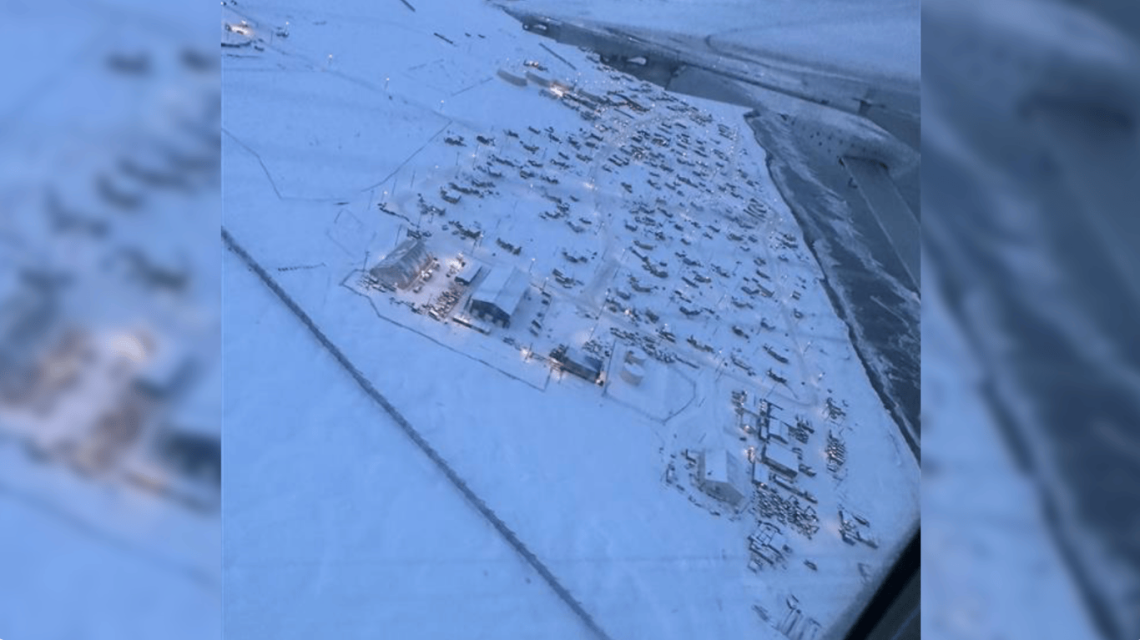
As the year drew to a close, Carmen Daggett found herself on a return flight to Utqiaġvik from Point Lay. She snapped photos of the sun while airborne. ‘I remember taking pictures because I knew I wouldn’t see the sun for a while,’ she told Newsweek. For many in Utqiaġvik, the absence of the sun becomes an accepted part of life, with the moon serving as a winter substitute.
On November 18, the sun rose for about an hour in Utqiaġvik before disappearing at 1:42 p.m. According to NOAA’s Solar Calculator, it won’t rise again until January 23, 2027. This marks 65 days without sunlight. Carmen Daggett, originally from Wisconsin and now a wildlife biologist in Utqiaġvik, finds this period notable. Her friend in Tasmania jokingly inquired if she was living in such darkness. The challenge of enduring two months without sun is hard to convey, yet Daggett and Robbin Perkins-Askew—a teacher from Dallas—tried to illustrate it.
The Reflective Season
Robbin Perkins-Askew, who began teaching in the North Slope two years ago, shared her perspective. ‘I’m one of the few who find this the best time of year,’ she said. As families go on vacation and teachers feel homesick, she sees it as an opportunity for reflection. ‘Though people call it the great darkness, I view it as a chance for reflection,’ she added. The sun’s disappearance solidifies her sense of place. ‘Suddenly, you’re aware you’re not in Kansas anymore.’ The perpetual darkness during work and rest periods is disorienting. ‘You wake up and it’s dark, go to sleep and it’s dark, even at work it’s dark,’ she said.
Her students experience similar confusion. ‘Parents often comment that their children’s days and nights are switched,’ she noted. With absenteeism high during these months, she stresses the importance of maintaining routines.
A Need to Hibernate
Carmen Daggett described the physical effects of the season. ‘Getting up is tougher, and staying active requires effort,’ she stated. The body appears to want to hibernate. Her productivity plummeted during her first winter. ‘I felt a lack of focus and productivity,’ she recalled. Perkins-Askew shared a doctor’s advice that those with darker skin need more vitamin D in this environment. Despite her years under the Texas sun, she finds it physically exhausting here.
Although the polar night isn’t completely dark, NOAA categorizes the light as civil twilight, offering several hours of dim light. By December’s solstice, only a few hours remain. ‘There’s a brief twilight midday,’ Daggett explained. On cloudy nights, the disorientation increases. On clear nights, the night sky reveals the cosmos. ‘The moon helps ground me,’ she noted. ‘But when clouds cover it, it’s unsettling.’
Facing the Darkness
The emptiness drives many teachers away, not because of students, but the lack of light. ‘Teachers leave because of the darkness,’ Perkins-Askew said. The darkness even drove her husband away. He found it overwhelming and couldn’t stay. She treats her endurance as defiance. ‘It’s a badge of honor to survive what most people can’t,’ she expressed. Initially daunted by the perpetual night, she now thrives in it.
Attempts to combat isolation appear through community activities. ‘In winter, people rely more on each other,’ Daggett observed. The holiday festivities echo the cultural importance of the whale hunt and sharing traditions during the Kivġiq festival. Perkins-Askew noted the centrality of December’s Christmas games, drawing residents to stay local.
This season is challenging yet communal. The Alaska Department of Health underlines higher suicide rates in winter. ‘The community checks in more on each other during this time,’ Perkins-Askew revealed. During her first winter’s struggle, Daggett benefited from social support. ‘A friend helped me by getting out for some fresh air with our dogs,’ she said. With her growing family, she now focuses on indoor greenery and light to ease the transition into darkness.
Finding Joy in Darkness
When friends inquire how Perkins-Askew endures the dark, her response is simple. ‘It’s life, and it’s beautiful.’ Daggett makes occasional sun-seeking trips to recharge but appreciates what Utqiaġvik offers. ‘The natural wonders here are spellbinding,’ she stated, referencing local wildlife and natural phenomena.
Perkins-Askew wants outsiders to appreciate life’s universality in Utqiaġvik. ‘People share the same values and hopes for their children,’ she said. ‘It’s no different here.’ Until the sun returns on January 23, she continues to face each day with optimism. ‘Though it is dark, the sun is coming.’
If you or someone you know is considering suicide, please contact the 988 Suicide and Crisis Lifeline by dialing 988 or visit 988lifeline.org.
 Chester Community Mourns After Fatal Pennsylvania Shooting
 Joe Thomas Reflects on Lessons Learned from His Father
 Batavia Access Toy Drive Faces Challenges in Finding New Space
 Mississippi Woman’s Shocking Dating Experience: A Bizarre Gift
 Syrnyky: A Ukrainian Culinary Tradition
 Caregiver Finds Unexpected Connection