The way broadcast networks cover congressional committee investigations reveals their biases. When a committee targets Republicans, it becomes a focus of intense media attention. The January 6 Committee led by former House Speaker Nancy Pelosi serves as a prime example. It lacked any Republican presence, making its coverage extensively one-sided.
In contrast, when investigations seek to scrutinize Democrats, media coverage often dwindles. This discrepancy became apparent on July 25, when Sen. Rand Paul from Kentucky released over 1,100 pages of Dr. Anthony Fauci’s diary, covering 2019 to 2022. The diaries, sourced from Fauci’s government computer, did not immediately prompt widespread media attention.
CBS Evening News broke the silence with a brief 24-second report two days later. Comprehensive coverage resurfaced only when Fauci was scheduled to testify before Paul’s committee.
Fauci’s diary entries held newsworthy revelations. Early admissions that COVID-19 did not originate from Wuhan’s wet markets stand out. Despite this, Fauci opposed the lab-leak theory, labeling it a conspiracy. The media echoed his stance.
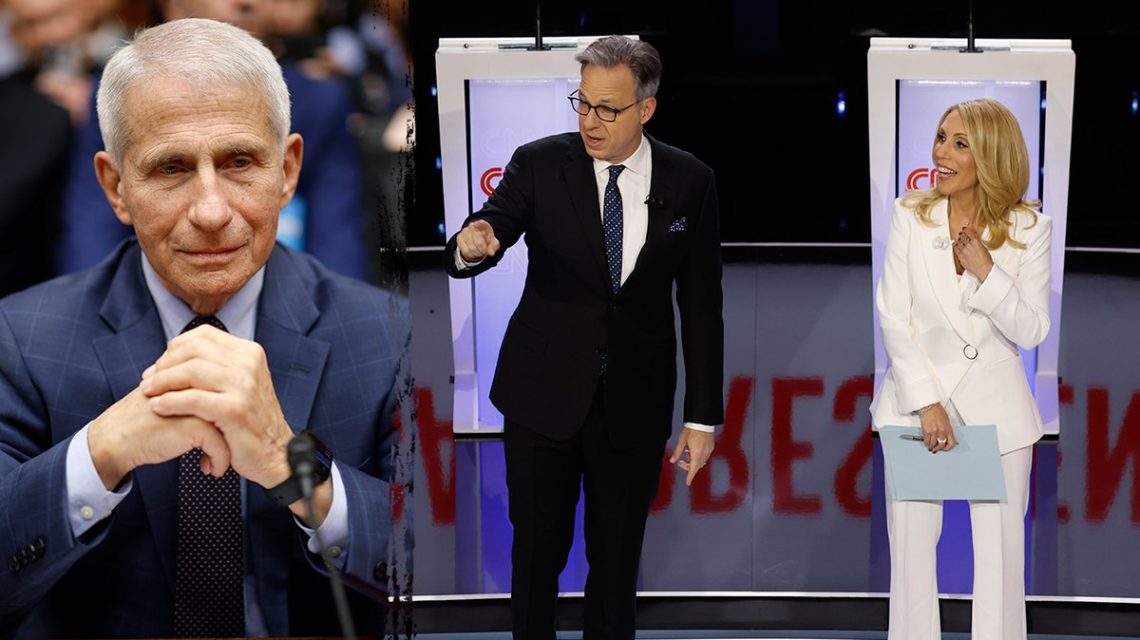
Fauci had amicable relationships with several news personalities, such as CNN anchors Jake Tapper and Dana Bash, according to diary entries.
Entries divulged Fauci’s friendships with media figures. For instance, ABC’s George Stephanopoulos appreciated Fauci after an interview. Fauci summarized a conversation with NBC’s Chuck Todd about handling conservative media.
By July 2020, Fauci noted forming a friendship with CNN’s Jake Tapper. He recorded dinners at Tapper’s home in Washington D.C., observing a developing friendship. During this period, socializing among families faced discouragement, but media figures and officials seemed exempt.
Once networks dedicated coverage to the Fauci hearing, their stance became evident. ABC’s Jay O’Brien on “Good Morning America” predicted a challenging hearing for Fauci, 85, seen as a long-time target of Sen. Paul. Comparisons were drawn between Fauci’s hearing and media’s portrayal of Trump.
On “CBS Mornings,” Dr. Celine Gounder, a Biden advisor, claimed Fauci never had the authority to shut down the country, contradicting Fauci’s past statements. She also disputed Fauci’s pursuit of fame.
Reporters such as Monica Alba on NBC provided some excerpts from Fauci’s writings while suggesting Paul’s release of the diaries seemed inappropriate. However, these diaries were public records due to being compiled on a government computer ahead of Fauci’s book plans.
Further coverage revolved around the Senate hearing’s challenging nature, with CBS reporting on Sen. Paul’s expulsion of Fauci’s lawyer for interrupting. Democrat accusations of a biased GOP investigation were highlighted, though CBS included a perspective from Dr. Jay Bhattacharya, a critic of Fauci, who discussed U.S. support for gain-of-function research in China.
Continued media portrayal framed Republican hearings as dramatic partisan events. Yet, Democrat-led initiatives like the January 6 hearings, involving figures like Liz Cheney, were shown as democratic and just. This biased approach contributes to public distrust in media institutions.
Tim Graham, Executive Editor of NewsBusters.org, co-authored “Unmasked: Big Media’s War Against Trump” with Brent Bozell.
 Trump’s 2024 Reelection and Evolving Voter Dynamics
  Defense Secretary Emerges as Key Player in the Trump Administration
  Hegseth’s Vision for the Military: Balancing Tradition and Innovation
  Significant Funding Boosts Ken Paxton’s Texas Senate Campaign Amid Tight Race
  U.S. States Extend Gas Tax Waivers Amid Rising Fuel Costs Due to Iran Conflict
  USCIS Raises Immigration Fees