
In a significant political shift in Hungary, the ruling Tisza party has nominated András Baka, a former head of the Supreme Court, as the country’s next president. This nomination was announced via the party’s parliamentary group’s Facebook page on Saturday.
Baka, aged 73, is anticipated to be elected to the largely ceremonial position by parliament on Tuesday. The move is viewed as part of Prime Minister Péter Magyar’s strategy to weaken the power structures established by former Premier Viktor Orbán. Magyar asserts that the recent electoral victory has given him a robust mandate to implement these changes.
Tisza lawmakers emphasized Baka’s unwavering commitment to the principle of the separation of powers. They stated that he has consistently championed the rule of law and judicial independence throughout his career. They expressed confidence that Baka’s experience and professional independence would be valuable assets as Hungary prepares to establish a new constitutional order.
Magyar’s election marked the end of Orbán’s 16-year tenure. Since then, Magyar has pledged to reestablish democratic standards, urging officials appointed during Orbán’s governance to step down. Among these has been the removal of former President Tamás Sulyok, whom Magyar criticized as being a puppet of Orbán. Sulyok had previously endorsed the constitutional amendment by Magyar’s party that concluded his own presidency.
The amendment stipulates that the new president will remain in office until a new constitution is enacted, or for a maximum period of five years. Baka, known for his previous role as a judge on the European Court of Human Rights, was ousted from his Supreme Court position by Orbán’s administration in 2011, years before completing his term. The European Court of Human Rights ruled in 2014 that Baka’s dismissal had infringed on democratic freedoms, a claim Orbán’s government denied.
Under Hungary’s existing constitution, the president functions as a largely ceremonial figure with limited authority to veto or review legislation. The opposition Fidesz party has chosen not to participate in the presidential election process, accusing the Tisza party of authoritarianism, a charge Tisza has rejected.
 President Trump’s Pre-Midterm Interview on Key Issues
  Trump’s 2024 Reelection and Evolving Voter Dynamics
  Defense Secretary Emerges as Key Player in the Trump Administration
  Hegseth’s Vision for the Military: Balancing Tradition and Innovation
 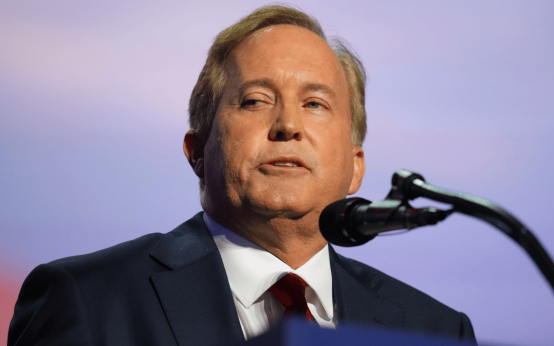 Significant Funding Boosts Ken Paxton’s Texas Senate Campaign Amid Tight Race
  U.S. States Extend Gas Tax Waivers Amid Rising Fuel Costs Due to Iran Conflict