
The federal government has introduced a significant shift in assessing higher education results. All programs participating in the federal student loan program will now face accountability based on their graduates’ earnings.
This change aims to enhance both educational and economic success. Focusing on what people know and what they can do ensures that learners gain practical skills relevant to their fields. By holding educational institutions responsible for their graduates’ financial outcomes, the policy encourages them to prioritize effective teaching and career readiness.
In a system where accountability links to actual results, institutions might adapt their curricula to match market demands, fostering better-prepared graduates. This strategic focus benefits not only students but also the broader economy, as it aligns workforce capabilities with industry needs.
While some educational programs previously measured success through varied, sometimes subjective, criteria, this new approach offers a clearer standard based on graduates’ real-world performance. Implementing such standards may inspire another review of educational policies and practices to maintain competitiveness in a changing economic landscape.
The Hill, known for its nonpartisan perspective, reports that this policy change could lead to a more robust discussion regarding the balance of educational quality and marketable skills. By placing earnings at the forefront, the government seeks to incentivize institutions to produce capable graduates who contribute effectively to the economy.
 Troy Swanson: Award-Winning Librarian Transforming Academic Libraries
 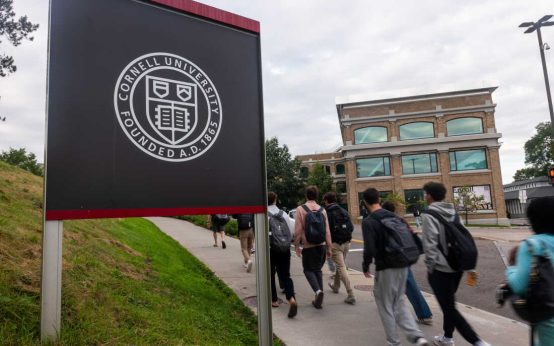 Cornell University to Investigate Handling of Alleged Assault Case
  Legal Challenge Against School Funding Inequalities in West Virginia
  Potential Changes Loom for School Voucher Programs
  Regents Exam Elimination Raises Concerns Over Student and School Accountability
  Education Funding Disparities in West Virginia