New York City Public Schools, the largest school district in the United States, is enforcing a one-year ban on the use of generative artificial intelligence (AI) tools for students through eighth grade. This measure represents one of the most stringent AI restrictions in American classrooms.
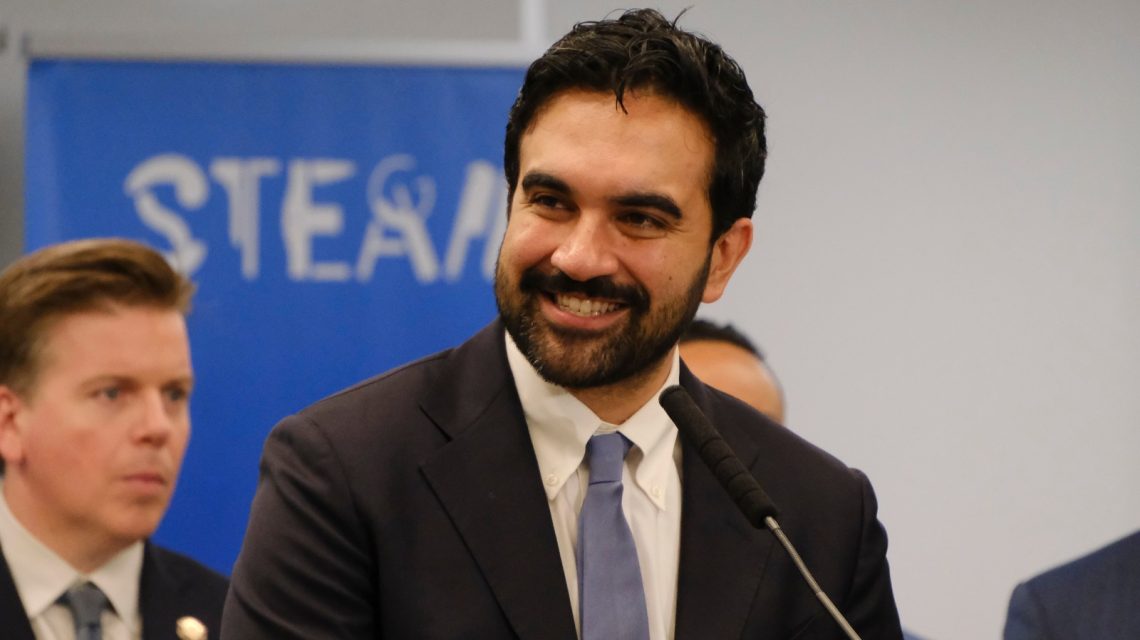
Mayor Zohran Mamdani, alongside Schools Chancellor Kamar Samuels, announced the policy, emphasizing the need to study AI’s effects on learning and child development. This pause affects around 600,000 students and prohibits AI companion chatbots at all grade levels. Mamdani expressed the importance of human interaction in education, stating, “Children need teachers and human connection in order to learn and grow.”
Samuels supported the move, emphasizing the preservation of curiosity and creativity in children. He stated that innovation does not inherently mean more technology, and the district aims to ensure technology serves educational purposes rather than dictating them.
The decision arises amidst different opinions among educators, parents, and policymakers regarding AI’s role in schools. While some districts are incorporating AI literacy programs, others like New York are imposing restrictions due to concerns about critical-thinking skills, increased screen time, and privacy issues.
The Technology in Schools coalition, consisting of various stakeholders, will evaluate the policy’s impact and issue a report. Mayor Mamdani and New York Governor Kathy Hochul both voiced the need to focus on learning rather than digital distractions.
Meredith Coffey, a senior policy associate at the Thomas B. Fordham Institute, noted that while New York City’s restrictions are stringent, other large districts have similar policies. Los Angeles Unified School District, for instance, limits student-facing AI for those under 13, and Fairfax County, VA, bans AI for grades K-5. Conversely, Chicago has integrated AI literacy for K-12 students.
Other districts have also adopted restrictive policies. Katy Independent School District in Texas has barred kindergarten through sixth-grade students from using AI chat tools and allowed controlled use for older students under supervision. Fairfax County Public Schools in Virginia has established restrictions and permits AI usage only with principal authorization.
On a broader scale, some states have legislated AI guidelines in schools. Oklahoma’s Responsible Technology in Schools Act requires districts to draft AI policies by the 2027-28 school year. Idaho is developing a framework focusing on privacy, academic integrity, and transparency.
Despite varying positions, many agree AI will be integral to education and work. Proponents argue AI can assist students in many ways, including personalizing learning. Critics, however, warn against risks like cognitive offloading and privacy concerns but acknowledge potential educational tools that could effectively use AI.
 Trump’s 2024 Campaign Targets Young Men Through Cryptocurrency
  How Modern Windows Improve Home Insulation
  State Department Simplifies Passport Process with Online Applications
  Senate Democrats Block Data Center Bill Over Efficiency Concerns
  David Madigan Appointed as USC’s Chief Academic Officer
  North American Values Institute Questions Pittsburgh Schools’ New Curriculum