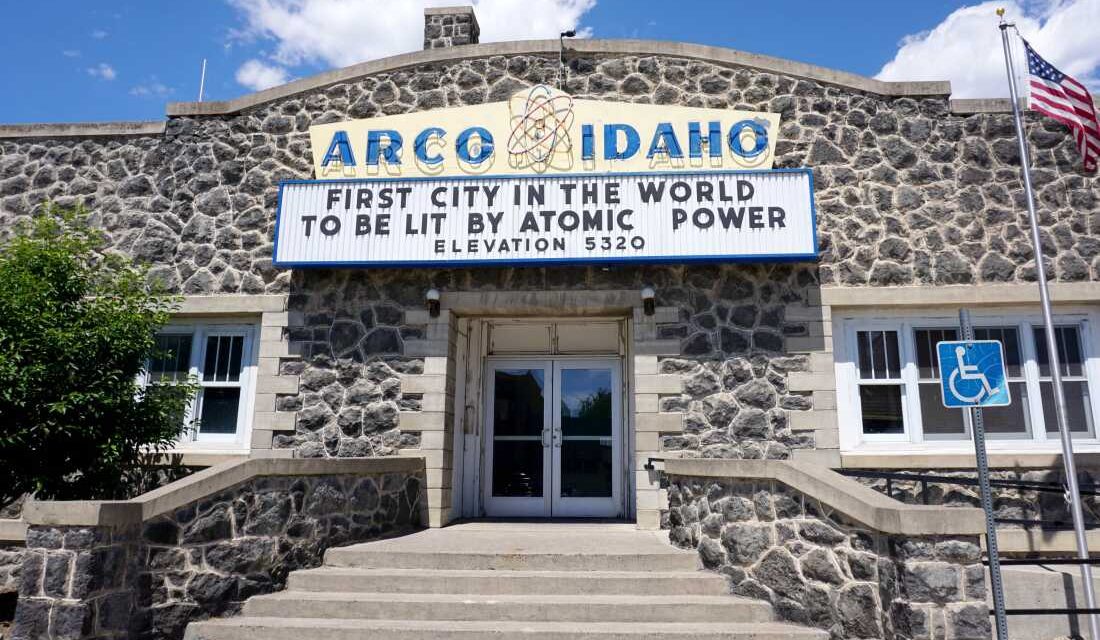
Arco, Idaho, like its neighboring small towns near the Idaho National Laboratory (INL), has a long-standing connection with nuclear energy stretching over several decades. Inside the bar in Atomic City, Idaho, a tiny community with a population of 52, patrons still smoke indoors. The bar’s walls are decorated with one-dollar bills and a flag bearing the ‘Don’t Tread On Me’ slogan.
Vickie O’Haro, who owns both the bar and the nearby race track, is familiar with her regular customers’ preferences, whether they prefer cold beers or atomic bomb shots. Most of her patrons work down the road at the INL, a hub for America’s nuclear energy tests since 1949. Despite a Gallup poll showing that most Americans are against having a nuclear plant nearby, residents here have a different perspective. O’Haro stated, ‘I live 10 miles away, and I’m fine. I’m not glowing in the dark. There’s nothing to be scared of.’
Behind the bar at Atomic City Bar & Store, and with her ownership of Atomic Motor Raceway, O’Haro maintains her businesses close to the INL.
After many years without significant progress, nuclear energy is gaining attention again. Under President Donald Trump, new projects advanced rapidly. A wave of small nuclear reactors will launch in the coming years. INL has hosted the activation of new reactor designs by three companies, alongside one in central Utah.
‘I think it’s actually pretty cool to be happening in my backyard,’ O’Haro expressed.
The INL spans a vast area of 900 square miles of remote, sagebrush-strewn high desert, almost the size of Rhode Island. Within this extensive site, Deployable Energy has successfully tested its reactor design. The reactor achieved a ‘critical’ state, marking a sustained chain reaction for the first time, indicating the potential for future electricity generation.
Lance Maul, the Chief Operating Officer at Deployable Energy, emphasized, ‘This could be a real turning point for the energy future.’ With his Australian accent, scraggly beard, and man bun, Maul outlined the company’s aim for micro reactors that differ from traditional large, costly nuclear plants. These micro reactors are designed to be portable and capable of supplying electricity to about a thousand homes.
‘It’s something deployable,’ Maul noted. ‘It’s something you can put on the back of a truck, offering a fundamentally different proposition.’
Nuclear energy proponents like Maul envision mass-produced reactors that can facilitate energy needs for remote areas, military bases, and AI data facilities. They are perceived as a viable solution to meet America’s increasing energy demands while reducing carbon emissions.
The support from Trump led to the Department of Energy expediting reactor permitting. NPR reports that this process eliminated numerous regulatory pages without public disclosure. Edwin Lyman, Nuclear Power Safety Director at the Union of Concerned Scientists, voiced skepticism, ‘I have no confidence in the Department of Energy and its oversight.’ He expressed concerns about relaxed standards regarding radiation, security, and environmental risks.
According to ProPublica, the federal commission regulating commercial nuclear development lost numerous staff, including safety experts, due to cuts under the Trump administration. The companies trialing their reactors aim for approval from this commission. ‘Cutting corners with nuclear safety is a bad idea,’ Lyman argued. ‘I’m concerned about its impact on the communities around INL.’
Meanwhile, at the Atomic City bar where workers unwind after shifts, O’Haro expressed her confidence in safety. ‘If we weren’t safe, my guys would tell me that we weren’t safe,’ she commented, turning up the music. While many Americans oppose new nuclear plants in their vicinity, polling indicates support for the U.S. to increasingly focus on nuclear power.
 Push for Reparations Faces Challenges and Calls for Strict Eligibility
  Texas Man Arrested for Threatening State Capitol Attack
 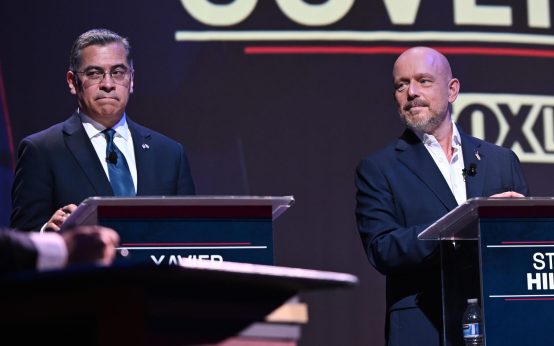 The Key Debate Between Xavier Becerra and Steve Hilton: What You Need to Know
  Physicians Urge Senate to Reject FDA Nominee
  Trump’s Executive Order to Combat Mosquitoes and Ticks in D.C.
  Debate Over Proposed English-Only Rule for Head Start Programs