The U.S. military has paused airstrikes on Iran after nearly two weeks of intense bombing. This pause comes as diplomatic efforts continue to prevent a return to full-scale conflict. The U.S.-Iran tensions are nearing a five-month mark, and the situation remains unpredictable.
President Donald Trump has alternated between threatening further strikes and emphasizing ongoing talks, while dismissing concerns that rising gas prices linked to the conflict might affect Republican prospects in the upcoming midterm elections. Israeli Prime Minister Benjamin Netanyahu’s planned visit to Trump next week in Washington adds to the uncertainty.
Israel had initiated the conflict alongside the U.S. on February 28, but has not participated in the recent American attacks following Iran’s effective closure of the Strait of Hormuz, a crucial shipping corridor through which 20% of the world’s oil flows. Michael Singh, managing director at the Washington Institute for Near East Policy, noted that Israel’s absence may indicate a desire to limit the conflict, but its involvement could escalate tensions.
Singh, a former senior Middle East director on the National Security Council, expressed caution in interpreting the pause in hostilities. He pointed out that if the pause extends over several days, it might hold significance, though it remains uncertain if it’s an operational pause or an opportunity for back-channel diplomacy.
A regional official involved in mediation efforts confirmed ongoing diplomacy, with the pause in strikes being viewed as a positive signal for de-escalation. Both the U.S. and Iran seem interested in returning to an interim ceasefire deal, with negotiations focusing on less restrictive vessel transit through the Strait of Hormuz.
“If both parties can compromise on shipping routes, a stable resolution may be reached,” the official, speaking anonymously, noted.
Since the war began, Iran has exerted control over the Persian Gulf waterway, impacting oil prices. Following a ceasefire agreement in June, conflicts over the strait continued, requiring U.S. intervention against Iran’s coastal defenses.
Singh speculates that the strikes aim to bring Iran back to negotiations. He further commented on the fragmented leadership within Iran, where internal factions complicate the diplomatic process. Concerns over appearing weak could make diplomacy challenging.
Both nations economically benefit from the strait’s reopening, though differing views on control hinder stability. Singh suggests that ongoing negotiations involve both verbal and military strategies.
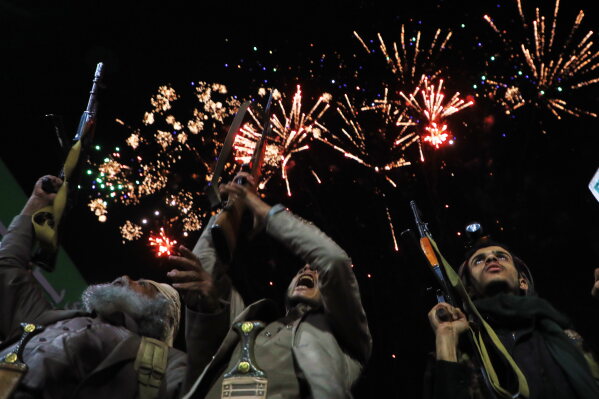
Despite the pause in attacks, regional tensions persist. Yemen’s Houthi rebels have attacked Saudi Arabia in retaliation for Saudi airstrikes, and have declared the Bab el-Mandeb Strait closed. This has heightened the strategic importance of this route for Saudi oil exports.
The U.S. military is enforcing a naval blockade of Iranian ports, disabling a Mozambique-flagged ship that violated the blockade on Friday. Trump continues to issue threats alongside diplomatic efforts, stating possible exit strategies involving either continued military intervention or negotiation.
Trump expresses belief that Iran is gradually becoming serious about negotiations, yet he stresses he is “not in a hurry” despite approaching elections. Voter discontent with rising prices could impact Republican election results.
The situation remains fluid, with Trump maintaining an open approach and discussing options with national security aides. No airstrikes occurred overnight in Iran after 13 days of consecutive attacks.
Trump emphasized on Friday, “Elections take care of themselves,” portraying a deliberate approach amid electoral concerns.
 British Police Arrest Man Suspected of Terror Plot
  Activists Push for Nationwide Ban on Child Marriage in the U.S.
  Investigation into Alleged Incident at Cornell University
  Rising Drone Threats Highlight Vulnerabilities in Moldova’s Airspace Defense
  Bolivia Faces Security Test Amid Unrest
  Incident on FlyDubai Flight Raises Security Concerns