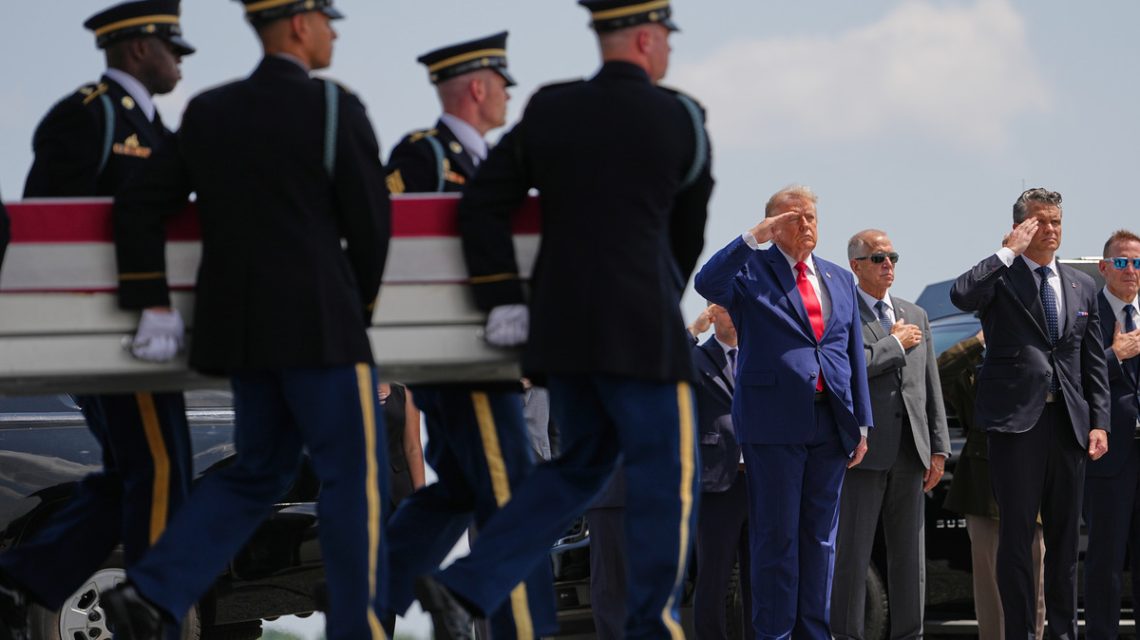
The Pentagon has changed its method for counting U.S. service members who have died or been injured in the Middle East. This has increased the scrutiny of how the Department of Defense communicates about casualties in the ongoing conflict with Iran.
The Defense Casualty Analysis System (DCAS) is the tool used by the Pentagon to update statistics on American personnel who have been killed or wounded. Since February, when the Iran war began, the official death toll has been recorded at 18, with 624 injuries. The database now categorizes casualties into two: those from February to June, and those after July 7. This date marks the end of a ceasefire announced by President Donald Trump in June. Following Iran’s targeting of merchant vessels near Oman, the U.S. resumed airstrikes, leading to nearly two weeks of attacks.
The Pentagon attributes discrepancies in DCAS to “temporary data disruption.”
The U.S. administration is facing criticism over the conflict, partly due to Iran’s control of the Strait of Hormuz, rising fuel prices, and claims of a lack of a clear exit strategy. Some observers believe the change in the database allows the Pentagon to avoid needing congressional approval to continue military actions and reduces the perceived U.S. losses.
Recently, Congress moved to limit President Trump’s war powers concerning Iran, showing a change as even some Republicans disagreed with the administration. Though the Senate’s vote was symbolic and non-binding, it highlighted a decrease in political support for the extended conflict.
Newsweek reached out to the Pentagon for comment. Former Pentagon official, Jim Townsend, criticized the administration for “playing games” with casualty figures. The adjustment treats the post-ceasefire period as a separate conflict, codename “Overseas Operations,” distinct from “Operation Epic Fury” launched in February. This new record marks the July fighting as separate, accounting for 14 U.S. deaths and 417 injuries previously.
Iranian assaults since July have mostly hit U.S. bases. An attack on a Jordan base resulted in the death of three U.S. service members, and another in Iraq led to a fatality during a “controlled detonation” of a drone. These deaths now appear under the “Overseas Operations” category. The deceased are 1st Lieutenant Tyler James Feehan, Private Isabella Gonzales, Sergeant Angel Rampersad, and Sergeant Michael Emmanuel Swinton. Additionally, 207 personnel have been wounded since July 7.
What’s Behind the Change?
Representative Thomas Massie criticized the new casualty category as misleading, stating it creates the illusion of two separate Iran wars interrupted briefly by a ceasefire. He accused Defense Secretary Pete Hegseth of bypassing the need for congressional approval. By law, the president must stop military operations within 60 days unless Congress authorizes an extension. When the limit was near in early May, Trump claimed the conflict with Iran was “terminated.” The application of the 1973 War Powers Act remains a contentious issue among experts and lawmakers.
On Thursday, The New York Times reported that the Pentagon adjusted the casualty figures in public records from 18 to 14. According to anonymous military officials, this change acknowledged that the four service members killed in July died after a ceasefire was announced in April. “These site anomalies are being resolved with the Military Services,” acting Pentagon press secretary Joel Valdez said, emphasizing the commitment to accurate casualty reporting.
 The Trump Team’s Challenge to the Military Leadership
  Maryland First State to Restrict Electronic Pricing in Grocery Stores
  Activists Push for Nationwide Ban on Child Marriage in the U.S.
  Democratic Hopes and Historical Warnings in 2026 Senate Race
  Republicans Face Challenges Amidst Cost of Living Concerns
  A Different Kind of Fall for Congress This Year