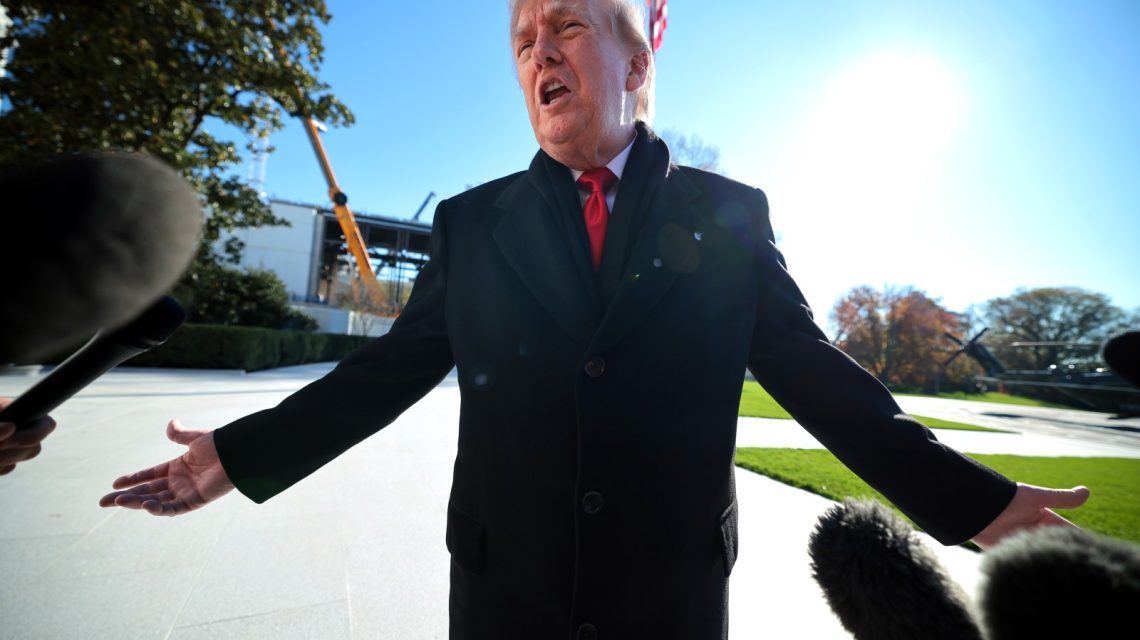
President Donald Trump reported extensive stock and bond transactions in September. His investments included Nvidia, SpaceX, and other firms influenced by his administration’s actions, prompting questions on potential conflicts of interest.
Trump’s disclosure, released Thursday, indicates he acquired up to $380,000 in Nvidia shares just before a scandal that led to CEO Jensen Huang’s resignation. He also traded in defense contractor L3Harris, whose federal contracts are under review following a nationwide aviation ground stop.
The report detailed 751 stock, ETF, and bond transactions, some filed after the federal deadline. The White House claims Trump’s investments are independently managed, and he cannot influence the purchases or sales.
“First, conflict of interest in that he or his appointees may pursue policies that increase the value of those stocks,” Richard Painter, former ethics lawyer under President George W. Bush, told Newsweek.
Virginia Canter of the Democracy Defenders Fund echoed these concerns, citing the president’s access to sensitive information and regulatory power over investment-related industries. Canter noted that active trading by a president gives an impression of possible inside information usage.
The disclosure did not specify Trump’s control over trades or any insider advantages linked to government decisions. Newsweek sought comments from the White House on these matters.
Nvidia Trades and High-Level Relationships
Trump’s reported Nvidia investments included purchasing up to $380,000 in stocks and selling up to $15,000 in September. On September 2, he made two significant purchases, coinciding with Nvidia’s agreement to acquire AI platform Hugging Face for $12.9 billion. The transaction’s timing relative to the agreement’s signing remains unclear.
The trades drew attention due to Trump’s ties with Huang, Nvidia’s former CEO, who resigned amid allegations connected to intelligence concerns. The New York Times reported Trump was briefed in 2025 on such matters.
The administration later imposed restrictions aimed at limiting Chinese access to advanced AI chips, impacting Nvidia’s business prospects.
L3Harris Trades and FAA Issues
Trump also noted two L3Harris stock sales in September, with one ranging between $50,001 and $100,000. L3Harris, responsible for FAA’s telecommunications, was linked to a significant aviation ground stop due to network issues. Investigations are ongoing without evidence of wrongdoing by L3Harris or direct connections to Trump’s transactions.
The stock sales preceded the incident by over two months, but questions about potential advantages from federal contracts remain.
SpaceX, Palantir, and Other Holdings
Trump acquired shares and corporate debt in SpaceX, amounting to $315,000, according to the disclosure. SpaceX relies heavily on federal contracts and approvals.
His disclosed portfolio also involved Palantir, a technology provider for defense and federal agencies, alongside investments in major firms like Apple, Amazon, Oracle, Netflix, and Tesla.
Trump reportedly was a net seller in September, reducing his holdings in companies like McDonald’s, Home Depot, and Comcast while purchasing significant municipal bonds and investments in a Vanguard index fund.
White House Defence of Stock Management
White House spokesperson Davis Ingle reiterated Trump’s non-involvement in transaction decisions, attributing them to independent financial institutions. They follow market index strategies akin to the Schwab 1000.
Trump stated in an interview with CBS News that he was unaware of the specifics of his investments, characterizing the transactions as automated.
“Having third-party financial advisers manage the investments does nothing to address potential conflicts of interest,” said Painter, raising further ethical questions.
Virginia Canter countered claims of mitigated conflicts, emphasizing a lack of transparency in trading operations and advising divestments or establishing blind trusts for effective conflict prevention.
Compliance with STOCK Act and Reporting Delays
Trump’s disclosure timing implicates potential non-compliance with the STOCK Act, which requires transaction reports within 30 days of the filer being informed. His filings indicated some transactions exceeded the 45-day statutory reporting limit.
Canter argued Trump should adhere to standard late-filing fees and requirements applicable to other government officials.
Painter suggested that deadline violations might not result in significant repercussions due to executive branch enforcement roles.
Current debates highlight whether elected officials should trade individual stocks amidst authority over related industries. Calls for policy amendments and divestment seek stronger safeguards than current disclosure practices.
Newsweek’s reporters and editors used Martyn, our AI assistant, to produce this story. Contact Newsweek editors on this story: Edward T. Cummins.
 Controversy Over Trump’s Intervention for Nvidia CEO Jensen Huang
 Challenges Await New York Representative in Congress
 Orange County Board Considers Renaming John Wayne Airport Amid Legacy Debate
 Spanish Election Shifts Power Dynamics: Trump Responds to Sánchez’s Defeat
 Texas Governor-elect Expanding Abortion Exceptions and Pennsylvania’s Abortion Rights Debate
 Gov. Hochul’s Upcoming Battle Against New York’s Trial Lawyers