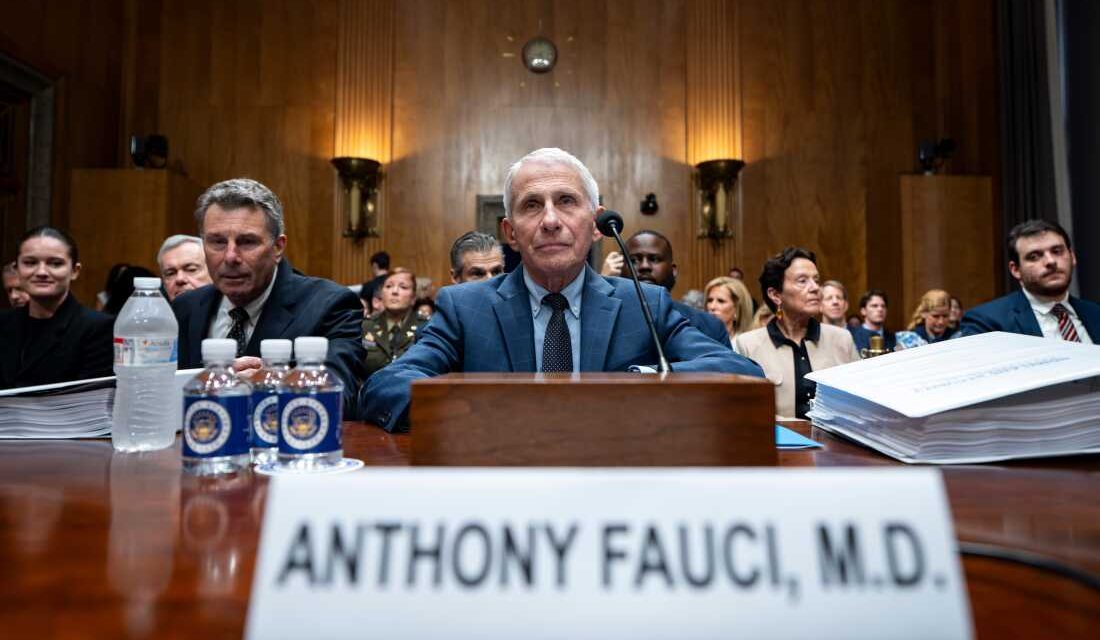
Dr. Anthony Fauci, the former director of the National Institute of Allergy and Infectious Diseases, faced the Senate Committee on Homeland Security and Governmental Affairs in Washington, D.C. His refusal to answer questions on COVID-19 origins, citing his Fifth Amendment rights, led to tensions with Sen. Rand Paul, who threatened to hold Fauci in contempt. This reflects ongoing disputes over the virus’s origins and impacts public health infrastructure.
Political pressures on Fauci are raising concerns among health professionals. Andy Kim, D-N.J., highlighted potential negative effects on future public servants and researchers. The current climate threatens the U.S. public health system, with epidemiologist Katelyn Jetelina noting reopened wounds within the community.
“I thought that we were healing as a country around COVID-19,” said Jetelina.
The ‘health freedom’ movement gained traction during the pandemic with objections to vaccines and public health measures. Nicole Huberfeld from Boston University pointed out these claims often lacked evidence, rooted instead in religious or moral objections. Republican lawmakers, she suggests, appeal to their base rather than addressing public health needs.
The erosion of public health value worries professionals like Dr. Georges Benjamin, head of the American Public Health Association. He cites declining health and ineffective responses to diseases, exacerbated by cuts to healthcare.
“We are less healthy,” said Benjamin. “We’ve seen it every day.”
Benjamin stresses the importance of evidence-based communication from health experts to politicians, warning of the intimidating atmosphere created by political threats. This environment affects educational enrollment and career choices in public health.
Jetelina fears for the profession’s future as students express concerns over professional risks. She advocates for systems that foster dialogue between health professionals and the public. These should address questions and improve communication and operations.
“People are demanding a far more participatory approach,” stated Jetelina.
Jetelina calls for a commission similar to the 9/11 Commission to assess pandemic responses. Benjamin underscores the urgency, highlighting the impact of distrust in science on national health and pandemic preparedness.
Public health’s core mission remains the treatment and healing of communities, a task complicated by current political dynamics.
 Concerns Over Changes to Voter-Registration Form for Americans Abroad
  Trump’s 2024 Campaign Targets Young Men Through Cryptocurrency
  Trump’s White House Visitor Center Proposal Gains Bipartisan Support
  State Department Simplifies Passport Process with Online Applications
  Understanding Inflammation: Myths and Facts
  Becerra and Hilton Clash in California Gubernatorial Debate