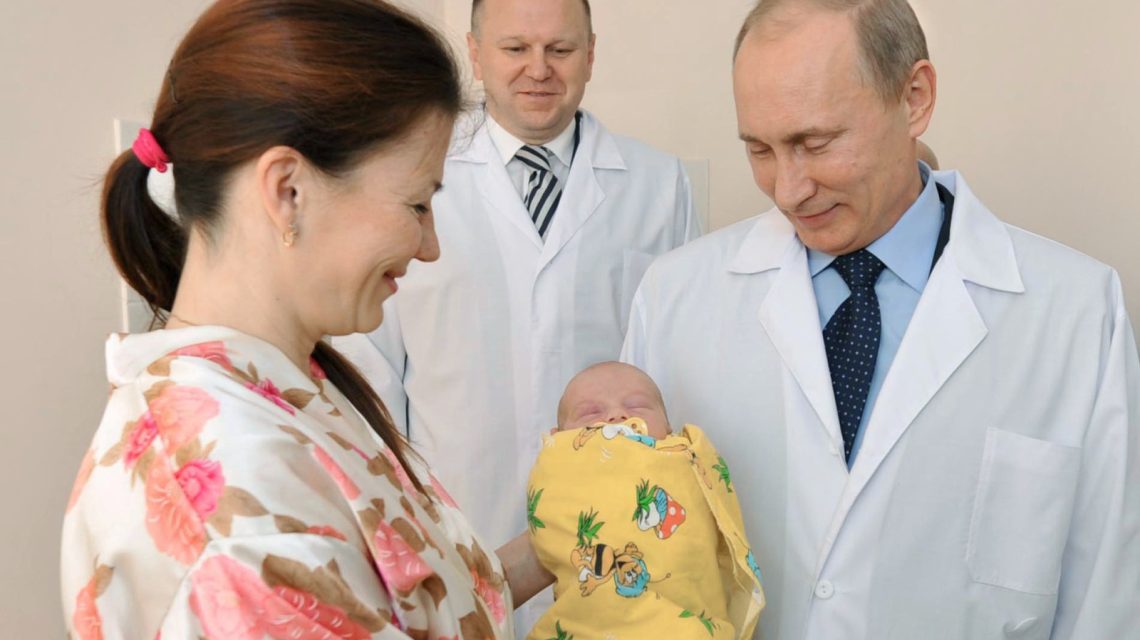
President Vladimir Putin is actively encouraging Russian women to increase the nation’s birthrate. Although abortion remains legal in Russia, the government has intensified efforts to discourage it. Actions include banning ‘child-free’ advocacy, pressuring private clinics to cease abortions, and imposing waiting periods and counseling for women seeking these services.
Recently, Putin took a new approach. He ordered that search engines prioritize websites supporting pregnancy over those offering abortion information. While resources support childbirth, the Kremlin prioritizes defense spending, allocating over a third of the federal budget to it. This leaves healthcare and social payments underfunded, placing the financial burden of child-rearing on parents.
Historical Context
Putin’s focus on fertility reflects Russian historical trends. In 1944, Josef Stalin introduced the Soviet ‘Mother Heroine’ award, incentivizing women to have many children to recover from wartime losses. Putin reinstated this title in 2022. At the Eastern Economic Forum, he called low fertility a major security threat, despite ongoing threats like Ukrainian drone incursions.
Demographic Concerns
Russia’s fertility rate is significantly below the needed 2.1 for population replacement. With only 1.19 million births in 2025, demographers project the population may decrease from 146 million in early 2025 to 141 million by 2036. Meanwhile, a labor shortage of 3.1 million workers is anticipated by 2030.
Family Plans and Abortion Stigma
In 2025, Russia introduced the ‘Family’ national project, integrating maternity grants, subsidized mortgages, and child benefits. Eligible families can receive significant payouts for housing and education. Despite these efforts, authorities stigmatize abortion, limiting access and imposing fines on individuals and organizations promoting it.
Economic hardships drive many to consider abortion. In Vologda, a region aggressively anti-abortion, 59.8% of decisions are financially motivated, with factors like job insecurity, debt, and housing challenges.
Prioritizing Defense Over Welfare
Russia’s 2027 budget earmarks 35.2% of spending for defense, whereas healthcare receives a mere 3.7%. This focus impacts regions unevenly, such as Primorsky Krai, which recently cut education and social support budgets.
Officials claim all social payments will be fulfilled when funds allow, yet war-related expenses remain prioritized. The signing bonus for new military recruits increased to 3 million rubles, though promises to support families remain unmet.
The War’s Impact
Although Putin asserts that demographic issues precede the war, the conflict consumes resources and has led to severe casualties. A Center for Strategic and International Studies report suggests 1.4 million Russian men have been killed or wounded in the conflict.
For Russia to address its fertility challenges effectively, authorities might consider fulfilling promised payments and reducing external controls rather than attempting to influence search engine results.
Note: Newsweek’s team collaborated with AI assistant Martyn for this report.
 In-Flight Altercation on Qatar Airways Leads to Police and FBI Response
 Virginia Residents Sue Over Alleged Immigration Violations
 Updates on Key International and Domestic Events
 Pope Leo XIV Completes South American Tour with Farewell Mass in Peru
 President Trump’s Critical Asia Trip: Key Meetings and Implications
 U.S. Plans to Restrict AI Chip Exports Before Trump-Xi Meeting