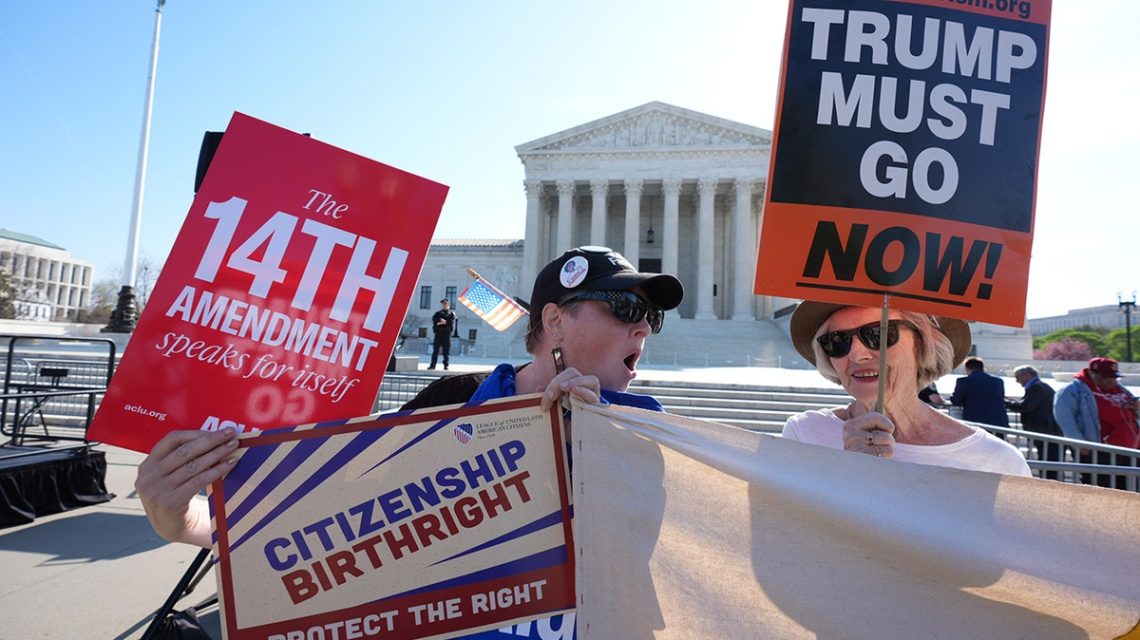
The Supreme Court has issued a decision in Trump v. Barbara that has significant implications for U.S. citizenship and census calculations. Five justices have deemed birthright citizenship constitutional for children of Chinese tourists, Islamic extremists, and other non-citizens. This encroaches on the sovereign American power to decide who becomes a citizen.
This ruling also impacts the census process. Illegal immigrants and temporary visa holders are included in census counts, affecting U.S. House seats allocation and, consequently, the Electoral College. This system needs reform before the 2030 census.
“Section 1 of the Fourteenth Amendment provides birthright citizenship to anyone born in the U.S. and ‘subject to the jurisdiction thereof.’ Originally, this was designed for freed slaves. Section 2 apportions House seats based on ‘the whole number of persons’ in each state.”
The government has blurred these rules. While diplomats and soldiers are excluded from citizenship and census counts, illegal immigrants are not. Since the Carter administration, non-citizens have been included in the census, further complicated by the Barbara decision which states that children born to foreign parents in the U.S. are now citizens.
Temporary visa holders, students and workers, also contribute to this census count, even though birth tourists do not. This inconsistency between citizenship and census standards necessitates change.
Concerns about this system relate directly to national security and political representation. The arrest of illegal immigrants impacts both the census tally and Medicaid funding, with heavy implications for sanctuary states.
China poses a geopolitical threat through alleged interference by sending Chinese birth tourists. These children, now citizens, could theoretically affect U.S. elections from abroad.
Congress can address these issues through the Equal Representation Act, which would limit census counts to American citizens and lawful permanent residents. This act would reinterpret “subject to the jurisdiction thereof” to align with legal precedents like United States v. Wong Kim Ark (1898) and Franklin v. Massachusetts (1992).
Congress can enact this change by statute to ensure it withstands executive order reversals. Legislation would provide a permanent solution, unlike possible executive orders. Enacting and signing the Equal Representation Act would challenge the Supreme Court to rectify a faulty citizenship allocation practice.
The implications of an inaccurate census go beyond politics, affecting federal funding and national security. Ensuring census accuracy keeps the republic secure and fair, away from foreign influence.
 The Trump Team’s Challenge to the Military Leadership
  Maryland First State to Restrict Electronic Pricing in Grocery Stores
  British Police Arrest Man Suspected of Terror Plot
  Activists Push for Nationwide Ban on Child Marriage in the U.S.
  Democratic Hopes and Historical Warnings in 2026 Senate Race
  Republicans Face Challenges Amidst Cost of Living Concerns